Garden Water Timers
Best Garden Water Timers for Hoses and Sprinklers
7 picks compared
8 min read
ProductPickly is reader-supported. When you buy through links on our site, we may earn an affiliate commission at no extra cost to you. It never changes our picks.
The short answerFor most gardens the RAINPOINT programmable single-outlet timer is the easiest pick, because it pairs a clear digital display with the three modes people actually use: a set schedule, a manual soak, and a rain delay you can trigger without wiping the program. If you just want a hose to stop on its own with no batteries, the Orbit mechanical dial is the simplest option, while the brass Insoma and the RAINPOINT two-zone units let you water two areas on separate schedules. The Ortis adds an IP67 sealed housing for exposed taps, and the Raindrip kit is built for patio pots and hanging baskets rather than a single hose. Choose by how many outlets you need, whether you want mechanical or digital control, and how you will handle batteries and winter, rather than by price alone.
?How we pickedWe compare published specifications, safety certifications and thousands of verified owner reviews, and we do not physically test every unit. Read the full process in our review methodology.
RAINPOINT Programmable Water Timer for Garden Hose, 1 Outlet with Rain Delay
★★★★★ 4.6 / 5 Best overall
This is the timer we chose for most gardens because it balances an easy digital display with the three modes that actually get used day to day: a set watering schedule, a manual soak, and a rain delay you can trigger without wiping the whole program. It threads onto a standard outdoor tap, drives a soaker hose or a sprinkler, and keeps its settings so you are not reprogramming it every week.
Type DigitalOutlets 1Programming Schedule, manual, rain delayPower Batteries
- Clear digital display makes scheduling simple
- Rain delay pauses watering without losing the program
- Fits standard outdoor taps and soaker or sprinkler hoses
- Single outlet means one zone at a time
- Screen can be hard to read in bright glare
Best for: most gardeners wanting one reliable programmable outlet
Orbit Mechanical Water Timer, Battery-Free Dial Hose Faucet Shutoff (62034)
★★★★★ 4.3 / 5 Best simple pick
The appeal here is that there is nothing to program and no battery to die: you twist the dial to a run time, and the clockwork mechanism counts down and shuts the water off. It is the pick for people who just want a hose to stop on its own after a set number of minutes, with a manual bypass so you can run the tap normally whenever you like.
Type Mechanical dialOutlets 1Programming Twist-dial countdownPower None, battery-free
- No batteries and nothing to program
- Manual bypass lets you use the tap normally
- Hard to get wrong for a one-off soak
- Cannot set a repeating daily schedule
- No rain delay or automatic restart
Best for: a no-fuss shutoff with no batteries or setup
Insoma Water Timer with Brass Inlet and Outlet, 2 Independent Zones
★★★★★ 4.5 / 5 Best dual zone
If you want to water two areas on their own schedules, this is the one to look at, since each of its two zones programs separately so the front bed and the back pots do not have to share a start time. The brass inlet and outlet threads are the reason it stands out from plastic-only rivals, giving the connections a more durable feel where hoses screw on and off often.
Type Digital, brass portsOutlets 2 independentProgramming Per-zone schedule, manual, rain delayPower Batteries
- Two zones run on their own separate schedules
- Brass threads feel sturdier than all-plastic ports
- Auto, manual, and rain delay modes on each zone
- More setup than a single-outlet timer
- Two zones draw more from the batteries
Best for: watering two areas on different schedules
Orbit Programmable Digital Hose Watering Timer, 1 Outlet with LCD (62061)
★★★★★ 4.4 / 5 Best display
This Orbit leans on a large LCD screen that spells out the program in plain terms, which makes it a friendly choice for anyone who finds tiny controls fiddly. It is a straightforward single-outlet digital timer with a built-in rain delay and a water-resistant housing, aimed at people who value a readable screen over extra zones or app features.
Type DigitalOutlets 1Programming Schedule, manual, rain delayPower Batteries
- Large LCD makes the schedule easy to read
- Built-in rain delay skips watering after storms
- Water-resistant housing for outdoor tap use
- Only one outlet, so one zone per unit
- No app or remote control
Best for: readable at-the-tap programming without apps
Ortis Programmable Hose Faucet Timer, 1 Outlet with IP67 Leak-Proof Design
★★★★★ 4.4 / 5 Best weatherproofing
The headline feature is the IP67 leak-proof rating, which is aimed at gardens where the timer sits fully exposed to rain and splashing all season. Underneath that it is a familiar single-outlet programmable timer with automatic, manual, and rain-delay modes, so the draw is the sealed housing rather than any change to how you set it.
Type Digital, IP67 sealedOutlets 1Programming Auto, manual, rain delayPower Batteries
- IP67 rating targets exposed, rainy spots
- Standard auto, manual, and rain-delay modes
- Threads onto a normal outdoor tap
- Single outlet limits it to one zone
- Sealed battery door can be stiff to open
Best for: taps left exposed to rain all season
RAINPOINT 2 Zone Sprinkler Timer for Garden Hose with Rain Delay
★★★★★ 4.4 / 5 Best two-outlet value
This is the other dual-zone option to weigh up, splitting one tap into two outlets that can each run their own program from a single unit. It suits a lawn plus a border, or a drip line plus a sprinkler, and keeps the familiar RAINPOINT layout of automatic, manual, and rain-delay modes so the controls feel consistent if you already own one of their timers.
Type DigitalOutlets 2Programming Per-zone schedule, manual, rain delayPower Batteries
- Two outlets from one tap for separate areas
- Rain delay and manual modes on each zone
- Familiar layout if you use RAINPOINT already
- Plastic ports where the Insoma uses brass
- Programming two zones takes longer to set up
Best for: splitting one tap into two watering areas on a budget
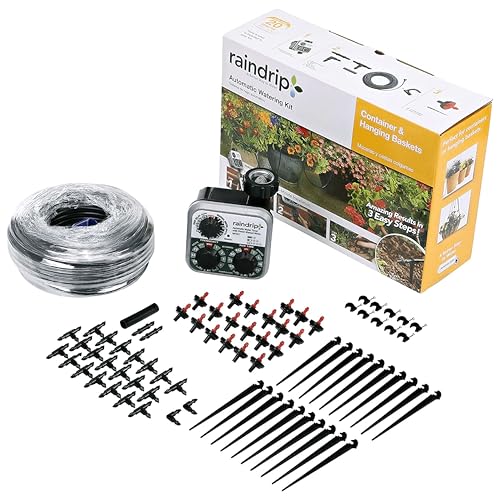
Raindrip R560DP Automatic Drip Watering System with Timer for Containers
★★★★★ 4.2 / 5 Best for containers
This one is different from the rest because it is a complete kit rather than just a faucet timer, pairing a timer with tubing and drippers to water up to twenty containers or hanging baskets automatically. It is the pick for patio pots and balcony gardens where the real problem is keeping many small containers watered rather than running a single hose or sprinkler.
Type Timer plus drip kitOutlets 1 with drip linesProgramming Timer with drip schedulePower Batteries
- Waters up to 20 pots or baskets automatically
- Comes with tubing and 20 drippers included
- Solves the container-watering problem, not just hoses
- More assembly than a plain faucet timer
- Aimed at containers rather than lawns or beds
Best for: keeping many patio pots and baskets watered
The best garden water timer for you comes down to four practical choices: how many outlets you need, whether you want a simple mechanical dial or a programmable digital unit, which schedule and rain-delay features you will actually use, and how you will handle batteries and winter storage. Our chosen picks cover a reliable single-outlet programmable timer for most gardens, a battery-free mechanical dial for a no-fuss soak, dual-zone units for watering two areas at once, a weather-sealed option for exposed taps, and a full drip kit for container gardens, so you can match one to how you really water.
Single-outlet vs dual-outlet timers
The first decision is how many areas you want to run from one tap. A single-outlet timer, like the RAINPOINT programmable pick or the Orbit LCD unit, drives one hose, soaker, or sprinkler at a time and is the simpler, lighter-on-batteries choice for a garden that waters as one zone. A dual-outlet timer such as the brass Insoma or the RAINPOINT two-zone unit splits the tap into two lines that each run their own program, so a lawn sprinkler and a drip line for pots can water on different days and different lengths without you swapping hoses. The trade off is a little more setup and battery draw, so only step up to two zones if you genuinely need to water two areas on separate schedules rather than paying for flexibility you will not use.
Mechanical dial vs digital vs app control
How the timer is controlled shapes the whole experience. A mechanical dial timer like the Orbit 62034 has no batteries and nothing to program: you twist it to a run time and it counts down and shuts off, which is perfect for an occasional soak but cannot repeat a daily schedule. A digital timer, which most of our picks are, lets you set watering to start at chosen times each day and run unattended for weeks, and it holds features like rain delay that a dial simply cannot. Some timers on the wider market add Bluetooth or WiFi so you can adjust the schedule from a phone, which is handy if the tap is awkward to reach, though it adds cost and one more thing to pair and update. For most gardeners a clear on-unit digital display, as on the Orbit LCD and RAINPOINT models here, hits the sweet spot between control and simplicity.
Programming schedules and rain delay
The real work of a good timer is running a schedule you can trust and stepping aside when the weather changes. On the digital picks you set a start time, a run length, and how often to repeat, then leave it, and the timer waters on that pattern until you change it. The feature that earns its keep is rain delay, which pauses the program for a set number of hours or days after a storm and then resumes on its own, so you are not soaking ground that is already wet or deleting your schedule to skip a day. Manual mode matters too, letting you run the tap for a one-off watering or to test a new sprinkler without touching the program. When you compare timers, look less at the maximum number of programs and more at whether the everyday actions, schedule, manual soak, and rain delay, are quick to reach.
Battery life and winterizing
A timer is only as reliable as its power, and a flat battery is the most common reason a schedule quietly stops in midsummer. Digital units here run on common batteries that typically last a season or more, though cold weather and driving two zones shorten that, so fitting fresh batteries at the start of the season and sealing the compartment is worth the small effort. The mechanical Orbit sidesteps this entirely by using no batteries at all. Winter is the other thing to plan for. Most timers should come off the tap before a hard freeze, because water left inside can freeze, expand, and crack the valve or housing, so at seasons end you disconnect it, drain it fully, take the batteries out, and store it somewhere dry and frost-free. A high weather rating like the IP67 Ortis handles rain and splashing all season, but remember that is protection from wet, not from freezing, so even a sealed unit still needs bringing in for winter.
Questions people ask
What does a garden water timer actually do?
A garden water timer sits between your outdoor tap and your hose, soaker, or sprinkler, and turns the water on and off for you. On a mechanical model you twist a dial and it counts down before shutting off, while a digital or programmable timer runs a set schedule, such as ten minutes every morning, and can hold a rain delay so you skip watering after a storm. It saves you standing at the tap and stops a hose being left running by accident.
Should I choose a single-outlet or a dual-outlet timer?
Pick a single-outlet timer, like the RAINPOINT or Orbit digital picks, if everything runs off one hose or one zone, since it is simpler to set up and cheaper to run. Choose a dual-outlet timer such as the Insoma brass or the RAINPOINT two-zone unit when you want two areas on different schedules from the same tap, for example a lawn sprinkler in the morning and a drip line for pots in the evening. Dual-zone units cost you a bit more setup time and battery use in exchange for that flexibility.
Is a mechanical dial timer or a digital timer better?
It depends on what you want it to do. A mechanical dial timer like the Orbit 62034 is the simplest option, with no batteries and nothing to program, but it only runs a single countdown and cannot repeat a daily schedule. A digital or programmable timer can start watering at set times each day, hold a rain delay, and run unattended for weeks, which is why most gardeners who water regularly prefer one. If you only ever want a hose to stop after a set number of minutes, mechanical is enough.
What is a rain delay and why does it matter?
A rain delay lets you pause a programmed timer for a chosen number of hours or days without deleting the schedule, so after heavy rain you are not watering ground that is already soaked. When the delay ends, the timer picks the normal program back up on its own. It is a standard feature on the digital picks here and is one of the most useful, because it saves water and stops plants sitting in waterlogged soil after a storm.
How long do the batteries last in a water timer?
Most digital hose timers run on common batteries and last a season or more under normal use, though frequent watering, cold weather, and driving two zones will drain them faster. A mechanical dial timer avoids the question entirely because it uses no batteries at all. Whatever you choose, it is worth fitting fresh batteries at the start of the season and keeping the compartment sealed, since a dying battery is the most common reason a schedule stops running mid-summer.
Can I leave a water timer outside over winter?
You should not leave most timers on the tap through a hard freeze, because water trapped inside can freeze, expand, and crack the housing or the valve. At the end of the watering season, disconnect the timer, let it drain fully, remove the batteries, and store it somewhere dry and frost-free. A sealed, higher-rated housing like the IP67 Ortis handles rain and splashing well, but that weatherproofing is about wet weather, not protection from freezing.
Will a water timer work with a soaker hose or drip system?
Yes. Most of the faucet timers here thread onto a standard outdoor tap and will feed a soaker hose, a sprinkler, or a drip line, and running low-flow drip irrigation on a timer is one of the most water-efficient ways to garden. If your main need is watering lots of containers, a purpose-built kit like the Raindrip system pairs the timer with tubing and drippers so you do not have to assemble the drip side yourself.
How did we choose the water timers in this guide?
We compared each timer on outlets and zones, how it is programmed, the modes it offers such as rain delay and manual watering, build quality including brass versus plastic ports and weather sealing, and how well it suits everyday jobs like a single hose, two zones, or a patio full of pots. Every product shown is a real listing, and these are our chosen picks based on those features rather than lab-tested claims.
The bottom lineSo which one?
The RAINPOINT programmable water timer is our top choice for most people, since a readable display plus schedule, manual, and rain-delay modes cover what a single-outlet garden really needs. If you want nothing to program and no battery to change, the Orbit mechanical dial is the honest simple pick, and for two areas on different schedules the brass Insoma leads with the budget RAINPOINT two-zone unit close behind. The Orbit LCD is the one to grab for an easy-to-read screen, the Ortis for a tap left out in the rain, and the Raindrip kit when the job is a patio full of pots rather than a hose. Match the timer to your outlets, your control preference, and your winter routine, and it will run your watering for seasons to come.