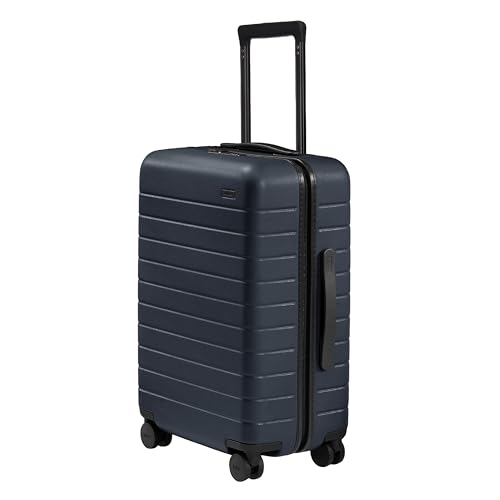
If you have ever watched fellow passengers struggle to shove an oversized suitcase into the overhead bin, you know why carry-on size rules matter. Airlines use standard dimensions to keep boarding smooth and bins safe. But those limits vary by carrier, and a bag that fits on one airline may be too big for another. This guide breaks down the standard carry-on size for major domestic and international airlines, gives you a quick reference chart, and offers practical tips for measuring your bag and avoiding gate checks.
Why Carry-On Size Matters
Carry-on size limits exist for two main reasons: safety and efficiency. Overhead bins are designed to hold bags of a certain size, and an oversized bag can fall out during turbulence or block other passengers' luggage. Airlines also want to speed up boarding, so they enforce size limits to keep the process moving.
When you book a flight, the airline's website lists the maximum dimensions for carry-on luggage. These are usually given in inches or centimeters, and they include wheels and handles. If your bag exceeds those limits, you may be forced to check it at the gate, which can cost extra and delay your trip.
Another reason size matters is that some airlines, especially budget carriers, have stricter limits. For example, a bag that fits on Delta may not fit on Spirit or Ryanair. Knowing the rules before you pack can save you from last-minute surprises.
Airline Carry-On Size Chart
Below is a comparison of carry-on size limits for major domestic and international airlines. Dimensions are in inches and include wheels and handles. Weight limits are per bag. Always verify with the airline before travel, as policies can change.
- American Airlines: 22 x 14 x 9 inches, no weight limit (but must be able to lift into bin)
- Delta Air Lines: 22 x 14 x 9 inches, no weight limit
- United Airlines: 22 x 14 x 9 inches, no weight limit
- Southwest Airlines: 24 x 16 x 10 inches, no weight limit
- Alaska Airlines: 22 x 14 x 9 inches, no weight limit
- JetBlue: 22 x 14 x 9 inches, no weight limit
- Spirit Airlines: 22 x 18 x 10 inches, no weight limit (but personal item is smaller)
- Frontier Airlines: 24 x 16 x 10 inches, no weight limit (but personal item is smaller)
- British Airways: 22 x 14 x 9 inches, weight limit 51 lbs (23 kg)
- Lufthansa: 21.7 x 15.7 x 9 inches, weight limit 17.6 lbs (8 kg)
- Emirates: 22 x 15 x 8 inches, weight limit 15.4 lbs (7 kg)
- Qantas: 22 x 14 x 9 inches, weight limit 15.4 lbs (7 kg)
- Ryanair: 21.7 x 15.7 x 7.9 inches, weight limit 22 lbs (10 kg) for priority, 15.4 lbs (7 kg) for non-priority
- EasyJet: 22 x 16 x 10 inches, no weight limit (but must fit in sizer)
As you can see, the most common limit is 22 x 14 x 9 inches. However, some airlines like Southwest and Frontier allow a bit more length. International carriers often have weight limits, which can be as low as 15 pounds (7 kg) for economy. If you are flying on a budget airline, check the exact dimensions, as they are often smaller.
How to Measure Your Bag
To avoid gate checks, you need to measure your carry-on correctly. Here is a simple step-by-step guide:
- Place your bag on a flat surface, with wheels down and handle extended.
- Use a tape measure to find the length (height) from the bottom to the top of the handle. This is the longest dimension.
- Measure the width from side to side at the widest point.
- Measure the depth from front to back at the thickest point.
- Add the three numbers together. The total should be less than the airline's maximum linear dimension (usually 45 inches).
- If your bag has external pockets or straps, measure them too, as they count.
Many airlines have a sizer at the check-in counter or gate. You can test your bag there. If it does not fit, you will have to check it. To be safe, measure your bag at home and compare it to the airline's published limits.
Tips to Avoid Gate Checks
Gate checks are inconvenient and can cost you time and money. Here are some practical tips to keep your carry-on with you:
- Choose a bag that meets the strictest airline's size limit if you fly multiple carriers.
- Pack light, because even if size is fine, weight limits on some airlines can be exceeded.
- Use a soft-sided bag that can be compressed to fit into a sizer.
- Check the airline's website before you leave, as size limits can change.
- If you are unsure, use the airline's sizer at the airport before reaching the gate.
- Consider buying a bag specifically designed to meet the most common 22 x 14 x 9 limit.
By following these tips, you can breeze through security and board with confidence, knowing your bag will fit in the overhead bin. Remember, when in doubt, check the airline's official policy. Safe travels!
