Lightweight Packing Totes
Best Lightweight Packing Totes
6 picks compared
8 min read
ProductPickly is reader-supported. When you buy through links on our site, we may earn an affiliate commission at no extra cost to you. It never changes our picks.
The short answerA good lightweight packing tote should hold a real load without straining its seams, close with a zipper that keeps the contents in, and fold down to almost nothing when it is empty so it costs you no storage space between uses. The BlissTotes 93L set is our overall pick because its mid-large size suits most jobs, it comes as a multipack, and the soft body folds flat when you are done. The 24 gallon set with carrying handles is the one to grab when you need to lift full totes, the 57 gallon jumbo bags swallow bulky bedding and pillows, the Lifewit clear-window bins keep seasonal clothes visible on a shelf, the ukeetap clear bins do the same in a see-through body, and the six-pack of heavy duty zippered totes is a simple value set for a single move. Decide how much you need to carry and how you want to close it first, then match the size to the job.
?How we pickedWe compare published specifications, safety certifications and thousands of verified owner reviews, and we do not physically test every unit. Read the full process in our review methodology.
BlissTotes Moving Bags, 93L 8-Pack Storage Bags, Moving Boxes
★★★★★ 4.6 / 5 Best overall
This is the set we would reach for first because 93 liters is the size that covers the most jobs. It is roomy enough to pack clothes, linens, or a dorm haul, but not so oversized that a full tote becomes impossible to lift. Eight in a pack means you can load a whole room and still have a couple spare, and the zip top keeps everything contained on the way out the door. The soft body is the point of a packing tote rather than a rigid box, so once a tote is empty it folds flat and slides under a bed or onto a shelf instead of taking up a corner of the closet.
Capacity 93 liters eachClosure ZipperPack Eight totesPacks down Folds flat empty
- 93L size suits most packing jobs
- Eight totes cover a full room
- Folds flat when empty
- Soft sides do not stack like rigid bins
- A full tote is heavy to carry far
Best for: anyone who wants one versatile foldable tote for moving, storage, or travel
8 Pack Extra Heavy Duty Large Moving Bags with Strong Zipper and Carrying Handles, 24 gal
★★★★★ 4.5 / 5 Best for carrying
The reason to pick this set over a plain sack is the handles. Reinforced carry handles let you lift a fully packed 24 gallon tote and move it across a room or into a car without the load fighting you, which is the part where flimsier bags tear at the seam. The strong zipper closes the top all the way so nothing spills while you carry it. At 24 gallons each these sit a little smaller than the jumbo bags, which is deliberate, since it keeps a full tote at a weight you can actually pick up. Eight in a pack makes it a sensible choice for a college move or clearing out a room in one go.
Capacity 24 gallons eachClosure Strong zipperCarry Reinforced handlesPack Eight totes
- Handles make a full tote easy to lift
- 24 gallon size stays liftable
- Eight totes for a whole move
- Smaller volume than the jumbo bags
- One color option in this pack
Best for: movers who need to carry fully loaded totes by hand
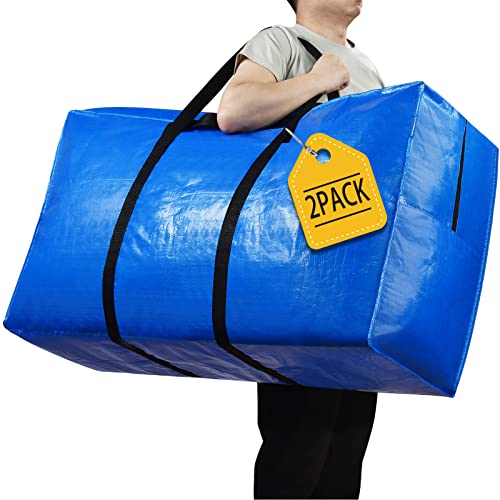
Extra Large Storage Bags, 57 Gallon XXL Jumbo Large Moving Bags Heavy Duty
★★★★★ 4.4 / 5 Best for bulky items
When the problem is volume rather than weight, these 57 gallon bags are the answer. Comforters, pillows, winter coats, and duvets are light but eat space, and a jumbo tote lets you get a whole bed set into one bag instead of three normal ones. The oversized body is where they earn their place, and they still zip shut and fold flat when the season is over. The trade-off comes from the same size that makes them useful. Fill one with anything dense and it turns heavy and awkward fast, so treat these as bags for bulky-but-light items rather than books or kitchenware.
Capacity 57 gallons eachClosure ZipperBest use Bedding and bulky itemsPacks down Folds flat empty
- Huge volume for bedding and coats
- Fewer bags needed for bulky loads
- Folds flat between seasons
- Too big to lift if packed with dense items
- Oversized for everyday storage
Best for: storing or moving comforters, pillows, and other bulky light items
Lifewit 6 Pack Clothes Storage Bins with Lids, Foldable Blanket Storage Bags with Zippers and Clear Window
★★★★★ 4.5 / 5 Best for closet storage
These are built for the shelf rather than the move. The clear window on the front lets you read what is inside without unzipping, which is what you want when sweaters and bedding live in the closet for months at a time, and the reinforced handles make it easy to pull a bin down from a high shelf. The lid keeps dust off the contents between seasons. They hold their shape better than a plain sack thanks to the structured sides, so they sit and stack more neatly on a shelf, and they still fold down flat when a bin is empty and out of rotation.
Closure Zipper with lidWindow Clear front panelPack Six binsPacks down Foldable when empty
- Clear window shows the contents
- Structured sides sit neatly on a shelf
- Reinforced handles for high shelves
- Structured body folds less small than a soft tote
- Better for storage than for carrying loads
Best for: keeping seasonal clothes and blankets visible and dust-free in a closet
ukeetap 8 Pack Extra Large Clothes Storage Bins with Lids, Clear
★★★★★ 4.4 / 5 Best see-through
If a small window is not enough and you want to see the whole load at a glance, these bins use a see-through body so you can spot the right one without opening any of them. Eight in a pack is a generous count for organizing a full wardrobe or a linen closet by category, and each has a lid to keep dust out. The clear material is the selling point and also the caution, since a see-through body shows every wrinkle and is a little less forgiving of scuffs than an opaque bin, but for finding things fast it does the job the window-style bins only half do.
Body See-throughClosure LiddedPack Eight binsSize Extra large
- See-through body shows the whole load
- Eight bins organize a full wardrobe
- Lids keep dust off
- Clear body shows scuffs over time
- Bulkier to store than a soft tote
Best for: organizing a closet where you want to see every bin's contents at once
6 Pack Extra Heavy Duty Large Moving Bags with Strong Zipper, Dark Blue
★★★★★ 4.4 / 5 Best value set
This is the pared-down option for a one-time job. You get six heavy duty totes with a strong zipper and nothing extra to pay for, which is all most people need to box up a room, haul it, and be done. The strong zip is the part that matters here, since it is where cheaper moving bags give out, and these hold up to a proper load. It is the smaller sibling of the eight-pack with carrying handles, so choose this one when you have less to move and would rather not pay for totes you will not use, and step up to the handled set when you know you will be lifting full bags.
Closure Strong zipperPack Six totesBuild Heavy duty fabricPacks down Folds flat empty
- Simple heavy duty set with no frills
- Strong zipper holds a full load
- Fewer totes for a smaller move
- No dedicated carry handles like the eight-pack
- Six totes may fall short for a big move
Best for: a smaller single move where you want strong totes without extras
A lightweight packing tote earns its place when it holds a real load without straining its seams, closes with a zipper that keeps the contents in, and folds down to almost nothing once it is empty. This guide sorts our picks by the job they do best, from soft totes that pack flat for a move to structured bins that keep seasonal clothes visible on a shelf, so you can match one to how you actually pack.
Foldable soft totes versus structured bins
The first choice is the form of the tote, because it decides how the bag behaves the rest of the time. A foldable soft tote is a plain fabric bag with a zip top, and its whole advantage is that it collapses to the thickness of the fabric when empty, so a stack of them takes up about as much room as a folded blanket. That makes soft totes the natural pick for moving and for anything you use occasionally, since they cost you almost no storage space between jobs. A structured bin holds its shape thanks to shaped, sometimes lidded sides, which lets it sit and stack neatly on a shelf and stay open while you load it. The trade-off is that a structured bin folds less small than a soft sack, so it earns its keep in a closet you use year round rather than in the back of a moving van. Deciding which of those two matters more to you narrows the field before you even look at size.
Handles and how you carry a full tote
It is worth being clear about what these are, because a packing tote is not a wheeled travel bag. Every pick here is a soft or semi-structured fabric tote with twin carry handles, so you lift it by hand or sling it over a shoulder rather than sliding it onto a suitcase handle the way you would a rigid travel organizer. That suits moving and storage, where you are carrying a bag from a room to a car, more than it suits rolling through an airport. Because you carry these by the handles, the handles are the part that decides whether a full tote survives the trip. Reinforced handles stitched deep into the body take the strain of a loaded bag, while thin handles tacked to the top are where cheaper totes tear first. If you know you will be lifting fully packed totes, choose a set that names its carry handles as a feature, and keep the heaviest items in the smaller totes so the load stays at a weight you can actually pick up.
Capacity and water resistance
Capacity is a balance between fitting enough in and still being able to move the bag. A mid-size tote around 24 gallons or roughly 90 liters is the everyday sweet spot, roomy enough for clothes and linens yet light enough to lift when full. Jumbo bags near 57 gallons are for bulky but light items such as comforters, pillows, and winter coats, where the problem is volume rather than weight. The catch is that a jumbo bag filled with anything dense turns heavy and unwieldy fast, so size up for bedding and stay mid-size for general packing. On water, set your expectations honestly. These fabric totes shrug off dust and light splashes, but the woven material and the zipper both let moisture through under real rain, so treat them as water resistant rather than waterproof. Do not leave a loaded tote out in the wet or rest one on a damp floor, and if you are moving in bad weather, cover the totes or carry them quickly between the door and the vehicle rather than trusting the fabric to keep water out.
Weight and how small it folds away
The last thing that separates these totes is what they do when they are empty, which for an occasional-use bag matters as much as how much they hold. A soft-sided tote weighs almost nothing on its own and folds nearly flat, so a whole set stores in the space a rigid box would need for one. That is the reason to reach for a packable tote over a plastic bin if you only pull them out for a move or a seasonal swap. A structured or lidded bin gives up some of that. Its shaped sides need to collapse to fold, so it never packs down as small as a plain sack, and in return you get a bag that keeps its shape on a shelf and shows its contents through a window or a clear body. That is a fair trade for long-term closet storage but a poor one for a bag you want to tuck away flat. So match the fold to the use: soft totes for the ones you store empty most of the year, structured bins for the ones that stay full and on display.
Questions people ask
What is a lightweight packing tote?
A lightweight packing tote is a soft-sided fabric bag with a zip top and handles that you fill with clothes, bedding, or household items for moving or storage. Unlike a rigid plastic box, it weighs almost nothing on its own and folds flat when empty, so it costs you little storage space between uses. The trade-off is that a soft tote does not stack as cleanly as a hard bin and relies on its zipper and seams to hold a heavy load, which is why build quality matters more than looks.
How big a packing tote do I need?
Match the size to what you will put inside and how far you have to carry it. A tote around 24 gallons or roughly 90 liters is the everyday sweet spot, big enough for clothes and linens but still liftable when full. Jumbo 57 gallon bags are for bulky but light items like comforters and pillows, where volume is the problem rather than weight. Fill a jumbo bag with anything dense and it becomes too heavy to lift, so buy the large size for bedding and the mid size for general packing.
Are foldable totes strong enough for moving?
The heavy duty ones are, and the zipper and handles are what decide it. A strong zipper that closes the full top and reinforced handles stitched into the body let a tote carry a real load without splitting, which is where cheaper bags fail. Look for those two features and do not overfill, since even a well-made tote will strain if you pack it past what the seams were built for. For a full move, totes with dedicated carry handles are worth choosing over a plain sack.
How small do packing totes fold when empty?
A soft-sided tote folds nearly flat, down to the thickness of the fabric and zipper, so a stack of empty totes takes up about as much room as a folded blanket. That is the main reason to choose a packable tote over a rigid box for occasional use. Structured bins with clear windows or lids fold less small because their shaped sides need to collapse, so if compact storage between uses is your priority, a plain soft tote packs down smaller than a structured bin.
Foldable soft totes or structured bins, which should I pick?
Pick a soft tote when you value packing down small and carrying a load, and a structured bin when you value keeping shape on a shelf and seeing what is inside. Soft totes fold flatter and handle a move well, while structured bins with clear windows or see-through bodies sit neatly in a closet and let you find seasonal clothes without unzipping every bag. Many people keep both, using soft totes for moving and bins for long-term closet storage.
Can I use packing totes for long-term storage?
Yes, and a lid or a full zip is what makes them suitable. A closed top keeps dust off clothes and bedding that sit for months, and a clear window or see-through body lets you identify a bin without opening it. Store them somewhere dry, since fabric totes are not sealed against moisture, and avoid packing damp items away, which can leave a musty smell. For visible seasonal storage, the lidded bins in this guide suit the job better than an open soft sack.
Are these packing totes water resistant?
Most fabric packing totes shrug off light splashes and dust but are not waterproof, so treat them as water resistant rather than sealed. The woven material and the zipper both let moisture through under real rain, which means you should not leave a loaded tote out in the wet or store one on a damp floor. If you are moving in bad weather, cover the totes or move them quickly between the door and the vehicle rather than counting on the fabric to keep water out.
How many totes come in a pack and how many do I need?
These sets range from two jumbo bags up to eight smaller totes, and the right count depends on the job. For a single room or a dorm, six to eight mid-size totes usually clears it in one pass. For bedding and bulky items, a two-pack of jumbo bags may be all you need. Buying a multipack is the cheaper route per tote and leaves you spares for storage afterward, so it is worth sizing up if you expect to reuse them.
The bottom lineSo which one?
The BlissTotes 93L set is our overall pick because its mid-large size covers the most jobs, it comes as an eight-pack, and the soft body folds flat when you are done, which is what most people want from a packing tote. Choose the 24 gallon set with carrying handles when you need to lift full totes, the 57 gallon jumbo bags for bulky bedding and pillows, the Lifewit clear-window bins for seasonal closet storage, the ukeetap clear bins when you want to see the whole load, and the six-pack of heavy duty totes as a simple value set for a smaller move. Decide how much you need to carry and how you want to close it first, then match the size to the job.