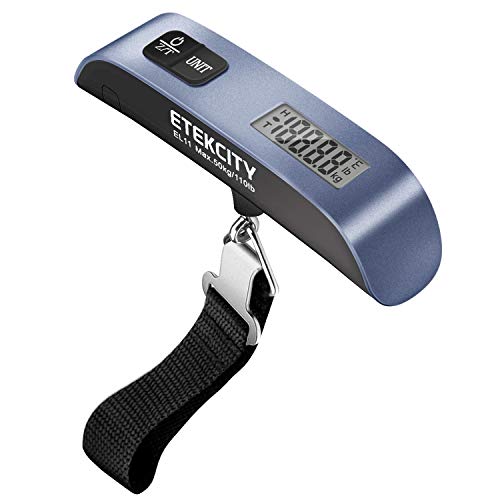
Packing for a trip is stressful enough without worrying about overweight baggage fees. A luggage scale is a small, affordable tool that can save you from surprise charges at the airport. But not all scales are created equal. Our editorial team compared specifications, buyer feedback and key decision factors to create this guide. Here is what you need to know before you buy.
Capacity: How Much Weight Can It Handle?
The first thing to check is the maximum weight a scale can measure. Most airlines allow 50 pounds (23 kilograms) for checked bags, but some budget carriers have lower limits, and others allow up to 70 pounds. A scale with a capacity of 50 to 110 pounds is common. For most travelers, a 50-pound scale is enough, but if you pack heavy or have large bags, a 110-pound model gives you more headroom.
Consider your own luggage. If you use a large suitcase that can weigh up to 80 pounds when fully packed, a 50-pound scale will be useless. Look for a scale that exceeds your typical bag weight by at least 10 pounds. Also, note that some scales have a minimum weight requirement, often around 0.5 pounds, so very light items may not register.
When comparing capacities, remember that a higher capacity does not mean better accuracy. A scale rated for 110 pounds may have the same 0.1-pound accuracy as a 50-pound model. The key is to choose a capacity that matches your needs without overpaying for unused range.
Accuracy: Why It Matters and What to Expect
Accuracy is the most critical feature. A difference of a few ounces can push you over the limit, so you want a scale that is reliable. Most digital luggage scales use a strain gauge sensor and are accurate to within 0.1 pound or 0.05 kilogram. That is precise enough for airline rules, which usually round to the nearest pound or kilogram.
However, accuracy can vary with usage. Hanging the bag so it swings will cause the reading to fluctuate. Always wait for the display to stabilize, and if your scale has a hold function, use it. Some scales also have a tare function that lets you zero out the weight of a strap or hook, which is useful if you attach a separate luggage strap.
To test accuracy, you can hang a known weight, like a dumbbell, to see if the reading matches. If you notice drift over time, replace the batteries, as low power can affect sensor performance. Also, avoid overloading the scale, as that can damage the sensor and lead to inaccurate readings.
Display Type: LCD, LED, and Backlight Options
The display is how you read the weight, so it should be clear and easy to see. Most scales use an LCD screen, which is low-power and readable in daylight. Some have a backlight for dark environments, which is handy if you weigh bags early in the morning or in a dim hallway. LED displays are less common but offer high contrast and are visible in any light.
Look for a display that shows the weight in both pounds and kilograms, especially if you travel internationally. Some scales have a switch to toggle between units. The size of the digits matters too. A large, bold display is easier to read when the scale is hanging at eye level. Also, consider the orientation: some displays are on the side, while others are on the top. Choose one that you can read comfortably while holding the bag.
Another feature to check is the hold function, which locks the reading on the screen for a few seconds after you stop weighing. This is essential because it is hard to look at the display while the bag is hanging. Some scales also have an auto-off feature to save battery, which is a nice convenience.
Size and Portability: Compactness for Travel
Since you will carry the scale with you, size and weight matter. Most luggage scales are small enough to fit in a pocket or a side compartment of your carry-on. They typically weigh between 3 and 6 ounces (85 to 170 grams). A compact design is great, but make sure the hook is sturdy enough to hold your bag. Some scales have a flat hook, while others have a rounded one that fits under the handle of a suitcase.
Consider the build quality. A scale with a plastic body is lightweight but may crack if dropped. A metal hook and reinforced frame add durability. Also, check the strap or lanyard that comes with the scale. Some models have a built-in tape measure that doubles as a strap, which is a space-saving feature.
When you travel, you will likely use the scale at home before you leave, and maybe at the hotel on the return trip. A scale that is easy to pack and quick to use will become a habit. Look for a scale that has a smooth, rounded shape so it does not snag on clothing or bag linings.
Extra Functions: Tape Measure, Temperature, and More
Many luggage scales come with additional features that can be useful, but they are not essential for everyone. A built-in tape measure is a common add-on. It helps you check the linear dimensions of your bag, which is the sum of length, width, and height. Some airlines have strict size limits, especially for carry-on bags. A tape measure saves you from carrying a separate one.
Another feature is a temperature display. This is less about luggage and more about knowing the weather at your destination. Some scales have a small thermometer that shows the ambient temperature. It is a gimmick for most, but if you travel to places with extreme climates, it might be a nice extra. However, it does not affect the weighing function, so do not pay extra for it unless you really want it.
Other functions to look for include a tare function, which lets you subtract the weight of a container or strap, and a hold button that locks the reading. Some scales have a low-battery indicator and an auto-off timer. While these are not critical, they improve usability. The key is to decide which features you will actually use. A simple, accurate scale is better than one with too many bells and whistles that you never touch.
Frequently Asked Questions
How do I use a luggage scale correctly?
To get an accurate reading, attach the scale's hook to the handle of your bag, then lift the scale by its top ring or handle. Hold the bag steady so it does not swing. Wait for the display to lock, which usually takes a few seconds. If your scale has a hold button, press it to freeze the reading. For best results, weigh the bag empty first to see the base weight, then add your items and weigh again.
Can I use a luggage scale for other purposes?
Yes, a luggage scale can weigh any item that you can hang, such as a backpack, a cooler, or even a fish you caught. However, it is not designed for weighing items that need a flat surface, like a suitcase on the floor. For those, you would need a bathroom scale. Also, avoid using it for items that are too heavy for the scale's capacity, as that can damage the sensor.
Are analog luggage scales as good as digital ones?
Analog scales use a spring mechanism and are often less accurate than digital scales. They can be affected by temperature and wear over time. Digital scales are more reliable and easier to read, and they usually have a hold function. Unless you prefer the vintage look or need a backup without batteries, a digital scale is the better choice.
In summary, a good luggage scale should have the right capacity for your bags, accurate readings, a clear display, and a compact design. Extra features like a tape measure can be handy, but they are not necessary. By focusing on these key factors, you can find a scale that helps you avoid overweight fees and travel with peace of mind. Check the current price on Amazon to see the latest options.
