OBD2 Scanners
Best OBD2 Scanners for DIY Car Diagnostics
7 picks compared
9 min read
ProductPickly is reader-supported. When you buy through links on our site, we may earn an affiliate commission at no extra cost to you. It never changes our picks.
The short answerFor most drivers the FOXWELL NT604 Elite is the best OBD2 scanner, reading engine, ABS, airbag and transmission codes with live data and no fees. The ANCEL AD310 is the budget pick, and BlueDriver is best if you prefer a wireless, phone-based tool.
?How we pickedWe compare published specifications, safety certifications and thousands of verified owner reviews, and we do not physically test every unit. Read the full process in our review methodology.
FOXWELL NT604 Elite
★★★★★ 4.7 / 5 Best overall
Reads engine, ABS, SRS airbag and transmission codes on a colour screen, with live data graphing. It covers the four systems most home mechanics actually need without a subscription.
Systems Engine, ABS, SRS, transLive data Yes, graphingType HandheldUpdates Free lifetime
- Four-system coverage, not just engine
- Live data with graphs
- No fees or subscription
- Wired, not wireless
- Menu takes a little learning
ANCEL AD310 Classic
★★★★★ 4.6 / 5 Best budget
A no-frills plug-in code reader that pulls and clears engine codes and shows freeze-frame data. For a first scanner to turn off a check-engine light, it is hard to beat.
Systems Engine onlyScreen MonochromeType HandheldPower From OBD2 port
- Very affordable
- Dead simple to use
- No batteries or app needed
- Engine codes only
- No live graphing
BlueDriver Bluetooth
★★★★★ 4.6 / 5 Best wireless
A Bluetooth dongle that pairs with its app to read all systems and generate repair reports, with no subscription. It suits owners who prefer their phone over a handheld.
Connection BluetoothSystems Engine, ABS, SRS +Reports Repair reportsFees None
- Full-system reads via app
- Repair reports with fixes
- No subscription
- Needs a phone or tablet
- Dongle can stay powered, drains battery if left in
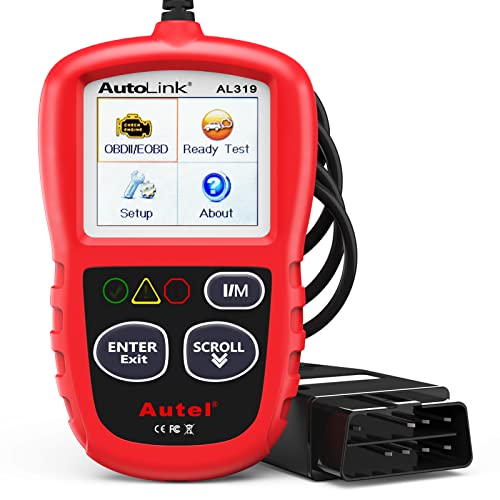
Autel AutoLink AL319
★★★★★ 4.6 / 5 Best simple reader
A one-button handheld that reads and clears engine codes and shows I/M readiness for emissions checks. A clean pick when you only want the basics done fast.
Systems Engine onlyReadiness I/M monitorsType HandheldUpdates Free
- One-button operation
- Shows emissions readiness
- Reliable brand
- No ABS or SRS
- No live graphing
Best for: Best simple reader
FIXD Bluetooth Sensor
★★★★★ 4.3 / 5 Best for beginners
A tiny Bluetooth sensor with a plain-English app that explains each code and its severity. It is aimed squarely at drivers who are not mechanics.
Connection BluetoothApp Plain-English codesSystems EngineExtras Maintenance alerts
- Explains codes in plain words
- Maintenance reminders
- Pocket-sized
- Some features push a paid tier
- Engine codes mainly
Best for: Best for beginners
FOXWELL NT301
★★★★★ 4.6 / 5 Best value with live data
A handheld that adds live sensor data and freeze-frame to basic code reading, at a mid price. A step up from a bare code reader without going pro.
Systems EngineLive data YesScreen ColourUpdates Free
- Live data at a fair price
- Colour screen and clear menus
- Free updates
- Engine system only
- No bidirectional tests
Best for: Best value with live data
TOPDON TopScan Lite
★★★★★ 4.5 / 5 Best bidirectional
A compact Bluetooth tool that adds bidirectional actuator tests and some service resets, which most cheap readers lack. Good for DIYers who tinker beyond codes.
Connection BluetoothBidirectional YesResets Oil, some servicesSystems Multi-system
- Bidirectional tests on a budget
- Service resets included
- Works through a phone app
- App-dependent
- Coverage varies by car
Best for: Best bidirectional
An OBD2 scanner turns a mystery warning light into a specific fault code, so you can decide whether it is a loose gas cap or a real repair. The right one depends on whether you just need to clear codes or want live data, ABS access, and actuator tests.
What to look for in an OBD2 scanner
Start with system coverage. Cheap readers handle engine codes only, while multi-system tools add ABS, airbag, and transmission, which is where the useful diagnostics live. Next, decide between a handheld and a Bluetooth dongle: handhelds are instant and self-contained, dongles lean on your phone for a bigger screen and plain-English explanations. Confirm the tool offers free updates and no subscription, since recurring fees add up fast on a device you use a few times a year.
Code reading vs live data vs bidirectional
Three tiers separate these tools. A basic reader pulls and clears stored codes, enough to reset a check-engine light. Live data adds real-time sensor readings, so you can watch fuel trims or coolant temperature while the engine runs. Bidirectional control goes further and commands parts directly, letting you cycle an ABS pump or test an injector to prove a diagnosis. Match the tier to how deep you plan to go under the hood.
Emissions readiness and passing inspection
Before a smog or state inspection, a scanner that shows I/M readiness monitors saves a wasted trip. It tells you whether the car has completed the self-tests inspectors check. If you recently cleared codes or replaced the battery, those monitors reset and need a few drive cycles to complete, so scan first and drive the car before you queue at the test centre.
Common mistakes to avoid
Do not buy a bare engine reader if the light that worries you is ABS or airbag, because it simply will not see those codes. Avoid leaving a Bluetooth dongle plugged in permanently, as some keep drawing power and can flatten a battery over weeks. And never clear a code without diagnosing the cause first, or you erase the evidence and the fault returns on the next drive.
Questions people ask
What does an OBD2 scanner actually do?
It plugs into the OBD2 port under your dashboard and reads the diagnostic trouble codes your car stores when a warning light appears. Better tools also show live sensor data, clear codes, and check emissions readiness. That turns a vague check-engine light into a specific starting point for the repair.
Where is the OBD2 port on my car?
On almost every car built for the US since 1996, the 16-pin port sits under the dashboard on the driver's side, near the steering column. Some hide it behind a small cover or ashtray. If you cannot find it, your owner's manual lists the exact spot.
Do I need a Bluetooth scanner or a handheld one?
Handhelds work on their own and boot instantly, which suits quick roadside checks. Bluetooth dongles use your phone's screen and app, often with clearer explanations and repair reports. Pick a handheld for simplicity, a dongle if you want your phone to do the reading.
What is a bidirectional scan tool?
A bidirectional tool can command components, not just read them. It can cycle an ABS pump, test an injector, or run an actuator, which helps confirm a part is the fault. Basic code readers only read and clear codes, so bidirectional tools cost more.
Will a cheap scanner read ABS and airbag codes?
Usually not. Entry code readers like the ANCEL AD310 handle engine codes only. For ABS and SRS airbag codes you need a multi-system tool such as the FOXWELL NT604 Elite or BlueDriver. Check the system list before buying if those lights concern you.
Do OBD2 scanners work on every car?
Any petrol car sold in the US from 1996 and diesel from 2008 supports OBD2, so basic engine reading is near universal. Advanced functions like ABS resets depend on the tool's coverage for your make. Heavy trucks need a dedicated heavy-duty scanner instead.
Can an OBD2 scanner clear a check-engine light for good?
It can clear the code and turn the light off, but if the underlying fault remains, the light returns after a few drive cycles. Use the scanner to find and fix the cause first, then clear the code to confirm the repair worked.
Are subscription-free scanners better?
For most owners, yes. Tools like BlueDriver and the FOXWELL handhelds give full function without recurring fees. Some app-based sensors lock useful features behind a paid tier, so read what the free version includes before you rely on it.
The bottom lineSo which one?
Buy the FOXWELL NT604 Elite for the most useful coverage without a subscription. Choose the ANCEL AD310 if you only need to read and clear engine codes cheaply, and BlueDriver if you want full-system diagnostics through your phone.