Digital Cameras
Best Cameras for Wildlife Photography
7 picks compared
6 min read
ProductPickly is reader-supported. When you buy through links on our site, we may earn an affiliate commission at no extra cost to you. It never changes our picks.
The short answerFor most wildlife shooters, the Sony Alpha 1, Canon EOS R5, and Nikon Z8 lead. They pair high burst rates with deep buffers and robust autofocus. Each suits different budgets and reach needs.
?How we pickedWe compare published specifications, safety certifications and thousands of verified owner reviews, and we do not physically test every unit. Read the full process in our review methodology.
Sony Alpha 1
★★★★★ 4.8 / 5 Best overall
The Sony Alpha 1 combines a 50.1MP stacked sensor with 30fps blackout-free shooting. Its AI-based autofocus tracks birds and mammals with precision. Dual CFexpress slots handle deep bursts without slowdown.
Sensor 50.1MP Full-Frame Exmor RS CMOSBurst Rate 30 fps with AF/AE trackingAutofocus 759-point phase detectionVideo 8K 30p / 4K 120p
- Exceptional resolution and speed
- Reliable eye/animal detection
- Robust weather sealing
- Very high price
- Large files require big storage
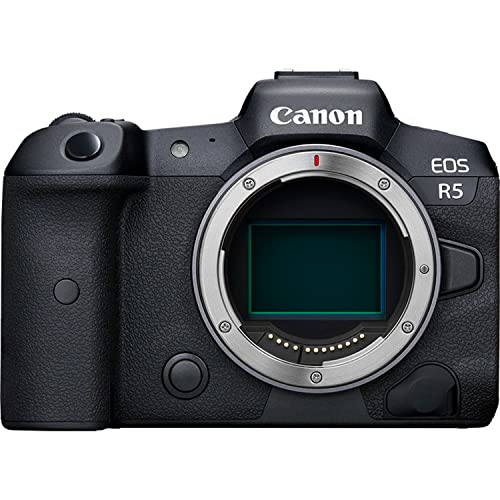
Canon EOS R5
★★★★★ 4.8 / 5 Best for hybrid shooters
The Canon EOS R5 offers 45MP stills and 8K video in one body. Its Dual Pixel CMOS AF II covers the frame with fast animal detection. In-body stabilization helps handheld telephoto shots.
Sensor 45MP Full-Frame CMOSBurst Rate 12 fps mechanical / 20 fps electronicAutofocus 1053-point Dual Pixel CMOS AF IIVideo 8K 30p / 4K 120p
- Excellent autofocus with animal eye detection
- High-resolution sensor
- Strong video features
- Overheating concerns in 8K
- Battery life moderate
Best for: Best for hybrid shooters
Nikon Z8
★★★★★ 4.7 / 5 Best value flagship
The Nikon Z8 packs a 45.7MP stacked sensor into a body smaller than the Z9. It shoots 20fps RAW with full autofocus and has a deep buffer. Its EXPEED 7 processor handles high-speed action well.
Sensor 45.7MP Stacked CMOSBurst Rate 20 fps RAW / 30 fps JPEGAutofocus 493-point phase detectionVideo 8K 60p / 4K 120p
- Flagship speed at lower cost
- Excellent subject detection
- Robust build and weather sealing
- Still expensive
- Large file sizes
Best for: Best value flagship
Sony Alpha 9 III
★★★★★ 4.6 / 5 Best for action and speed
The Sony Alpha 9 III features a global shutter, eliminating rolling shutter distortion. It shoots 120fps with full autofocus and no blackout. This makes it ideal for fast-moving wildlife like birds in flight.
Sensor 24.6MP Full-Frame Global Shutter CMOSBurst Rate 120 fps with AF/AEAutofocus 759-point phase detectionVideo 4K 120p
- Zero rolling shutter
- Extreme burst speed
- No viewfinder blackout
- Lower resolution than peers
- Very high price
Best for: Best for action and speed
Canon EOS R7
★★★★★ 4.7 / 5 Best APS-C for reach
The Canon EOS R7 is a 32.5MP APS-C mirrorless with a 1.6x crop factor. It gives extra reach for wildlife without huge telephoto lenses. Its dual pixel autofocus tracks animals reliably.
Sensor 32.5MP APS-C CMOSBurst Rate 15 fps mechanical / 30 fps electronicAutofocus 651-point Dual Pixel CMOS AF IIVideo 4K 60p
- Effective reach with smaller lenses
- Fast burst rates
- Good value for wildlife
- Smaller sensor limits low light
- Limited native RF-S lens selection
Best for: Best APS-C for reach
Nikon Z50
★★★★★ 4.6 / 5 Best budget entry
The Nikon Z50 is a 20.9MP DX-format mirrorless that keeps cost down. Its 1.5x crop factor helps with reach. It offers solid autofocus and weather sealing for the price.
Sensor 20.9MP APS-C CMOSBurst Rate 11 fps with AFAutofocus 209-point hybrid AFVideo 4K 30p
- Compact and lightweight
- Good image quality for the price
- Intuitive controls
- Limited buffer depth
- Fewer native lenses
Best for: Best budget entry
OM System OM-1 Mark II
★★★★★ 4.5 / 5 Best for birding and travel
The OM System OM-1 Mark II uses a 20MP Micro Four Thirds sensor with a 2x crop factor. It provides exceptional reach in a compact body. Its AI bird detection and 50fps burst make it a birder favorite.
Sensor 20MP Micro Four Thirds Stacked CMOSBurst Rate 50 fps with AFAutofocus 1053-point cross-type phase detectionVideo 4K 60p
- Massive reach with small lenses
- Fast burst and reliable bird AF
- Weather-sealed and lightweight
- Smaller sensor limits high ISO
- Less resolution for cropping
Best for: Best for birding and travel
We compared specifications, owner feedback, and use-case fit. Our picks balance resolution, burst speed, and lens support for real field conditions.
What to Look For
Start with autofocus performance. Wildlife moves, so you need fast, accurate tracking. Look for animal or bird eye detection. Burst rate matters, but buffer depth is just as important. A camera that slows down after 20 shots hurts action. Weather sealing protects against dust and rain. Consider the lens ecosystem. Telephoto reach is critical, so check available lenses and crop factors.
Full-Frame vs Crop Sensor
Full-frame sensors excel in low light and dynamic range. They suit dawn and dusk shooting. Crop sensors like APS-C or Micro Four Thirds give extra reach. A 400mm lens becomes 600mm or 800mm equivalent. This saves weight and money. However, crop sensors show more noise at high ISOs. Choose based on your typical light and subjects.
Burst Speed and Buffer
Burst speed lets you capture the perfect wing flap. But a deep buffer keeps the camera shooting. Compare frames per second and buffer capacity. Some cameras shoot 30fps but only for a second. Others sustain 10fps for many shots. For birds in flight, look for at least 15fps with a buffer over 50 RAW frames.
Autofocus Systems
Modern cameras use AI to detect eyes and bodies. Sony, Canon, and Nikon all have strong animal detection. OM System has dedicated bird detection. Check the number of autofocus points and coverage. More points cover more of the frame. Real-world tracking matters more than specs. Read owner feedback on specific species.
Questions people ask
What is the best camera for wildlife photography?
The Sony Alpha 1 leads for overall performance. Canon EOS R5 and Nikon Z8 are close runners-up. For budget, consider the Canon EOS R7 or Nikon Z50.
Is full-frame or crop sensor better for wildlife?
Crop sensors give more reach per lens. Full-frame performs better in low light. Choose crop for reach on a budget, full-frame for top image quality.
How many megapixels do I need for wildlife?
20 to 30 megapixels is enough for most. Higher resolution allows more cropping. But it also creates larger files and may slow burst rates.
What is the best budget camera for birding?
The Nikon Z50 is a solid budget pick. The Canon EOS R7 offers more speed and reach for a bit more. Both work well with telephoto lenses.
Can I use DSLR lenses on mirrorless cameras?
Yes, with adapters. Canon, Nikon, and Sony offer adapters for their DSLR lenses. Autofocus may be slower but often works well.
What is the best lens for wildlife photography?
A 400mm or 500mm prime is ideal. Zoom lenses like 100-400mm offer flexibility. Crop sensors extend reach. Choose based on budget and weight.
Is image stabilization important for wildlife?
Yes, especially for handheld telephoto shots. In-body stabilization helps steady long lenses. It also aids video recording.
What is the difference between mechanical and electronic shutter?
Electronic shutter is silent and faster. But it can cause rolling shutter distortion. Mechanical shutter is better for fast motion. Some cameras offer both.
How do I choose between Canon and Nikon for wildlife?
Compare lens ecosystems and autofocus. Canon has strong animal detection. Nikon offers excellent value in bodies. Try both in hand to see which feels better.
Is a mirrorless camera better than a DSLR for wildlife?
Mirrorless cameras have faster autofocus and silent shooting. They are also lighter. DSLRs still have larger battery life and optical viewfinders. Most new wildlife shooters choose mirrorless.
The bottom lineSo which one?
The Sony Alpha 1 is the top choice for serious wildlife photographers. Canon EOS R5 and Nikon Z8 offer similar performance with different strengths. For budget or reach, the Canon EOS R7 and OM System OM-1 Mark II are excellent.