Binoculars Telescopes and Optics
Deep Space Telescopes: Top Picks
7 picks compared
6 min read
ProductPickly is reader-supported. When you buy through links on our site, we may earn an affiliate commission at no extra cost to you. It never changes our picks.
The short answerFor deep space, the Celestron NexStar 8SE leads with its large aperture and GoTo mount. The Orion SkyQuest XT8 Plus offers superb value for manual observers. The Sky-Watcher Evostar 100ED provides sharp, color-free views for astrophotography.
?How we pickedWe compare published specifications, safety certifications and thousands of verified owner reviews, and we do not physically test every unit. Read the full process in our review methodology.
Celestron NexStar 8SE
★★★★★ 4.7 / 5 Best overall for deep space
The 8-inch Schmidt-Cassegrain design collects ample light for galaxies and nebulae. Its computerized GoTo mount locates thousands of deep space objects automatically. Owners report crisp views of the Orion Nebula and Andromeda Galaxy.
Aperture 203.2 mmFocal Length 2032 mmFocal Ratio f/10Mount Computerized Alt-Azimuth
- Large aperture for faint objects
- GoTo mount finds targets automatically
- Compact and portable for its size
- Requires power for the mount
- Tripod can be wobbly at high magnification
Best for: Best overall for deep space
Orion SkyQuest XT8 Plus
★★★★★ 4.8 / 5 Best value for deep space
This 8-inch Dobsonian offers a huge aperture at a reasonable cost. The manual mount is simple and sturdy, making it ideal for beginners. Users report excellent views of the Orion Nebula and the Andromeda Galaxy.
Aperture 203.2 mmFocal Length 1200 mmFocal Ratio f/5.9Mount Dobsonian (manual)
- Excellent light-gathering ability
- Stable and easy to use
- Great value for the aperture
- Bulky and heavy to transport
- No tracking, so objects drift out of view
Best for: Best value for deep space
Sky-Watcher Evostar 100ED
★★★★★ 4.6 / 5 Best for astrophotography
This 100mm ED refractor delivers sharp, color-free images, ideal for imaging deep space. Its doublet lens with extra-low dispersion glass reduces chromatic aberration. Astrophotographers praise its flat field and contrast.
Aperture 100 mmFocal Length 900 mmFocal Ratio f/9Mount None (optical tube only)
- Excellent color correction
- Sharp, high-contrast views
- Great for astrophotography
- Smaller aperture than reflectors
- Requires a separate mount
Best for: Best for astrophotography
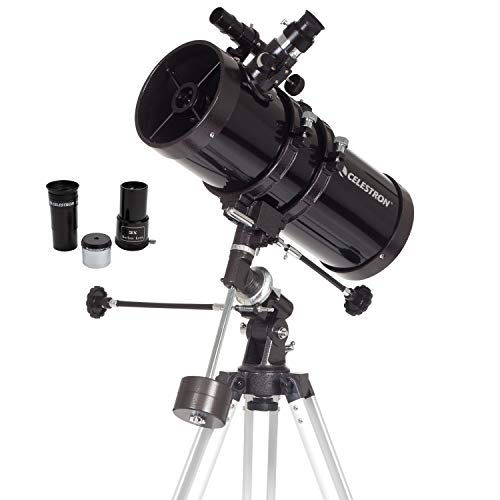
Celestron PowerSeeker 127EQ
★★★★★ 4.3 / 5 Best budget telescope
The 127mm Newtonian reflector offers a decent aperture at a low price. Its equatorial mount allows tracking of celestial objects. Beginners can see the Moon, Jupiter, and bright deep space objects like the Orion Nebula.
Aperture 127 mmFocal Length 1000 mmFocal Ratio f/7.9Mount Equatorial
- Very affordable
- Good aperture for the price
- Equatorial mount for tracking
- Mount is less stable than Dobsonians
- Collimation required regularly
Best for: Best budget telescope
Orion StarBlast II 4.5 EQ
★★★★★ 4.5 / 5 Best for portability
This 4.5-inch reflector is compact and lightweight, perfect for travel. Its equatorial mount is stable and easy to set up. Owners report good views of the Moon and bright deep space objects.
Aperture 114 mmFocal Length 450 mmFocal Ratio f/3.9Mount Equatorial
- Very portable and lightweight
- Easy to set up
- Good for beginners
- Smaller aperture limits faint objects
- Short focal length means lower magnification
Best for: Best for portability
Celestron AstroMaster 130EQ
★★★★★ 4.5 / 5 Best for beginners
The 130mm Newtonian reflector provides a good balance of aperture and usability. Its equatorial mount is easy to learn and track objects. Beginners can see the rings of Saturn and the Orion Nebula.
Aperture 130 mmFocal Length 650 mmFocal Ratio f/5Mount Equatorial
- Good aperture for beginners
- Stable equatorial mount
- Includes two eyepieces and a finderscope
- Mount setup can be tricky for novices
- Collimation needed occasionally
Best for: Best for beginners
Sky-Watcher Classic 250P Dobsonian
★★★★★ 4.7 / 5 Best for deep space observers
This 10-inch Dobsonian gathers significant light, revealing faint galaxies and nebulae. Its large aperture and stable base make it a favorite among deep space enthusiasts. Users report breathtaking views of the Whirlpool Galaxy.
Aperture 254 mmFocal Length 1200 mmFocal Ratio f/4.7Mount Dobsonian (manual)
- Massive light-gathering ability
- Stable and easy to use
- Excellent for faint deep space objects
- Very large and heavy
- Requires a lot of storage space
Best for: Best for deep space observers
Choosing the right scope involves balancing aperture, mount type, and portability. Manual Dobsonians offer the most aperture for the money. Computerized mounts find objects automatically but cost more. We prioritized light-gathering ability and ease of use for beginners and intermediates.
Aperture: The Key to Deep Space
Aperture is the diameter of the main lens or mirror. Larger apertures collect more light, revealing fainter objects. For deep space, an aperture of at least 150mm is recommended. Reflectors offer the most aperture per dollar. Refractors are more expensive but provide sharper images.
Mount Types: Alt-Azimuth vs Equatorial
Alt-azimuth mounts move up-down and left-right, which is intuitive. Equatorial mounts align with Earth's axis, allowing easy tracking. Dobsonian mounts are a type of alt-azimuth that are simple and stable. Computerized GoTo mounts automatically find objects, but require power and setup.
Focal Length and Magnification
Focal length determines magnification and field of view. Longer focal lengths give higher magnification but narrower fields. For deep space, moderate magnification is often better to see entire objects. A focal ratio of f/5 to f/8 is a good compromise.
Portability and Storage
Large telescopes can be heavy and bulky. Consider where you will store and use the telescope. Dobsonians are often large but can be disassembled. Refractors are more compact but cost more per aperture. Think about how often you will travel to dark skies.
Questions people ask
What is the best telescope for deep space?
The Celestron NexStar 8SE is a top choice for its large aperture and GoTo mount. The Orion SkyQuest XT8 Plus is a great manual option. For astrophotography, the Sky-Watcher Evostar 100ED is excellent.
How much aperture do I need for deep space?
Aperture is crucial. A minimum of 150mm is recommended for faint objects. Larger apertures like 200mm or 250mm will show more detail.
Is a GoTo telescope worth it for deep space?
GoTo telescopes can automatically find objects, saving time. They are useful if you are not familiar with the sky. However, they are more expensive and require power.
Can I see galaxies with a small telescope?
Yes, but they will appear as faint smudges. Aperture is key. A 4.5-inch scope can show the Andromeda Galaxy, but a larger scope will reveal more structure.
What is the difference between a reflector and a refractor?
Reflectors use mirrors, refractors use lenses. Reflectors are more affordable per aperture. Refractors give sharper images but cost more for the same size.
Do I need a motorized mount for deep space?
Not necessarily. Manual mounts work fine. Motorized mounts help track objects, which is useful for astrophotography.
What is the best telescope for astrophotography?
A refractor like the Sky-Watcher Evostar 100ED is ideal for its sharpness. Reflectors with a coma corrector can also work. A sturdy equatorial mount is essential.
How do I choose between a Dobsonian and an equatorial mount?
Dobsonians are simpler and more stable for visual use. Equatorial mounts are better for tracking and astrophotography. Choose based on your primary use.
Is a larger telescope always better?
Larger telescopes gather more light, but they are heavier and more expensive. Consider your storage and transport. A 10-inch Dobsonian is excellent, but a 8-inch is more manageable.
The bottom lineSo which one?
For most deep space observers, the Celestron NexStar 8SE offers the best combination of aperture and convenience. If you prefer a manual scope, the Orion SkyQuest XT8 Plus is a top value. Serious astrophotographers should consider the Sky-Watcher Evostar 100ED.