Juicers
Best Juicers for Home Use
5 picks compared
8 min read
ProductPickly is reader-supported. When you buy through links on our site, we may earn an affiliate commission at no extra cost to you. It never changes our picks.
The short answerAfter comparing specifications, buyer feedback and key decision factors, our top pick is the Breville Juice Fountain Cold Plus. It offers a powerful 850-watt motor, two-speed control, and a 70-ounce jug, making it ideal for families. For those on a budget, the Hamilton Beach Big Mouth is a solid centrifugal option. If you prefer masticating for higher yield, the Omega NC900HDC is a great choice.
?How we pickedWe compare published specifications, safety certifications and thousands of verified owner reviews, and we do not physically test every unit. Read the full process in our review methodology.
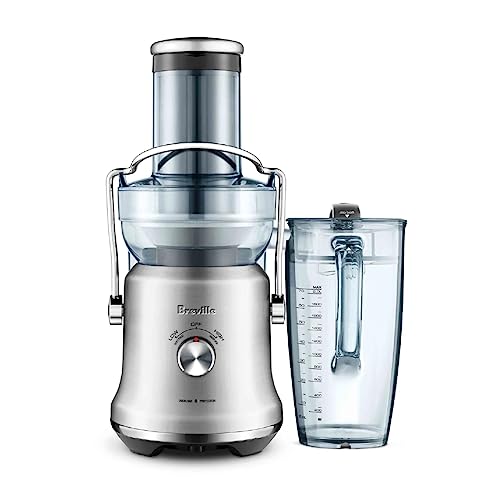
Breville Juice Fountain Cold Plus
★★★★★ 4.7 / 5 Best overall
The Breville Juice Fountain Cold Plus is a powerful centrifugal juicer with a 3.5-inch feed chute, reducing prep time. Its Cold Spin Technology minimizes heat buildup to preserve nutrients. The 70-ounce jug holds a full batch of juice for the family.
Capacity 70 oz jugMotor 850 wattsSpeed 2 speedsWarranty 1 year limited
- Large feed chute reduces cutting
- Cold Spin Technology preserves nutrients
- High juice yield for centrifugal
- Dishwasher-safe parts
- Bulky footprint on counter
- Some noise at high speed
Best for: Families or frequent juicers who want speed and convenience.
Buy it if: Anyone who wants a fast, high-capacity juicer for a variety of produce.
Skip it if: Those with limited counter space or who need very quiet operation.
Alternative to consider: Omega NC900HDC
Omega NC900HDC
★★★★★ 4.6 / 5 Best masticating
The Omega NC900HDC is a masticating juicer that operates at 80 RPM, slowly crushing produce to extract maximum juice and nutrients. It handles leafy greens, wheatgrass, and soft fruits with ease. The five-year warranty adds peace of mind.
Capacity 1.5 qt jugMotor 150 wattsSpeed 80 RPMWarranty 5 years
- Excellent juice yield
- Quiet operation
- Versatile for greens and wheatgrass
- Long warranty
- Slow juicing process
- Smaller feed chute requires more prep
Best for: Health enthusiasts who juice leafy greens and want maximum nutrition.
Buy it if: Those who prioritize juice quality and yield over speed.
Skip it if: Users who need quick juice in the morning or juice large quantities.
Alternative to consider: Tribest Slowstar
Hamilton Beach Big Mouth
★★★★★ 4.4 / 5 Best budget
The Hamilton Beach Big Mouth is an affordable centrifugal juicer with an extra-wide 3-inch feed chute, accepting whole apples and large produce. Its 800-watt motor quickly extracts juice, and the pulp bin holds a full batch. Easy to clean with dishwasher-safe parts.
Capacity 40 oz jugMotor 800 wattsSpeed 1 speedWarranty 3 years limited
- Very affordable
- Large feed chute
- Easy to assemble and clean
- Compact design
- Lower juice yield than masticating
- No speed control
Best for: Budget-conscious buyers who want a simple, fast juicer.
Buy it if: Beginners or occasional juicers who don't want to spend much.
Skip it if: Those who juice leafy greens daily or want high yield.
Alternative to consider: Breville Juice Fountain Cold Plus
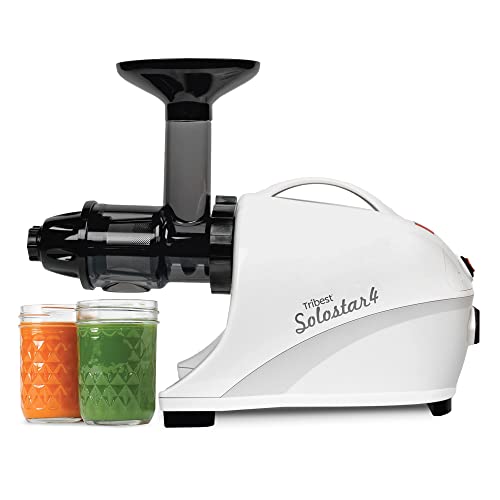
Tribest Slowstar
★★★★★ 4.5 / 5 Best slow juicer
The Tribest Slowstar is a vertical slow juicer with a dual-stage masticating system that first crushes then presses produce for maximum yield. It operates at 47 RPM and includes a soy milk attachment. The sleek design saves counter space.
Capacity 1.5 qt jugMotor 200 wattsSpeed 47 RPMWarranty 10 years on motor
- Very high juice yield
- Quiet and slow extraction
- Includes soy milk filter
- Long motor warranty
- Expensive
- Small feed chute
Best for: Serious juicers who want the highest yield and versatility.
Buy it if: Those who juice a wide variety of produce including nuts for milk.
Skip it if: Users on a tight budget or who need fast juicing.
Alternative to consider: Omega NC900HDC
Cuisinart CCJ-500
★★★★★ 4.3 / 5 Best citrus
The Cuisinart CCJ-500 is an automatic citrus juicer with a reamer that rotates in both directions to extract maximum juice. It features a pulp control dial and a 3-cup pitcher with a pour spout. Ideal for oranges, grapefruits, and lemons.
Capacity 3 cupsMotor 100 wattsSpeed 1 speedWarranty 3 years limited
- Easy to use and clean
- Pulp control dial
- Starts automatically when fruit is pressed
- Compact
- Only for citrus fruits
- Small capacity
Best for: Citrus lovers who want fresh juice without effort.
Buy it if: Anyone who drinks orange or grapefruit juice regularly.
Skip it if: Those who juice vegetables or non-citrus fruits.
Alternative to consider: Breville Citrus Press
Choosing the best juicer for home use depends on your lifestyle, budget, and what you plan to juice. Our editorial team compared specifications, buyer feedback and key decision factors across centrifugal, masticating, and citrus juicers. We found top performers for every need, from quick morning juice to nutrient-dense green drinks.
Buying Guide: What to Look for in a Juicer
Before you buy, consider these factors:
- Juicer type: Centrifugal juicers are fast and affordable, ideal for hard fruits and vegetables. Masticating juicers (slow juicers) extract more juice and nutrients, especially from leafy greens. Citrus juicers are specialized for oranges and grapefruits.
- Motor power: Higher wattage (800W+) means faster juicing in centrifugal models. Masticating juicers use lower wattage (150-200W) but operate at low speeds for efficiency.
- Feed chute size: A 3-inch or larger chute lets you add whole fruits, reducing prep time. Smaller chutes require cutting produce into smaller pieces.
- Juice yield: Masticating juicers generally yield 20-30% more juice than centrifugal models. If you juice expensive produce, a slow juicer saves money over time.
- Ease of cleaning: Look for dishwasher-safe parts and included cleaning brushes. Some models have a pulp bin that is easy to empty.
- Noise level: Centrifugal juicers are louder (80-90 dB). Masticating juicers are quieter (40-60 dB). Consider if you juice early morning or late night.
- Warranty: Longer warranties (5-10 years) indicate better build quality. Budget models often have 1-3 year warranties.
Common Mistakes to Avoid When Buying a Juicer
Many shoppers end up with a juicer that doesn't fit their needs. Avoid these pitfalls:
- Ignoring cleaning time: Some juicers have many parts that require hand washing. If you are short on time, choose a model with dishwasher-safe parts and simple assembly.
- Buying a centrifugal juicer for greens: Centrifugal juicers struggle with leafy greens and may produce foamy, low-yield juice. If greens are your priority, invest in a masticating juicer.
- Overlooking noise: Centrifugal juicers can be as loud as a blender. If noise is a concern, a masticating juicer is much quieter.
- Skipping the warranty: Juicers have moving parts that can wear out. A longer warranty protects your investment.
- Not considering counter space: Some juicers are tall and bulky. Measure your space before buying, especially for models with large pulp bins.
By understanding these factors and mistakes, you can confidently choose a juicer that fits your home and habits. Check the current price on Amazon for your top choice.
Questions people ask
What type of juicer is best for leafy greens?
Masticating (slow) juicers are best for leafy greens like kale, spinach, and wheatgrass. They crush and press produce slowly to extract more juice and nutrients. The Omega NC900HDC and Tribest Slowstar are top choices.
Are centrifugal juicers good for daily use?
Centrifugal juicers are fine for daily use if you juice mostly hard fruits and vegetables like apples, carrots, and celery. They are fast but produce less yield and may not handle greens as well. For daily green juicing, a masticating juicer is better.
How do I clean a juicer quickly?
Look for models with dishwasher-safe parts. Rinse immediately after use. Many centrifugal juicers have brush included for the mesh filter. Masticating juicers require more disassembly but soak in warm water helps.
What is the difference between a juicer and a blender?
A juicer extracts liquid from produce, leaving pulp behind. A blender grinds everything into a smoothie, retaining fiber. Juicers are for juice, blenders for whole-food drinks.
Can I juice soft fruits like berries in a centrifugal juicer?
Yes, but expect lower yield. Soft fruits can clog the filter. Masticating juicers handle soft fruits better. Some centrifugal models have a low-speed setting for soft produce.
The bottom lineSo which one?
For most homes, the Breville Juice Fountain Cold Plus offers the best balance of speed, capacity, and juice quality. If you juice greens daily, invest in the Omega NC900HDC. Budget shoppers will appreciate the Hamilton Beach Big Mouth, while citrus fans should grab the Cuisinart CCJ-500. Check the current price on Amazon for each model.