Juicers
Juicers Compared: Best Masticating vs Centrifugal
7 picks compared
6 min read
ProductPickly is reader-supported. When you buy through links on our site, we may earn an affiliate commission at no extra cost to you. It never changes our picks.
The short answerFor most households, the Omega NC900HDC masticating juicer offers the best balance of yield and versatility. The Breville 800JEXL centrifugal juicer is the fastest option for everyday fruits. Budget buyers should consider the Hamilton Beach 67608A for basic juice needs.
?How we pickedWe compare published specifications, safety certifications and thousands of verified owner reviews, and we do not physically test every unit. Read the full process in our review methodology.
Omega NC900HDC
★★★★★ 4.7 / 5 Best overall
The Omega NC900HDC is a slow masticating juicer that excels at leafy greens and wheatgrass. It operates at 80 RPM, which minimizes heat buildup and oxidation. Owners report high juice yields and easy cleanup with the included brush.
Type MasticatingMotor 2 HPSpeed 80 RPMWarranty 15 years
- High yield on leafy greens
- Quiet operation
- Long warranty
- Slow juicing process
- Small feed chute
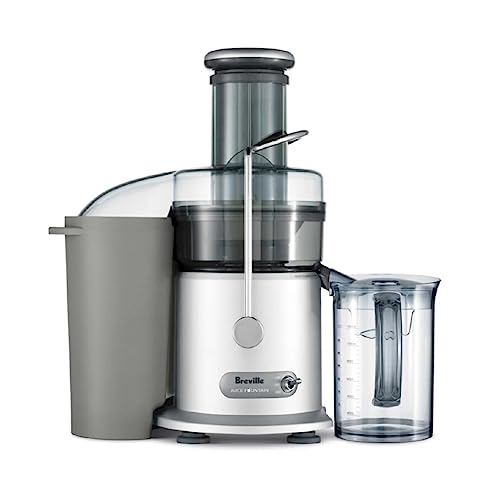
Breville 800JEXL
★★★★★ 4.6 / 5 Best for speed
The Breville 800JEXL is a powerful centrifugal juicer with a 1,200-watt motor. It juices whole fruits and vegetables quickly thanks to a 3-inch feed chute. The Italian-made mesh filter and titanium-plated cutting disc enhance durability.
Type CentrifugalPower 1200 wattsFeed Chute 3 inchesMaterial Die-cast metal
- Fast juicing
- Large feed chute
- Sturdy build
- Loud operation
- Not ideal for leafy greens
Hamilton Beach 67608A
★★★★★ 4.4 / 5 Best budget
The Hamilton Beach 67608A is a budget-friendly centrifugal juicer with a 400-watt motor. It features a 3-inch feed chute and a pulp container that holds up to 32 ounces. The dishwasher-safe parts simplify cleanup.
Type CentrifugalPower 400 wattsFeed Chute 3 inchesPulp Container 32 oz
- Low price
- Dishwasher-safe parts
- Compact size
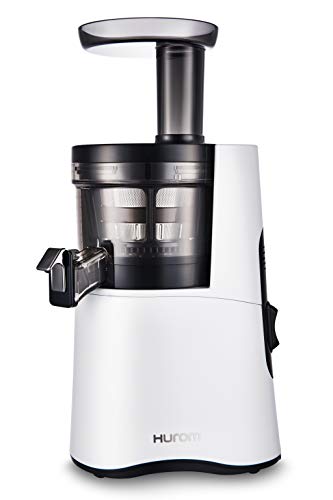
Hurom H-AA Slow Juicer
★★★★★ 4.7 / 5 Best for leafy greens
The Hurom H-AA is a slow juicer that uses a rotating auger to crush produce gently. It operates at 43 RPM, preserving nutrients and maximizing juice extraction from spinach and kale. The vertical design saves counter space.
Type Masticating (vertical)Speed 43 RPMFeed Chute NarrowWarranty 10 years
- Excellent leafy green yield
- Quiet
- Compact footprint
- Expensive
- Slow for large quantities
Best for: Best for leafy greens
Breville JE98XL
★★★★★ 4.5 / 5 Best value
The Breville JE98XL is a mid-range centrifugal juicer with a 700-watt motor and a 3-inch feed chute. It includes a 70-ounce juice jug and a 2-liter pulp container. The Italian-made micro mesh filter is durable and easy to clean.
Type CentrifugalPower 700 wattsFeed Chute 3 inchesJuice Jug 70 oz
- Good juice quality
- Large capacity
- Reasonable price
Tribest GSE-5000
★★★★★ 4.5 / 5 Best for citrus
The Tribest GSE-5000 is a manual citrus press that extracts juice from oranges, lemons, and grapefruits. It uses a gear-driven mechanism to apply pressure evenly, maximizing yield. The stainless steel construction is built to last.
Type Manual citrus pressMaterial Stainless steelCapacity One fruit at a timeWarranty 5 years
- High citrus yield
- No electricity needed
- Durable
- Manual effort
- Only for citrus
Best for: Best for citrus
NutriBullet Juicer Pro
★★★★★ 4.3 / 5 Best for beginners
The NutriBullet Juicer Pro is a centrifugal juicer with a 1,000-watt motor and a 3-inch feed chute. It features a simple two-speed control and a 32-ounce juice pitcher. The dishwasher-safe parts make it easy for new users.
Type CentrifugalPower 1000 wattsFeed Chute 3 inchesJuice Pitcher 32 oz
- Easy to use
- Fast juicing
- Simple cleanup
- Average yield
- Not for leafy greens
Best for: Best for beginners
Centrifugal juicers are fast but can struggle with leafy greens. Masticating juicers extract more juice but take longer. Our picks cover both types and different budgets.
How to choose a juicer type
Centrifugal juicers spin at high speed to shred produce and separate juice. They work fast but generate heat and foam, which can reduce nutrient quality. Masticating juicers crush and press at low speed, yielding more juice and preserving enzymes. They handle leafy greens and wheatgrass better but take longer. Consider your primary produce and time constraints.
Key specifications to compare
Motor power ranges from 200 to 1,200 watts. Higher wattage generally means faster juicing but also more noise. Feed chute diameter affects prep time; a 3-inch chute accepts whole apples. Speed matters for oxidation; slower speeds reduce nutrient loss. Check warranty length, as masticating juicers often come with 10 to 15 years.
Matching a juicer to your lifestyle
If you juice daily for a family, a large-capacity centrifugal model saves time. For health-focused users who want leafy greens, a slow masticating juicer is better. Budget buyers can find reliable centrifugal models under a reasonable price. Citrus lovers might prefer a dedicated press for maximum yield and ease.
Maintenance and cleaning considerations
Juicers with multiple parts require more cleanup time. Look for dishwasher-safe components and included brushes. Some models have self-cleaning features, but manual rinsing is often needed. Pulp containers vary in size; larger ones reduce emptying frequency. Consider how much time you are willing to spend on maintenance.
Questions people ask
What is the difference between a masticating and centrifugal juicer?
Masticating juicers crush and press produce at low speed, yielding more juice and preserving nutrients. Centrifugal juicers shred at high speed, which is faster but generates heat and may reduce nutrient quality.
Which juicer is best for leafy greens?
Masticating juicers like the Hurom H-AA or Omega NC900HDC are best for leafy greens because they extract juice efficiently without clogging.
Can a centrifugal juicer handle wheatgrass?
Most centrifugal juicers struggle with wheatgrass due to the high speed and dry pulp. A masticating juicer is recommended for wheatgrass.
Is a slow juicer worth the extra cost?
Slow juicers are worth it if you juice leafy greens regularly or want higher yield and nutrient retention. They are quieter but slower.
How do I clean a juicer quickly?
Rinse parts immediately after use and use a brush for mesh filters. Many parts are dishwasher-safe, but hand washing may be faster.
What is the average lifespan of a juicer?
Centrifugal juicers last 3 to 5 years with proper care. Masticating juicers often last 10 years or more due to robust construction.
Can I juice citrus fruits in a masticating juicer?
Yes, but you may need to peel them first. A dedicated citrus press is more efficient for citrus.
Which juicer is easiest to clean?
Centrifugal juicers with dishwasher-safe parts, like the NutriBullet Juicer Pro, are generally easier to clean. Masticating juicers have more parts.
The bottom lineSo which one?
For most users, the Omega NC900HDC offers the best combination of yield and versatility. If speed is your priority, the Breville 800JEXL delivers. Budget shoppers can rely on the Hamilton Beach 67608A for basic juicing.