Colanders
Compare the best colanders with honest, buyer-first research. We break down what matters when choosing a colander so you can decide with confidence.
64 posts in this topic
It is not safe. Melted plastic can release harmful chemicals and create uneven surfaces that harbor bacteria. Even if the damage looks minor, the structural integrity is compromised. Replace the colander immediately. Do not use it for food preparation again.
Yes, a colander can work as a steamer basket if it fits inside your pot and has stable handles. Use a stainless steel or heat-safe silicone colander, not plastic. Place it above simmering water, cover, and steam until tender. Watch that steam escapes properly and the colander doesn't touch the water.
Stainless steel is the safest colander material for food. It is non-reactive, durable, and does not leach chemicals. Plastic can scratch and harbor bacteria. Silicone is heat-safe but may absorb odors. Enameled steel is safe unless chipped. Choose stainless steel for hot and acidic foods.
A fine mesh colander is best for draining pasta without losing small pieces. Its tight weave catches orzo, couscous, and even quinoa. Look for a sturdy stainless steel model with a wide base and secure handles. This design prevents spills and makes pouring easy.
For rinsing quinoa, the best colander is a fine-mesh model with holes smaller than 1 millimeter. Quinoa seeds are tiny, so standard colanders let them slip through. A fine-mesh sieve catches every grain while allowing water to drain quickly. Look for a sturdy handle and a stable base for easy rinsing.
A colander is a bowl-shaped kitchen tool with holes, used to drain liquids from solid foods. Its primary job is separating water, broth, or oil from pasta, vegetables, and canned goods. You also use it to rinse produce and berries. Colanders come in metal, plastic, or silicone, each with different durability and heat resistance.
No, a colander does not need holes in the bottom. Many designs use side holes only, which drain just as well and keep the base stable. Bottom holes can let water pool underneath, especially if the colander sits flat. Side holes often drain faster and are easier to clean. Choose based on your kitchen tasks.
No, a strainer and a colander are not the same, though they overlap. A colander is a large, bowl-shaped vessel with big holes for draining pasta or washing produce. A strainer is finer, often with a mesh screen, for sifting flour or straining broths. Their differences matter for specific tasks.
Rinse the colander immediately after use to prevent food from drying. Wash with warm soapy water and a soft sponge. For stuck bits, soak in hot water with dish soap. Use a bottle brush for small holes. Dry thoroughly to avoid water spots.
Yes, stainless steel colanders are generally better than plastic for durability, heat resistance, and longevity. They withstand high temperatures without warping or leaching chemicals. Plastic colanders are lighter and cheaper, but they can stain, retain odors, and crack over time. For most cooks, stainless steel is the superior investment.
Yes, most colanders are dishwasher safe, but it depends on the material. Stainless steel and silicone handle the heat well. Aluminum can discolor or warp. Plastic may melt on the bottom rack. Always check the manufacturer's label first. When in doubt, wash by hand.
Stainless steel colanders are more durable, heat-resistant, and long-lasting, but they cost more and can scratch cookware. Plastic colanders are lighter, cheaper, and gentler on pans, but they may warp or stain over time. For heavy daily use and hot draining, choose stainless steel. For occasional use or budget-friendly needs, plastic works well.
Yes, but only if the colander is made of oven-safe material like stainless steel or oven-safe glass. Plastic colanders will melt, and silicone ones have temperature limits. Always check the manufacturer's rating before placing any colander in a hot oven.
The best colander for rinsing quinoa is a fine mesh stainless steel model with holes smaller than 1 millimeter. Quinoa grains are tiny, so standard colanders let them slip through. A fine mesh catches every grain while allowing water to drain quickly. Look for a sturdy base and comfortable handles for easy pouring.
A colander is a large, bowl-shaped vessel with holes, used to drain bulky foods like pasta or vegetables. A strainer is finer, often with a mesh screen, for separating liquids from small particles. Choose based on the size of what you are draining.
Hold the colander firmly over the sink, pour the pasta and water in slowly, and shake gently to release steam. Use a colander with small holes or a fine mesh to catch small pasta. For large batches, drain in portions to avoid overflow and spills.
The best colander for rinsing vegetables is a stainless steel model with fine mesh and a wide base. It handles heavy loads without tipping and drains quickly. Look for one with sturdy handles and a hook for easy storage. A 5-quart size suits most households.
Stainless steel is the safest colander for hot foods. It withstands high temperatures without melting or warping. It does not leach chemicals into your food. Silicone is also safe up to 450°F, but it can be floppy. Plastic is not recommended for hot use. Choose stainless steel for durability and peace of mind.
Yes, you can use a colander as a steamer basket if it fits inside a pot with a lid and is heat-safe. Stainless steel or silicone colanders work best. Plastic ones may melt. Place it above boiling water, not touching it. Check stability and steam circulation.
The best colander for draining pasta is a stainless steel model with a stable base and comfortable handles, such as the Cuisipro 5-quart. It resists rust, handles hot water well, and offers ample capacity for family meals. For budget buyers, a sturdy plastic option works fine.
No, a colander and a strainer are not the same. A colander is a large, bowl-shaped tool with handles and big holes, used for draining pasta or washing produce. A strainer is typically smaller, with a fine mesh, used for sifting flour or straining liquids. Choose based on your task.
Yes, most colanders are dishwasher safe. Stainless steel and heat-resistant plastic models handle the heat and spray. However, aluminum colanders can discolor or corrode, and some nonstick or coated finishes may degrade. Always check the manufacturer's instructions. If unsure, hand washing is the safest choice.
For most home cooks, a stainless steel colander with a stable base and two long handles is best. It resists heat, won't stain, and lasts for decades. Choose a size that holds at least double your pasta volume. Silicone models are great for compact storage.
A colander is a bowl-shaped kitchen tool with holes that drains liquid from solid food. You use it to separate water from pasta, rice, and vegetables. It also rinses produce and berries under the tap. Colanders come in metal, plastic, and silicone. Choose one with stable handles and a wide base.
Learn how to pick the perfect colander for your kitchen. Compare materials, sizes, mesh vs. holes, handle design, and maintenance tips to find the best fit for your cooking style.
Learn the best ways to clean stainless steel, plastic, and silicone colanders. Remove stuck food, prevent rust and stains, and extend the life of your kitchen essential with simple, natural solutions.

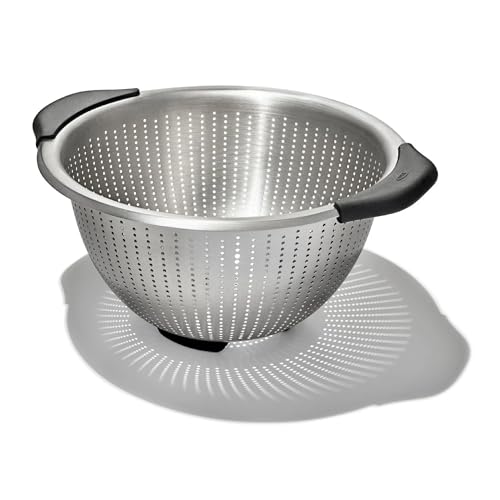
We analyze the OXO Good Grips colander's sturdy build, comfortable handles, and non-slip base, comparing it to other popular colanders to help you decide.

Rachael Ray's colanders bring bright colors and sturdy design to the kitchen, but does style compromise performance? Our editorial team compared specifications, buyer feedback, and key decision factors to find out.
Your colander drains slowly because food bits clog the holes, the holes are too small, or it sits flat on the counter, blocking airflow. Rinse it under hot water, poke out debris with a toothpick, or tilt it to break the water seal. For better flow, choose a colander with larger holes or raised feet.
Line the colander with cheesecloth, a coffee filter, or a reusable mesh liner to catch small foods. For a permanent fix, apply food-safe silicone to enlarge holes or re-drill smaller ones. If the colander is metal, you can solder or epoxy a finer mesh over the base. Otherwise, replace it with a fine-mesh model.
Set the colander in a sturdy, wide-based bowl or sink rack that grips the sink. Choose a model with a flat, flared base and wide feet. Hold the handle firmly while pouring. For heavy loads, drain in batches to reduce weight and improve balance.
Clean and dry the crack, then apply a food-safe epoxy or silicone sealant designed for plastics or metal. Clamp the crack and let it cure fully before use. If the crack is large or the colander is stressed, replace it. A cracked colander can harbor bacteria and fail during draining.
Scrub the rust with a paste of baking soda and water or lemon juice and salt, then rinse and dry completely. For stubborn spots, use a non-scratching scouring pad. After cleaning, season the metal with a light coat of cooking oil to prevent future rust.
To stop a colander from rusting, dry it immediately after washing and store it in a dry place. For existing rust, scrub with a mild abrasive and baking soda paste. Apply a food-safe sealant or switch to stainless steel for a permanent fix.
Your colander drains slowly because holes are clogged with food bits, the base is flat against the sink, or water pressure is low. Rinse holes under hot water, prop it up with a spoon, or tilt it. If holes are blocked, use a toothpick. For flat bases, place a small trivet underneath.
Rinse the colander under hot water immediately after use, then wash with warm soapy water and a soft sponge. For stuck-on food, soak in hot soapy water for 10 minutes. Dry with a towel to prevent water spots. Avoid abrasive pads and bleach.
Scrub the rust off with a paste of baking soda and water or white vinegar and salt. Rinse, dry completely, and rub with a little vegetable oil. For heavy rust, soak in vinegar overnight. Always dry thoroughly to prevent new rust.
Set the colander in a sink with a flat bottom or use a colander with a wide, stable base and rubber feet. If it still tips, hold it with one hand or place it over a bowl that fits snugly inside.
To fix a rusty colander, scrub off loose rust with steel wool or a scouring pad, then wash with warm soapy water. For stubborn rust, soak in white vinegar for 30 minutes, rinse, and dry thoroughly. Apply a food-safe oil like mineral oil to prevent future rust. If rust has created holes or deep pitting, replace the colander.
For a metal colander, use epoxy or JB Weld to reattach the handle, then clamp it for 24 hours. For plastic, try plastic epoxy or heat welding. If the handle is cracked, reinforce it with a metal bracket. If it's beyond repair, replace the colander.
Slow drainage usually means blocked holes or a vacuum lock. Check for food debris stuck in the holes and clear them with a brush. If water pools, tilt the colander to break the seal. Rinse thoroughly after each use to prevent buildup.
Set the colander in a sink or bowl that fits its base snugly, or use a colander with a wide, flat base and non-slip feet. If it still tips, place a damp towel underneath. For heavy loads, support the rim with one hand while draining.
Mix equal parts baking soda and water into a paste. Apply it to rust spots and let it sit for 30 minutes. Scrub with a non-scratch pad or old toothbrush. Rinse and dry completely. For stubborn rust, use white vinegar first. Repeat if needed.
Place a silicone or cloth barrier between the colander and pot, or use a colander with a soft rim. For existing scratches, wash gently and avoid abrasive tools. Switch to a plastic or silicone colander for heavy use.
For a plastic handle, clean the break, apply strong epoxy or super glue, clamp for 24 hours, and reinforce with zip ties or a hose clamp. For metal, use a metal epoxy or replace the rivet. If the handle is cracked near the bowl, replace the colander for safety.
Your colander likely rocks because the sink base is curved or the colander's feet are uneven. Check the sink shape first. If the colander has legs, bend them slightly. For bowl-style sinks, use a colander with a flat rim or a sink strainer basket. If the colander is warped, replace it.
Mix equal parts white vinegar and water in a bowl. Submerge the rusted colander for 30 minutes. Scrub with a non-abrasive sponge or soft brush. Rinse thoroughly and dry completely. For stubborn spots, make a paste of baking soda and water. Apply, wait 10 minutes, then scrub again.
Bend the handle back gently using pliers or a wrench. For metal, apply heat first to reduce breakage. For plastic, use hot water to soften it. Work slowly and check alignment often. If the handle cracks or the rivets loosen, replace the colander.
Your colander drains slowly because holes are clogged with food bits, water pressure is low, or the bowl sits flat against the sink. Rinse the holes under hot water, hold it at an angle, or lift it to let air escape. If it's still slow, check for a dented base.
To clean a rusty colander, scrub off loose rust with fine steel wool or a scouring pad. Then soak it in white vinegar for 30 minutes to dissolve remaining rust. Rinse, dry completely, and rub with a little vegetable oil to prevent new rust. For deep rust, repeat or use a commercial rust remover.
Dry your colander immediately after washing, and store it in a dry place. For light rust, scrub with a paste of baking soda and water. For heavy rust, use white vinegar. Season it lightly with cooking oil to protect the surface.
Soak the colander in a paste of baking soda and water, then scrub with a soft sponge. For stubborn stains, add white vinegar or lemon juice. Rinse thoroughly and dry. This removes most food stains without scratching the plastic.
Your colander likely won't sit flat because the bowl's rim is smaller than the colander's base, or the bowl has a curved edge. Check the bowl diameter first. If it's too small, use a larger bowl or a colander with a flat, wide rim. For wobbly legs, bend them slightly outward.
Place a silicone or cloth trivet between the colander and the pan when draining. Alternatively, use a colander with a soft silicone rim. These simple steps prevent metal-on-metal contact and keep your non-stick surface intact.
Your colander likely won't sit flat because its base is warped, has a dent, or the feet are uneven. First, check the base on a flat surface. If it rocks, gently bend it back into shape if it's metal. For plastic, try heating it slightly. If it's still unstable, replace it.
For a quick fix, clean the broken surfaces, apply a two-part epoxy rated for metal or plastic, clamp for 24 hours, and let it cure fully. For heavy use, reinforce with a metal bracket. If the handle is beyond repair, replace the colander.
Make a paste of baking soda and water, apply it to the rust spots, let it sit for 30 minutes, then scrub with a non-abrasive pad. Rinse and dry thoroughly. For stubborn rust, use white vinegar or lemon juice with salt.
Place a silicone or rubber mat under the colander to increase friction and prevent sliding. Alternatively, rest it over a bowl that fits snugly inside, or use a colander with a flat, wide base and non-slip feet. These simple fixes stop tipping for good.
Scrub rust off with a paste of baking soda and water or white vinegar. Rinse and dry completely. Season bare metal with a light coat of cooking oil. For coated colanders, touch up chipped enamel. If rust has pitted the metal, replace it.
Your colander likely drains poorly because food bits clog the holes or the bowl sits flat on the sink, blocking airflow. Rinse it under hot water and scrub with a brush. For a flat-bottomed colander, lift one side or use a sink strainer to create a gap.
Rust on a metal colander is frustrating and can ruin food. Learn why it happens, how to remove it safely, and when it's time to replace. Plus, find rust-resistant options that last.
Struggling to drain a big pot of pasta or a huge batch of veggies? Learn smart techniques to manage large quantities without buying a new colander, and discover when upgrading to a large-capacity model makes sense.