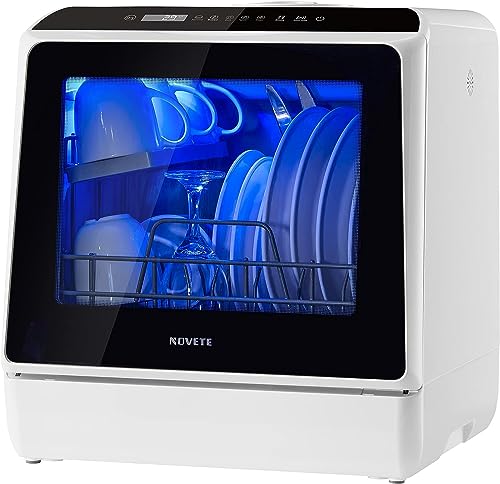
Run a vinegar cycle monthly to dissolve grease, limescale, and odors.
- Clean the filter and spray arms regularly to maintain performance.
- Prevent buildup by scraping food, using proper detergent, and airing out the door.
- If problems persist, inspect hoses and consider professional service or replacement.
Why does my countertop dishwasher smell or underperform?
Food particles, grease, and hard water minerals accumulate over time. These deposits cling to the filter, spray arms, and interior walls. Bacteria thrive in the warm, damp environment, causing odors. Detergent residue can also build up and reduce cleaning power. A clogged filter restricts water flow, leaving dishes dirty. Hard water leaves white limescale that can damage heating elements.
How to clean a countertop dishwasher with vinegar, step by step
First, remove all dishes and the filter. Rinse the filter under warm water and scrub with a soft brush. Place two cups of white vinegar in a dishwasher-safe measuring cup on the top rack. Run the hottest, longest cycle, like Heavy or Sanitize. The vinegar breaks down grease and dissolves mineral deposits. After the cycle, wipe the door gasket and edges with a vinegar-dampened cloth. For stubborn limescale, soak the spray arms in vinegar for 30 minutes before running a second cycle.
How often should you clean with vinegar?
Monthly cleaning prevents buildup and keeps the dishwasher fresh. If you have hard water or run heavy loads, clean every two weeks. After cleaning, run a plain water rinse cycle to remove any vinegar smell. Check the owner's manual for specific recommendations. Some manufacturers suggest using citric acid instead, but vinegar works for most models.
How to prevent buildup and odors in a countertop dishwasher
Scrape food off dishes before loading, but no need to rinse. Run the garbage disposal before starting to reduce food entering the dishwasher. Use the correct amount of detergent, as too much leaves residue. Leave the door slightly open after a cycle to let the interior dry. Clean the filter weekly and wipe the door gasket regularly. Use a rinse aid to prevent water spots and mineral buildup.
When should you replace your countertop dishwasher or call a pro?
If vinegar cleaning doesn't fix persistent odors or poor cleaning, check for clogs in the drain hose. A professional can inspect the pump and heating element. Consider replacement if the unit is over five years old and repairs cost more than half the price of a new one. Strange noises or error codes may indicate a mechanical issue. If water leaks persist after cleaning, call a technician. For safety, always unplug the unit before attempting any repairs.