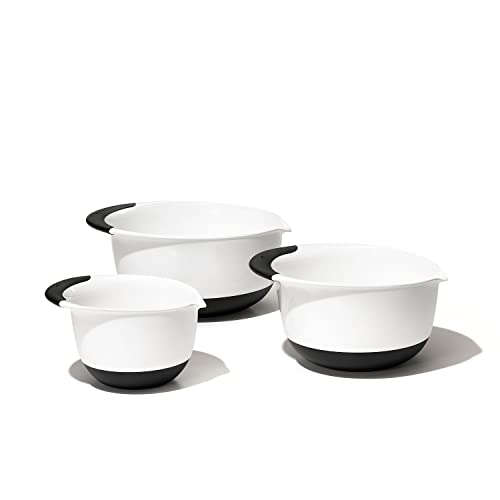
Stainless steel mixing bowls are the most versatile for baking.
- Choose a set with non-slip bases and multiple sizes.
- Glass bowls are best for microwave tasks and seeing dough rise.
- Nesting bowls save space in small kitchens.
What to Look for in Mixing Bowls for Baking
Start with material. Stainless steel is durable and lightweight. Glass is microwave-safe and non-reactive. Plastic is affordable but can absorb odors. Size matters. A set with 1.5, 3, and 5 quart bowls covers most recipes. Look for a non-slip base. It keeps the bowl steady while you whisk or knead. Pour spouts help transfer batter cleanly. Nesting bowls save cabinet space. Handles are useful for heavy doughs. Check if they are dishwasher safe. Lids turn bowls into storage containers.
Best Mixing Bowls for Bread and Dough
Bread dough needs a wide, sturdy bowl. A 5 quart stainless steel bowl gives room to knead. Glass bowls let you see dough rise. Ceramic bowls are heavy but stable. Choose a bowl with a flat bottom. It prevents tipping during mixing. Some bowls come with a lid for proofing. A non-slip ring is a plus. It stops the bowl from sliding on the counter. Look for a smooth interior. It makes cleaning easier.
Best Mixing Bowls for Cakes and Batters
Cake batter needs a bowl that is easy to pour. A glass bowl with a spout works well. It lets you pour batter without drips. Stainless steel bowls are lighter. They are easier to hold while adding ingredients. A set with multiple sizes helps. Use a small bowl for eggs, a large one for batter. Non-slip bases are key. They keep the bowl still while you mix. Choose a bowl with a wide rim. It makes holding and pouring simpler.
Best Mixing Bowls for Small Kitchens
Small kitchens need stackable bowls. Nesting stainless steel sets save space. Look for a set that includes a colander. It adds function without bulk. A 3 piece set is often enough. It covers most baking tasks. Collapsible silicone bowls are another option. They fold flat for storage. But they are less stable. A hanging rack can store bowls on the wall. Choose bowls with a loop handle. It makes hanging easy.
Best Mixing Bowls for Kids and Beginners
Kids need unbreakable bowls. Plastic or silicone bowls are safe. They are light and easy to hold. Look for a bowl with a handle. It helps small hands grip. A non-slip base prevents spills. Beginners benefit from clear measurements. Some bowls have markings inside. They make measuring easy. Choose a set with lids. It lets kids store their creations. Avoid heavy glass or ceramic for young bakers.