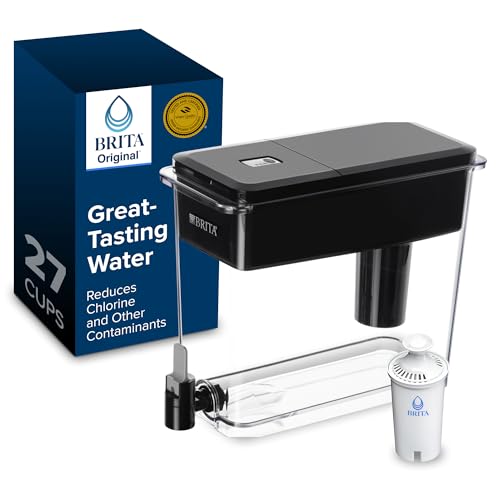
You may think any water filter makes your tap water safe, but the truth is that different filters target different contaminants. Our editorial team compared specifications, buyer feedback and key decision factors to help you understand what a water filter can and cannot remove. From sediment and chlorine to lead, bacteria, viruses, pharmaceuticals, and PFAS, each contaminant requires a specific filtration technology. NSF standards provide a reliable way to verify a filter's claims. Read on to learn which filter type is right for your water quality concerns.
Common Contaminants Overview
Water contaminants fall into several categories. Sediment includes sand, rust, and dirt that cause cloudiness and can clog plumbing fixtures. Chlorine is added by municipalities for disinfection but leaves an unpleasant taste and odor that many people find objectionable. Lead leaches from old pipes and solder joints, especially in homes built before 1986, and is a serious health risk, particularly for children and pregnant women. Bacteria and viruses can enter through groundwater contamination from septic systems or agricultural runoff, or through pipe breaches during repairs. Pharmaceuticals and PFAS (per- and polyfluoroalkyl substances) are emerging contaminants from industrial discharge, household waste, and firefighting foam. PFAS are often called forever chemicals because they persist in the environment. Not all filters address every category, so understanding your local water quality is essential.
Filter Types and What They Remove
Different filter media are designed for specific contaminants. Below is a breakdown of common filter types and their removal capabilities, including typical micron ratings and certification levels.
Sediment Filters
Sediment filters (often made of pleated polyester or spun polypropylene) physically trap particles like sand, rust, and silt. They are rated by micron size (e.g., 5 microns, 1 micron). A 5 micron filter captures particles visible to the naked eye, while a 1 micron filter removes finer sediment. These filters do not remove chemicals, dissolved solids, or microbes. They are typically used as a pre-filter to protect downstream systems like carbon filters or RO membranes from clogging.
Activated Carbon Filters
Activated carbon filters use adsorption to remove chlorine, volatile organic compounds (VOCs), and improve taste and odor. Some carbon blocks are certified under NSF/ANSI 42 for aesthetic effects. However, standard carbon filters do not remove lead, bacteria, viruses, or dissolved minerals. For lead reduction, look for carbon filters certified under NSF/ANSI 53, which typically use a catalytic carbon or a carbon block with additional media. Carbon filters come in two forms: granular activated carbon (GAC) and carbon block. Carbon block filters are more effective at removing smaller particles and contaminants because they have a denser structure.
Reverse Osmosis (RO) Systems
RO systems force water through a semi-permeable membrane, removing a wide range of contaminants including lead, arsenic, fluoride, nitrates, and many pharmaceuticals. Some RO systems also include a carbon pre-filter and post-filter to improve taste and protect the membrane. RO can reduce bacteria and viruses, but not completely; a UV stage may be added for microbial safety. RO systems are often certified under NSF/ANSI 58, which covers reduction of arsenic, lead, nitrate, and other health contaminants. They also produce wastewater, typically 3-4 gallons for every gallon of purified water, which is a consideration for water conservation.
Ultraviolet (UV) Purifiers
UV filters use ultraviolet light to inactivate bacteria, viruses, and protozoa (like Giardia and Cryptosporidium). They do not remove sediment, chemicals, or heavy metals. UV is typically used in combination with other filters for comprehensive treatment. The effectiveness of UV depends on water clarity; sediment or turbidity can shield microbes from the light, so a pre-filter is often necessary. UV lamps need to be replaced annually to maintain effectiveness.
Ion Exchange Filters
Ion exchange resins soften water by removing calcium and magnesium (hardness). Some specialized resins can remove lead and other heavy metals through a process called selective ion exchange. They do not remove sediment, chlorine, or microbes. Ion exchange filters are often used in whole-house water softeners, but can also be found in some countertop or under-sink filters for specific contaminant reduction.
Specialty Filters for PFAS and Pharmaceuticals
PFAS and pharmaceuticals require advanced filtration. Granular activated carbon (GAC) can reduce some PFAS, but removal efficiency varies based on contact time and carbon type. Reverse osmosis is more effective for both PFAS and many pharmaceuticals, often achieving over 90% reduction. Look for filters specifically tested under NSF/ANSI 53 or NSF/ANSI 58 for these contaminants, or NSF/ANSI 401 for emerging contaminants like pharmaceuticals and PFOA/PFOS. Some filters combine carbon and ion exchange media to target multiple contaminant classes.
NSF Standards Explained
NSF International sets performance standards for water filters. Key standards include:
- NSF/ANSI 42: Aesthetic effects (chlorine taste/odor, sediment).
- NSF/ANSI 53: Health-related contaminants (lead, mercury, VOCs, cyst reduction).
- NSF/ANSI 58: Reverse osmosis systems (includes reduction of arsenic, lead, nitrate, etc.).
- NSF/ANSI 244: Microbiological water purifiers (bacteria, virus, cyst removal).
- NSF/ANSI 401: Emerging contaminants (pharmaceuticals, PFOA/PFOS, etc.).
When shopping for a water filter, check the product's NSF certification listing to confirm it meets your specific needs. Not all filters are certified, and some claims may be unverified. Certification means the filter has been tested by an independent third party to meet specific reduction requirements. Look for the NSF mark on the product packaging or search the NSF database online.
Choosing the Right Filter
To select the best water filter, first test your water or obtain a quality report from your local utility. Identify which contaminants are present. Then match them to a filter type:
- If you only want better taste and chlorine reduction, a simple carbon filter (NSF 42) may suffice.
- If lead or heavy metals are a concern, choose a filter certified under NSF 53 (carbon block) or NSF 58 (RO).
- For microbial safety (bacteria, viruses), consider a UV purifier or an RO system with UV.
- For PFAS or pharmaceuticals, a reverse osmosis system with NSF 401 certification is recommended.
- Always combine a sediment pre-filter if your water has visible particles or if you have well water.
Remember that no single filter removes everything. Multi-stage systems often provide the broadest protection. Consider your budget, installation space, and maintenance requirements. Countertop filters are easy to install, while under-sink systems require plumbing modifications but offer higher capacity.
Maintenance and Filter Life
Regular maintenance is crucial for filter performance. Sediment filters should be replaced every 3-6 months, or more often if water is very dirty. Carbon filters typically last 6-12 months, depending on water usage and contaminant load. RO membranes can last 2-3 years, but pre-filters must be changed on schedule to protect them. UV lamps need annual replacement because the intensity decreases over time. Always follow the manufacturer's instructions for replacement intervals. Neglecting maintenance can lead to bacterial growth on the filter media and reduced contaminant removal. Some filters have indicator lights or flow meters to remind you when to change them.