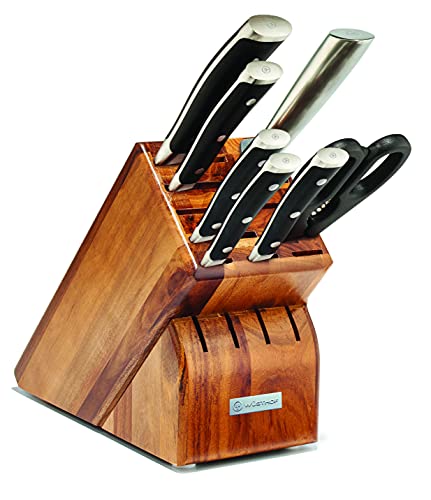
Dull knives are usually caused by improper cutting surfaces, poor storage, or lack of regular honing. Fix them with a honing rod for daily maintenance, sharpening stones for restoring edges, or professional sharpening for deep repairs. Proper storage and cutting habits prevent future dullness.
Why It Happens: Three Common Causes of Dull Knives
Our editorial team compared specifications, buyer feedback and key decision factors to explain why knives lose their edge. The most frequent reasons are simple to fix once you know them.
1. Improper Use: Cutting on the Wrong Surfaces
Cutting on glass, granite, ceramic, or metal surfaces instantly dulls a blade. Even some plastic cutting boards are too hard. Always use wood or soft plastic cutting boards. Avoid scraping the blade across the board; lift and place instead. For example, using a glass cutting board might seem convenient for cleanup, but it will dull your knife after just a few uses. Similarly, granite countertops are a common culprit; never cut directly on them. Even ceramic plates used as a cutting surface can cause edge damage. Stick to wood (especially end-grain maple) or polyethylene plastic boards. If you use a plastic board, replace it when it becomes heavily scored, as deep grooves can harbor bacteria and also cause uneven cutting pressure that dulls the blade.
2. Poor Storage: Tossing Knives in a Drawer
When knives bump against other utensils or the drawer sides, the edge gets micro-chips and rolls. Store your knife set in a block, on a magnetic strip, or with individual blade guards. Never leave knives loose in a drawer. A magnetic strip mounted on the wall is an excellent option because it keeps knives separated and easily accessible. If you prefer a drawer, use a knife tray insert with slots that hold each blade in place. Blade guards are inexpensive and protect the edge even when knives are stored together. Avoid storing knives in a block that has slots too wide, as the blade can wobble and hit the sides. Also, never store knives in a sink or dishwasher; the moisture and movement can damage the edge and handle.
3. Lack of Honing: Skipping Daily Edge Alignment
Honing does not sharpen; it straightens the microscopic edge that bends during use. Without regular honing (every few uses), the edge folds over and feels dull even though metal is still present. A honing rod is the quick fix. Think of it like straightening a bent paperclip; you are not removing material, just realigning it. Many home cooks skip this step because they think honing is the same as sharpening. But honing is essential maintenance. If you use your knives daily, hone them before each use or at least once a week. A few strokes on a ceramic or steel rod take only seconds and can triple the time between sharpenings. For example, a chef who hones regularly may only need to sharpen every few months, while someone who never hones might need to sharpen every few weeks.
How to Fix Dull Knives: Step by Step
Follow this order: start with honing, then sharpen, then consider professional help. For a full knife set, repeat the process for each blade.
- Hone with a honing rod. Hold the rod vertically with tip on a towel. Place the knife heel at the top of the rod at a 15-20 degree angle. Draw the blade down and across, applying light pressure. Repeat 5-10 times per side. Do this weekly. For a 20-degree angle, imagine the rod is at 10 o'clock and the knife is at 2 o'clock; the angle between them is about 20 degrees. Use a smooth, even motion from heel to tip. Do not apply too much pressure; let the weight of the knife do the work. A common mistake is using a sawing motion; instead, draw the blade in one continuous stroke.
- Sharpen with a sharpening stone. Soak the stone in water for 10 minutes. Place it on a non-slip surface. Hold the knife at the same angle and push the blade across the stone from heel to tip. Use a coarse grit first, then fine. Repeat 10-15 strokes per side. Rinse and dry the knife. For a 1000 grit stone (coarse), you will remove more metal and set the edge. Then switch to a 3000-6000 grit stone (fine) to polish and refine. Keep the stone wet during use; add water as needed. After sharpening, strop the blade on leather or denim to remove any burr. A burr is a tiny wire edge that forms during sharpening; stropping removes it for a razor-sharp finish.
- Use a pull-through sharpener. If you are not comfortable with a stone, a pull-through sharpener with carbide or ceramic slots is easier. Pull the knife through each slot 3-5 times, alternating sides. These remove more metal, so use sparingly. Pull-through sharpeners are convenient but can be aggressive. They are best for quick touch-ups on softer steel knives. For high-end knives, a stone or professional service is recommended to avoid damaging the edge geometry. Always follow the manufacturer's instructions; some sharpeners have a preset angle that may not match your knife.
- Seek professional sharpening. For very dull or damaged blades, or if you own a premium knife set, take them to a professional. They use precision equipment and can restore the original edge. Cost is usually a few dollars per knife. Professional sharpeners can also fix issues like uneven edges, chips, or bent tips. They often use water-cooled grinders or belt sanders with fine grits. Look for a local sharpening service or check with kitchen supply stores. Some offer mail-in services. If you have a set of high-carbon steel knives, professional sharpening every 6-12 months is a good investment.
When to Replace Knives Instead of Sharpening
Some knives cannot be saved. If the blade has large chips, cracks, or is bent, replacement is safer. Also, very cheap knives with soft steel may not hold an edge even after sharpening. For a quality knife set, regular maintenance extends life for decades. But if the blade is worn down to a thin profile, it is time to buy new. For example, if a chef's knife has been sharpened so many times that the blade width near the edge is less than 1/8 inch, it becomes fragile and prone to breaking. Similarly, if the handle is loose or cracked, replacement is more cost-effective than repair. When buying new, consider knives with harder steel (like VG-10 or AUS-8) that hold an edge longer. Avoid knives with stamped blades; forged blades are generally thicker and more durable. Check the current price on Amazon for a good honing rod or sharpening stone to keep your knives sharp. Investing in proper tools and habits saves money and frustration.
How Cutting Technique Affects Knife Sharpness
Your cutting technique can also contribute to dullness. Using a rocking motion on a cutting board is fine, but twisting the blade while cutting (like prying apart food) can bend the edge. Similarly, cutting through bones or frozen food with a chef's knife can cause chips. Use the right knife for the job: a cleaver for bones, a bread knife for crusty loaves, and a paring knife for small tasks. Also, avoid using your knife as a can opener or screwdriver. When chopping, lift the blade off the board rather than scraping it sideways. Scraping drags the edge across the board, accelerating wear. Instead, use the spine of the knife to push food off the board. Another tip: let the knife do the work. Applying excessive force can dull the edge faster. A sharp knife should cut with minimal pressure. If you find yourself pressing hard, it is time to hone or sharpen.
Check the current price on Amazon for a good honing rod or sharpening stone to keep your knives sharp. Investing in proper tools and habits saves money and frustration.