pk-lead
The Camp Chef Competition Blend is one of the more familiar names on the hardwood pellet shelf, and this review meets it the way most buyers first do: as a product listing rather than a bag already burning in a hopper. Everything below is an editorial read of what the listing claims and what those claims usually mean for pellet grill and smoker owners. We have not smoked or cooked with this particular bag, so nothing here is a hands-on verdict. The goal instead is to translate the spec sheet into plain language, point out the parts worth checking before you buy, and help you judge whether a three-wood competition blend suits the way you actually cook. On paper this reads as an all-purpose, everyday pellet rather than a specialist single-wood product, and that framing shapes everything that follows.
What it is
At its simplest, the Camp Chef Competition Blend is a bag of compressed hardwood pellets made to feed a pellet grill or smoker. Pellets like these are both the fuel and the flavor at the same time: an auger pulls them from the hopper into a fire pot, where they ignite to produce heat and smoke together. A competition blend, as the name suggests, mixes more than one wood species instead of leaning on a single note. In this case the listing and the wider Camp Chef line describe a blend built around maple, hickory, and cherry. That trio is a deliberate middle ground, a little sweet, a little bold, and a little fruity, meant to sit comfortably under a wide range of food rather than specialize in one protein. The listed format is a 20 lb bag, which is the standard consumable unit for this category and is designed to be bought, burned, and replaced.
Key features per listing
The following points are drawn from the product listing rather than independent measurement. They describe what the manufacturer and retailer claim for the product, and they are the specifications most buyers compare across competing pellet bags.
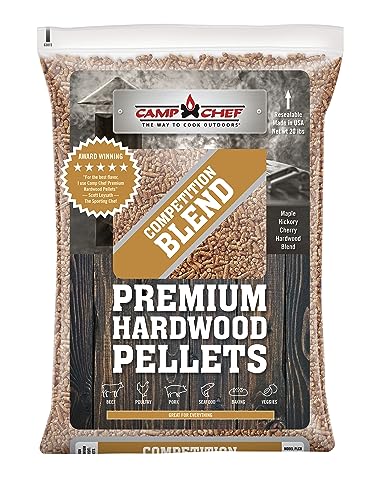
Camp Chef Competition Blend BBQ Pellets, 20 lb. Bag
A three-wood hardwood blend (maple, hickory, and cherry per the listing) sold as a 20 lb bag for pellet grills and smokers.
Check price on Amazon- Bag weight: 20 lb, the common size for this category and enough to cover several typical cooks depending on grill and temperature.
- Wood blend: a competition-style mix described around maple, hickory, and cherry, chosen to balance sweet, savory, and fruity smoke notes.
- Hardwood claim: the listing presents these as 100 percent hardwood pellets with no fillers, meaning the blend is marketed as food-grade cooking wood rather than a pellet cut with binders or scrap species.
- Low ash claim: the product is marketed as a low-ash pellet, a claim that, if it holds in your grill, points to less frequent fire-pot cleanout between cooks.
- Flavor profile: positioned as an all-round, do-everything smoke profile rather than a single-note wood, aimed at smoke, bake, roast, braise, and general barbecue use as the title states.
Treat each of these as a listing claim. They are the kind of attributes a manufacturer controls and documents, so they are reasonable to repeat, but words like low ash and balanced flavor are only confirmed by your own grill and your own palate.
Who it is for
This blend reads as a natural fit for pellet grill and smoker owners who want one bag that does most jobs rather than a cabinet full of single-wood options. If you cook across proteins, pork one weekend, poultry the next, a beef brisket or some ribs after that, an all-round competition blend removes the decision of which wood to load. It also suits newer pellet grill owners who are still learning how their machine burns and would rather start with a versatile everyday pellet before experimenting with stronger single woods. Someone who already knows they want an aggressive, pure hickory bite for beef, or a light, clean fruitwood for fish and chicken, may prefer a dedicated single species instead. The competition blend is the generalist choice, not the specialist one.
Strengths on paper
The clearest strength is versatility. A maple, hickory, and cherry mix is formulated to avoid extremes, so on paper it should work acceptably under almost anything you put on the grates, which is exactly what a household that cooks varied menus wants. The balanced profile also lowers the risk of overpowering lighter foods, something a heavy single wood can do if you are not careful. The 100 percent hardwood and low-ash claims, taken at face value, point to clean-burning fuel and less maintenance between cooks. Finally, Camp Chef is a recognized brand in the pellet grill space, and buying a blend from an established maker tends to mean consistent bagging and wide availability, which matters for a consumable you will repurchase. None of this is a performance guarantee, but as a specification set it lines up well with everyday backyard cooking.
Things to check honestly
A few realities are worth keeping in view before you buy. First, storage matters more than brand: pellets are compressed sawdust held together by their own natural lignin, and moisture is their enemy. Pellets that absorb humidity can swell, crumble, and jam an auger, so plan to keep them in a dry, sealed container regardless of which brand you choose. Second, pellet compatibility is broad. Food-grade pellets of standard diameter are generally cross-compatible with most pellet grills and smokers, so you are usually not locked to a single brand by your machine, though it is always worth confirming your grill maker does not require its own pellets for warranty reasons. Third, flavor is subjective. A blend described as balanced will still taste different to different cooks, and the only real way to know if you like it is to burn a bag. Fourth, ash output and consumption vary by grill, ambient temperature, and how low and slow you cook, so any low-ash claim will land differently on your setup. Finally, remember this is a consumable. One bag is fuel, not a durable tool, so value is better judged per cook over time than from a single purchase. We are not making any food-safety or health claims here; these are practical handling notes, not guarantees.
How it compares
The honest way to frame a competition blend is against the single-wood pellets it sits beside on the shelf. A pure hickory bag delivers a strong, bacon-like, savory smoke that many cooks love on pork and beef but which can turn harsh on delicate foods if overdone. A pure apple or cherry bag leans mild, sweet, and fruity, flattering to poultry and fish but sometimes too subtle for a big beef cut. The Camp Chef Competition Blend aims to split the difference, carrying some of hickory's backbone, maple's gentle sweetness, and cherry's fruit and color, so it never specializes but also never leaves a protein badly matched. If your cooking is varied and you want one bag to reach for, the blend is the logical pick. If you cook one protein almost exclusively and have a clear flavor preference, a matched single wood may please you more. Neither is objectively better; they answer different questions, and the right choice depends on how wide your menu is rather than on which bag is superior.
Verdict
On the strength of its listing, the Camp Chef Competition Blend is an easy product to understand and a sensible default for anyone who wants a versatile everyday pellet from a recognized brand. The maple, hickory, and cherry blend is built for range rather than intensity, the 20 lb bag is a standard consumable size, and the 100 percent hardwood and low-ash claims are the right things for a maker to advertise, with the caveat that your own grill confirms them, not the label. We have not cooked with this bag, so we are describing a specification and a flavor concept, not a tested result. If you want one blend that handles pork, poultry, and beef without fuss, and you are comfortable judging subjective flavor and real-world ash output for yourself, it is a reasonable bag to start with. You can review current details and the full listing for the Camp Chef Competition Blend pellets on Amazon.
Disclosure: This is an editorial, specification-based review written from the product listing, not a hands-on test. We may earn a commission from qualifying purchases made through links on this page, at no extra cost to you. Specifications described here are listing claims and should be confirmed on the current product page before you buy.