The George Foreman Indoor and Outdoor Electric Grill with Stand is pitched as a single appliance that tries to bridge two very different jobs, countertop cooking inside your kitchen and open air grilling out on a patio or balcony. This overview is written from the current Amazon listing and the published product details rather than from hands on cooking, so treat it as an editorial read of what the product claims and not as a verdict from first hand use. The clearest points from the listing are easy to summarize: it runs on electricity, it ships with a stand, and it is described with a 15 serving capacity.
What it is
This is an electric grill, which is the single most important thing to understand before anything else. It does not burn gas and it does not use charcoal. It needs mains power, so wherever you plan to cook with it you will need access to a standard power outlet or a suitable outdoor rated extension. That design choice shapes everything about how and where you can use it. Indoors it behaves like a large countertop grill, and outdoors it behaves like a plug in patio grill rather than a traditional fire based barbecue.
The George Foreman name has long been associated with electric grilling, and this model carries that lineage into a format that includes a freestanding stand. The listing frames it as an indoor and outdoor unit with a 15 serving capacity, which positions it for gatherings rather than a single plate. Because the stand is part of the package, the appliance is meant to work either as a standing grill you cook at while upright or, depending on the configuration, as a grill head you place on a table. The precise behavior of the stand is one of the items worth confirming on the listing before you buy.
Key features
Reading the listing and the published details, the features that stand out are the electric power source, the included stand, the stated 15 serving capacity, and the George Foreman style grilling surface. Electric power means consistent, dial controlled heat without lighting a flame or waiting for coals, and it means the grill is viable on balconies and in settings where open flame cooking is restricted. The included stand is what separates this model from a plain tabletop grill, since it is intended to raise the cooking surface to a comfortable standing height for outdoor use.
The 15 serving figure is the capacity claim from the listing and is a useful rough guide to how much food the grilling surface is designed to hold at once. George Foreman grills are also closely associated with a nonstick cooking surface and a sloped plate meant to channel drippings away from the food, though the exact plate material, coating, and slope design for this specific unit should be verified against the listing rather than assumed. The card below reflects only the product and ASIN from the package.
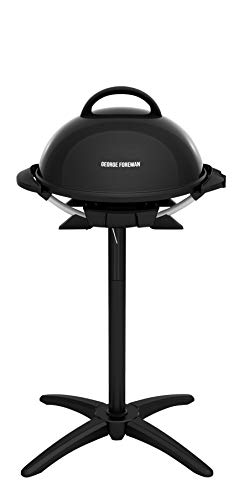
George Foreman Indoor Outdoor Electric Grill with Stand, 15-Serving
Electric indoor and outdoor grill sold with a stand and listed with a 15 serving capacity. Confirm the exact cooking area, wattage, whether the stand detaches for tabletop use, and the nonstick plate details on the current Amazon listing.
Check price on AmazonWho it is for
This grill makes the most sense for people who want outdoor grilling flavor and format without committing to gas or charcoal. If you live in an apartment or a condo, or you spend time on a patio or balcony where a flame based barbecue is impractical or not permitted, an electric grill with a stand is one of the few formats that fits. The freestanding stand suits anyone who wants to cook standing up outside, while the fact that it is fundamentally an electric grill head means it can also serve people who want to move it indoors in colder months.
It also suits cooks who value convenience and cleanup over the ritual of building a fire. There is no ash to manage and no propane tank to swap, only a plug and a temperature control. If you are feeding a small crowd rather than a single person, the 15 serving capacity claim lines up with casual family cooking and modest get togethers. Buyers who specifically want the smoky character of charcoal or the high searing heat of a dedicated gas grill should weigh that against what an electric unit is built to do.
Strengths on paper
On paper the strengths are straightforward. The electric design removes fuel handling entirely, which simplifies setup and makes the grill usable in more places than a flame grill. The included stand adds flexibility that a bare tabletop grill does not offer, giving you a standing cooking height outdoors. The stated 15 serving capacity suggests a surface sized for sharing rather than solo cooking. The George Foreman format is generally built around a nonstick, drip channeling surface that is easy to wipe down, which tends to make cleanup less of a chore than scrubbing grates over a fire.
Portability is another practical plus of the electric and stand combination, since the grill head can typically be separated from the base for storage or transport, and electric grills avoid the weight of a fuel tank. Temperature control on electric grills is usually handled by a simple dial, which gives repeatable results once you learn the settings. These are reasonable expectations for the category, but the specific implementation on this unit, including how the stand detaches and how the heat probe or dial is arranged, is worth confirming on the listing.
Things to check
Because this overview is based on the listing rather than hands on use, there are several concrete details you should verify yourself before buying.
- It is electric, so it needs a power outlet. Confirm the cord length and whether you have suitable power where you intend to cook, indoors or out.
- Cooking area and servings. The listing cites a 15 serving capacity. Check the actual grilling surface area so you know whether it matches how many people you usually feed.
- Wattage. Electric grills vary in power, and wattage affects heat up time and searing ability. Confirm the wattage on the current listing.
- Removable stand. Verify whether the stand detaches so the grill head can be used on a tabletop, and how simple that conversion is.
- Nonstick plates. Confirm the plate material, the nonstick coating, and whether the plates are removable for cleaning, since the listing is the authority on this unit.
- Included parts and warranty. Check exactly what comes in the box and the manufacturer coverage before you order.
None of these points are criticisms. They are simply the facts that a listing can confirm and that this editorial overview cannot verify firsthand, so the listing should be your final reference.
How it compares
The most useful comparison is not against another named model but against the two fuel formats most buyers weigh it against, gas and charcoal. A charcoal grill delivers the smoky flavor and high radiant heat that many people associate with classic barbecue, but it asks for lighting time, ash cleanup, and careful fire management, and it is often restricted on balconies and in shared outdoor spaces. A gas grill offers fast, controllable heat and strong searing, but it requires a propane tank or a gas line and still involves an open flame.
An electric grill like this George Foreman model trades the flame and the smoke for plug in convenience. You lose the charcoal character and typically some peak searing heat, and you gain the ability to cook where fire is impractical, along with simpler startup and cleanup. For an apartment patio, a balcony, or an indoor setting, that tradeoff is often the whole reason to choose electric. For someone whose priority is deep smoke flavor or maximum sear, a fuel based grill remains the more natural fit. Matching the format to where and how you cook matters more than any single spec.
Verdict
As an editorial overview, the George Foreman Indoor and Outdoor Electric Grill with Stand reads as a sensible pick for anyone who wants flame free, plug in grilling that can move between a patio and a kitchen, with a stand included and a stated 15 serving capacity for feeding a small group. The honest caveat is that it is electric and therefore tied to a power outlet, and the specifics that matter most, the cooking area, the wattage, whether the stand is removable for tabletop use, and the nonstick plate details, are things you should confirm directly. If the format fits how you cook, check the current listing to review the current capacity, power, and plate specifications and decide from there.
This is an editorial overview compiled from the current Amazon listing and published specifications, not a hands on review, and we did not test or use the product ourselves. ProductPickly may earn a commission from qualifying purchases made through links on this page.