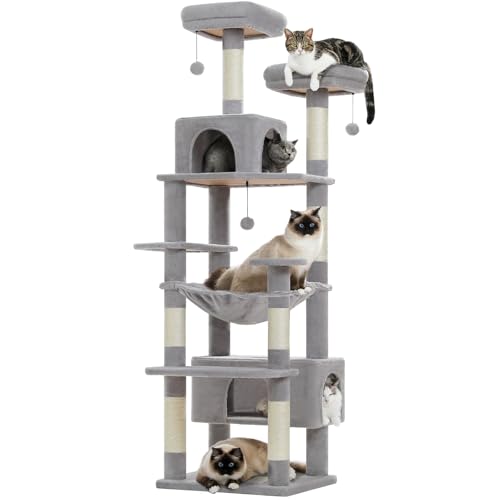
Choosing the right cat tree can feel overwhelming with so many sizes, materials, and features on the market. Our editorial team compared specifications, buyer feedback, and key decision factors to help you make an informed choice. This guide breaks down the essentials: height, materials, stability, scratching posts, and cat size. You'll also find practical tips for multi-cat households and small spaces.
Height and Cat Size
The first thing to consider is the height of the cat tree. Cats love to climb and perch high, but the ideal height depends on your cat's age, agility, and confidence. A tall tree of 6 to 7 feet suits active, young cats that enjoy jumping. For kittens, senior cats, or cats with mobility issues, a shorter tree of 3 to 4 feet is safer and easier to access.
Measure your available floor space and ceiling height before buying. A tree that is too tall for a room with low ceilings can feel cramped. Also, consider the size of your cat. A large Maine Coon needs a sturdier, wider tree with bigger platforms, while a petite cat can manage a slimmer design.
When choosing height, think about the placement. A tree placed near a window can give your cat a view, but make sure it doesn't block traffic. For small spaces, a corner tree or a wall-mounted option can save floor space.
Materials and Construction
Cat trees are made from various materials, and the quality directly affects durability and safety. The base and support posts are often made of particleboard, MDF, or solid wood. Solid wood is the most durable but heavier and more expensive. High-density particleboard is a good middle ground, but avoid low-density boards that can warp or break.
The covering material matters too. Most trees use carpet, faux fur, or sisal rope. Carpet is durable but can snag claws. Faux fur is soft and cozy but may wear out faster. Sisal rope is excellent for scratching posts because it mimics tree bark and helps maintain claw health.
Check the stitching and attachment. Look for tightly woven fabric and reinforced seams. Platforms should be securely attached with screws, not just staples. A well-constructed tree will have a solid feel and no wobble when you shake it gently.
Stability and Safety
Stability is crucial to prevent tipping and injury. A cat tree should have a wide base, preferably with a non-slip bottom. The center of gravity should be low, meaning heavier platforms and thicker posts at the bottom. Many trees come with wall anchors or straps; always use them, especially for taller models.
Test the stability by pressing on the top platform. If it wobbles, it's not safe for an active cat. Look for trees with a base that is at least as wide as the tree's height divided by three. For example, a 6-foot tree should have a base of at least 2 feet in diameter.
Safety also includes the absence of sharp edges, small parts that could be swallowed, and toxic finishes. Choose trees with rounded corners and non-toxic, pet-safe paints or stains. Inspect the tree regularly for loose screws or frayed fabric.
Scratching Posts and Surfaces
Scratching is a natural behavior that helps cats stretch and mark territory. A good cat tree should include multiple scratching posts covered in sisal rope. Look for posts that are at least 3 to 4 inches in diameter and tall enough for your cat to stretch fully. A post that is too thin or too short won't be used.
The orientation of scratching surfaces matters. Some cats prefer vertical posts, others like horizontal cardboard or carpet. A mix of both can satisfy different preferences. Also, consider the placement of the posts. They should be accessible from different levels of the tree.
Check the quality of the sisal. High-quality sisal is tightly wound and durable. Some trees use sisal mats that can be replaced when worn. This is a good feature for extending the life of the tree.
Multi-Cat and Small Space Tips
If you have multiple cats, you need a tree that can accommodate them without conflict. Look for trees with multiple perches, hideaways, and separate levels. A tree with at least two or three perches at different heights allows cats to choose their spot. For multi-cat homes, consider a larger tree with a wide base and extra reinforcement.
In small spaces, a floor-to-ceiling cat tree can be a great option. These trees use tension poles to fit between the floor and ceiling, saving floor space. Alternatively, wall-mounted shelves or a compact tree with a small footprint can work. Look for trees that are tall but narrow, or those with a corner design.
Another tip for small spaces is to choose a tree with a built-in scratching post and a perch that doubles as a bed. This maximizes functionality. Also, consider the color and style to match your decor. Many trees come in neutral colors or wood tones that blend in.
Frequently Asked Questions
How tall should a cat tree be?
A good rule is to match the tree's height to your cat's jumping ability. Most cats enjoy trees between 5 and 7 feet tall, but for kittens or senior cats, a shorter tree of 3 to 4 feet is safer. Always ensure the tree is stable and placed against a wall.
What is the most durable material for a cat tree?
Solid wood or high-density particleboard with a sturdy base is most durable. Avoid flimsy cardboard or thin plastic. Look for carpet or sisal covering that is tightly attached and can withstand scratching.
How do I stop my cat tree from tipping over?
Choose a tree with a wide base and a low center of gravity. Many trees come with wall anchors or straps. Always secure the tree to the wall, especially if you have a heavy or active cat. Place it on a flat, stable surface.