
The Klein Tools MM325 is a handheld digital multimeter aimed at electrical work, home projects, and everyday troubleshooting. This is an editorial overview built from the current Amazon listing and the published product description, not a hands on review. I have not used this meter myself, so the aim here is to lay out exactly what the listing claims, where the tool seems to fit, and the details you should confirm for yourself before you buy or before you place a probe on anything that carries voltage.
What it is
The MM325 is described on the listing as a digital, manual ranging multimeter. Manual ranging means you choose the measurement range yourself with the dial rather than letting the meter pick it automatically. Some people prefer that control because it is predictable and fast once you know the rough value you expect, while others find auto ranging more convenient when they are jumping between very different readings. The listing frames the MM325 as a 600V AC and DC voltage tester that also reads resistance, continuity, and diodes, and that tests batteries and current. In plain terms, it is a general purpose electrical meter rather than a specialist instrument, and it covers the handful of measurements most people reach for when they are checking an outlet, a battery, a fuse, or a simple circuit.
Because it is a contact meter, you use it by touching two probes to the points you want to measure. That is worth stating up front, because a multimeter is a tool for measuring live electrical circuits, and that carries real risk. It should only be used by someone who already knows how to work safely with electricity. Follow the manual that comes with the meter, respect the probe category ratings, and de-energize circuits wherever that is possible so you are not working on them live. No meter can be treated as guaranteed safe, so the habits you bring matter as much as the tool.
Key features
Pulling only from what the listing states, the MM325 covers AC and DC voltage up to a listed 600V, resistance, continuity, and diode testing, plus battery testing and a current function. The continuity mode is the one most people use for quick go or no go checks on wires, switches, and fuses, while the diode mode helps when you are poking at electronics. The battery test is a handy extra for quickly judging whether a cell still has useful charge. It is a manual ranging design, so you set the expected range on the dial before you measure. What the listing in front of me does not spell out is the exact current range, the display count, and the full contents of the box, and those are the first things I would confirm on the product page before buying.
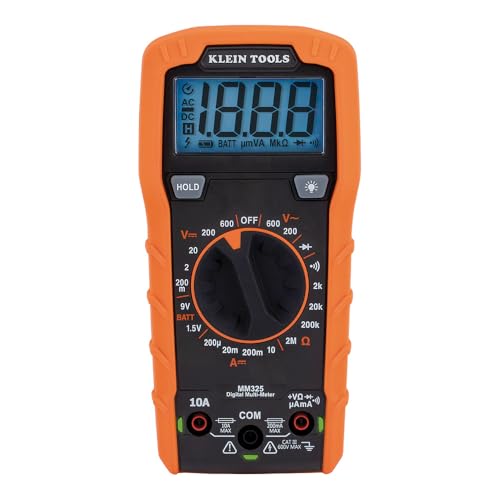
Klein Tools MM325 Multimeter, Digital Manual-Ranging 600V AC/DC Voltage Tester, Tests Batteries, Current, Resistance, Diodes, and Continuity
Manual ranging digital multimeter listed for 600V AC and DC voltage, with resistance, continuity, and diode checks, plus battery and current testing. Confirm the current range, display count, and what is in the box on the listing.
Check price on AmazonWho it is for
On paper the MM325 reads like a meter for DIY electrical work, hobbyist electronics, and basic troubleshooting around the home or workshop. If you are checking whether an outlet is live, confirming a blown fuse, measuring a battery, tracing continuity in a run of wire, or doing light electronics work, this class of meter is built for exactly that. It is less obviously aimed at someone who needs advanced functions such as true RMS on noisy signals, high current clamp measurements, or capacitance and frequency, so if those are on your list, check the spec sheet closely rather than assuming they are present. Anyone who is not already comfortable and trained around live electrical work should treat a multimeter as a tool that demands respect and, where appropriate, get guidance before using it on energized circuits.
Strengths on paper
The clearest strength is coverage of the everyday basics in one unit: AC and DC voltage to a listed 600V, resistance, continuity, diodes, batteries, and current. That combination handles the large majority of common household and hobby measurements without needing a second instrument. The manual ranging design can be a plus for users who want deliberate, repeatable control over the range they are reading. Klein Tools is also a well known name in hand tools and test equipment, which is part of why many buyers put this model on their shortlist, though brand reputation is not a substitute for reading the actual specs and safety ratings. As always, the listing claims are the starting point, and the manual is the authority on limits and correct use.
Things to check
Before buying, confirm these points directly on the listing and in the manual, because they are the details that decide whether the meter fits your job. First, the measurement functions and ranges: the listing names voltage, resistance, continuity, diodes, batteries, and current, but it does not state the exact current range or the input limits in the summary I am working from, so verify the current range, the input jacks, and any fuse protection. Second, confirm that it is manual ranging rather than auto ranging if that matters to you; the listing describes it as manual ranging. Third, the CAT safety rating: the listing I am working from does not state a CAT category, and that rating tells you which electrical environments the meter is designed for, so look for the CAT rating and voltage limits on the product page and in the manual before you use it anywhere near higher energy circuits. Fourth, confirm whether the test leads and a battery are included in the box, since the data in front of me does not state that, and it affects whether you can use the meter out of the box. Fifth, confirm the display count and resolution if precise readings matter to you. Finally, on safety: use the meter only if you are competent to work with electricity, follow the manual and the probe category ratings, de-energize circuits where possible, and never exceed the meter's rated limits. Treat every claim here as something to verify on the live listing rather than a promise.
How it compares
It helps to place the MM325 in the broader multimeter landscape. A basic digital multimeter like this one measures current by being placed in series with the circuit, which means you break the circuit and route it through the meter's leads and jacks. That is accurate for modest currents but it has practical limits, and you must respect the current range and fuse rating, which is exactly why confirming the current spec matters. A clamp meter, by contrast, measures current by clamping its jaws around a conductor without breaking the circuit, which makes it far more convenient and safer for larger AC currents such as those on appliance or panel circuits. If most of your work is voltage, continuity, resistance, and light current checks, a standard DMM like the MM325 is the natural fit. If you routinely measure higher currents on live wiring, a clamp meter is often the better primary tool, with a DMM kept alongside for the finer measurements. Neither replaces the other entirely, and the right choice comes down to the kind of work you do most. I am not naming specific rival models here, because the honest comparison is about the tool category rather than a head to head on specs I have not verified.
Verdict
As an editorial read of the listing, the Klein Tools MM325 looks like a sensible, no frills manual ranging digital multimeter for DIY electrical work, hobbyist electronics, and routine troubleshooting, covering AC and DC voltage to a listed 600V along with resistance, continuity, diodes, batteries, and current. Because I have not tested it, the responsible move is to confirm the specifics that the listing summary leaves open: the exact current range, the CAT safety rating, the display count, and whether the leads and a battery are included. If those line up with your needs and you are competent to work safely with electricity, it is a reasonable candidate in this category. To see the current images, full specifications, the CAT rating, and what is in the box, check the current listing on Amazon and read the manual before first use.
This is an editorial overview based on the current Amazon listing and published specifications, not a hands on review, and no first hand testing was performed. ProductPickly may earn a commission from qualifying purchases made through links on this page.