Digital Cameras
Best Cameras for Photography Beginners
7 picks compared
6 min read
ProductPickly is reader-supported. When you buy through links on our site, we may earn an affiliate commission at no extra cost to you. It never changes our picks.
The short answerFor most beginners, the Canon EOS R50, Sony ZV-E10, and Nikon Z50 are top picks. They offer user-friendly controls, interchangeable lenses, and strong image quality. Each suits different needs and budgets.
?How we pickedWe compare published specifications, safety certifications and thousands of verified owner reviews, and we do not physically test every unit. Read the full process in our review methodology.
Canon EOS R50
★★★★★ 4.8 / 5 Best overall for beginners
The Canon EOS R50 is a compact mirrorless camera with a 24.2MP APS-C sensor. It features Canon's Dual Pixel CMOS AF II for fast and accurate autofocus. The camera includes a fully articulating touchscreen and 4K video.
Sensor 24.2MP APS-C CMOSAutofocus Dual Pixel CMOS AF IIVideo 4K/30pScreen 3.0" vari-angle touchscreen
- Excellent autofocus
- Lightweight and compact
- User-friendly touchscreen
- Limited lens selection compared to DSLR
- No in-body image stabilization
Best for: Best overall for beginners
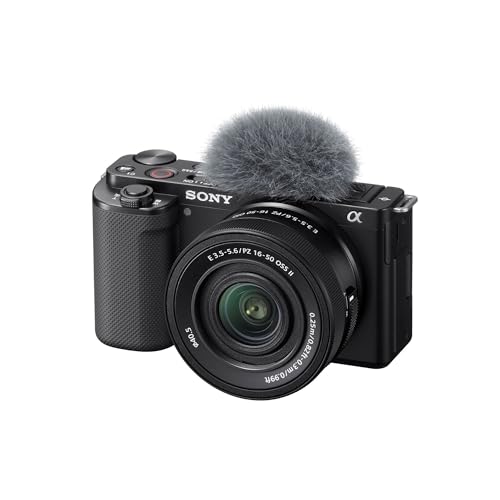
Sony ZV-E10
★★★★★ 4.7 / 5 Best for vlogging and content creation
The Sony ZV-E10 is a mirrorless camera designed for vloggers. It has a 24.2MP APS-C sensor and a flip-out screen. The camera features real-time eye tracking and a built-in directional microphone.
Sensor 24.2MP APS-C CMOSAutofocus Real-time Eye AFVideo 4K/30pScreen 3.0" flip-out touchscreen
- Flip-out screen for vlogging
- Great autofocus
- Compact and lightweight
- No viewfinder
- Limited physical controls
Best for: Best for vlogging and content creation
Nikon Z50
★★★★★ 4.7 / 5 Best for outdoor and travel photography
The Nikon Z50 is a weather-sealed mirrorless camera with a 20.9MP APS-C sensor. It has a durable build and a deep grip. The camera offers 4K video and a tilting touchscreen.
Sensor 20.9MP APS-C CMOSAutofocus Hybrid AF with 209 pointsVideo 4K/30pScreen 3.2" tilting touchscreen
- Weather-sealed body
- Comfortable grip
- Good battery life
- Limited native lens selection
- No in-body stabilization
Best for: Best for outdoor and travel photography
Canon EOS Rebel T7
★★★★★ 4.6 / 5 Best budget DSLR
The Canon EOS Rebel T7 is an entry-level DSLR with a 24.1MP APS-C sensor. It uses Canon's EF mount, giving access to a huge lens library. The camera includes a 9-point autofocus system and Full HD video.
Sensor 24.1MP APS-C CMOSAutofocus 9-point phase detectionVideo Full HD/30pScreen 3.0" fixed LCD
- Affordable price
- Huge lens selection
- Simple controls
- Older autofocus system
- No touchscreen
Best for: Best budget DSLR
Sony Alpha a6100
★★★★★ 4.7 / 5 Best for fast action and wildlife
The Sony Alpha a6100 is a mirrorless camera with a 24.2MP APS-C sensor. It offers real-time tracking and 11fps burst shooting. The camera has a 180-degree tilting touchscreen and 4K video.
Sensor 24.2MP APS-C CMOSAutofocus Real-time Eye AF and trackingContinuous Shooting 11 fpsVideo 4K/30p
- Fast and accurate autofocus
- High burst rate
- Compact size
- No in-body stabilization
- Menu system can be complex
Best for: Best for fast action and wildlife
Fujifilm X-T30 II
★★★★★ 4.7 / 5 Best for learning manual controls
The Fujifilm X-T30 II is a mirrorless camera with a 26.1MP APS-C X-Trans sensor. It features dedicated dials for ISO, shutter speed, and exposure. The camera offers film simulation modes and 4K video.
Sensor 26.1MP APS-C X-Trans CMOS 4Autofocus Hybrid AF with 425 pointsVideo 4K/30pScreen 3.0" tilting touchscreen
- Physical dials for manual control
- Excellent image quality
- Film simulations
- Smaller grip
- Battery life is average
Best for: Best for learning manual controls
Panasonic Lumix G100
★★★★★ 4.5 / 5 Best for hybrid photo and video
The Panasonic Lumix G100 is a Micro Four Thirds camera with a 20.3MP sensor. It is designed for creators, with a built-in microphone and headphone jack. The camera offers 4K video and a vari-angle touchscreen.
Sensor 20.3MP Micro Four ThirdsAutofocus Depth from Defocus AFVideo 4K/30pScreen 3.0" vari-angle touchscreen
- Compact and lightweight
- Good video features
- Built-in mic with wind reduction
- Smaller sensor
- Autofocus can hunt in low light
Best for: Best for hybrid photo and video
We compared specifications, owner feedback, and use-case fit. Focus is on what matters for learning: controls, autofocus, and lens options.
What to look for in a beginner camera
Start with sensor size. APS-C sensors are a good balance of quality and cost. Look for a camera with a flip-out screen for easy framing. Autofocus is crucial, especially for moving subjects. Consider the lens system, as you will want affordable lenses to grow with.
Mirrorless vs DSLR for beginners
Mirrorless cameras are lighter and show a live preview in the viewfinder. They have faster autofocus and are the current trend. DSLRs offer a huge selection of used lenses and often have longer battery life. Both are good for learning; mirrorless is more future-proof.
Key specifications explained
Megapixels affect print size, but 20MP is enough for most. Autofocus points determine coverage; more points help track subjects. Continuous shooting speed matters for action. Video resolution and frame rates are important if you plan to shoot video.
Budgeting for your first camera
Set a budget that includes a lens and memory card. Kit lenses are versatile but often slow. Consider buying a body with a prime lens like a 35mm for better low light. Used cameras can save money, but check shutter count and condition.
Questions people ask
What is the best camera for a beginner photographer?
The Canon EOS R50 is a top choice for its ease of use and autofocus. The Sony ZV-E10 is great for vlogging. The Nikon Z50 offers durability for travel.
Should a beginner buy a DSLR or mirrorless camera?
Mirrorless is often recommended for beginners due to lighter weight and modern features. DSLRs are still viable, especially on a budget, with many affordable lenses.
How many megapixels do I need as a beginner?
20 to 24 megapixels is sufficient for most beginners. It allows for large prints and cropping. More megapixels can help but are not essential.
Is it worth buying a used camera for a beginner?
Yes, used cameras can save money. Look for low shutter counts and no signs of damage. Check that the sensor is clean and all buttons work.
What lens should I buy with my first camera?
A kit lens like an 18-55mm is versatile. A prime lens like a 35mm f/1.8 is better for low light and learning composition. Many beginners start with a kit lens and add a prime later.
Do I need a camera with 4K video?
Not necessarily. If you plan to shoot video, 4K offers more flexibility in editing. For stills only, 1080p is fine. Most modern cameras have 4K.
Can I learn photography on a smartphone before buying a camera?
Yes, smartphones can teach composition and exposure. However, a dedicated camera offers better control and image quality. Many beginners start with a phone and then upgrade.
What is the difference between APS-C and full-frame sensors?
Full-frame sensors are larger and perform better in low light. They are also more expensive. APS-C sensors are smaller, lighter, and more affordable, making them ideal for beginners.
The bottom lineSo which one?
For most beginners, the Canon EOS R50 offers the best balance of features and ease of use. If you are on a tight budget, the Canon EOS Rebel T7 is a solid choice. Consider your primary use, such as vlogging or travel, to pick the right model.