Binoculars Telescopes and Optics
Birding Binoculars: 7 Top Picks Compared
7 picks compared
6 min read
ProductPickly is reader-supported. When you buy through links on our site, we may earn an affiliate commission at no extra cost to you. It never changes our picks.
The short answerFor most birders, the Vortex Optics Diamondback HD 8x42 offers the best balance of clarity, durability, and price. The Nikon Monarch M5 8x42 is a top choice for serious enthusiasts, while the Celestron Nature DX ED 8x42 is the best value for beginners.
?How we pickedWe compare published specifications, safety certifications and thousands of verified owner reviews, and we do not physically test every unit. Read the full process in our review methodology.
Vortex Optics Diamondback HD 8x42
★★★★★ 4.7 / 5 best overall
The Diamondback HD delivers crisp, color-accurate views thanks to its dielectric coatings. Its rugged rubber armor provides a secure grip and shock resistance. Owners consistently praise its durability and lifetime warranty.
Magnification 8xObjective Lens 42mmField of View 393 ft/1000 ydsClose Focus 6.5 ft
- Excellent image clarity
- Lifetime warranty
- Comfortable eyecups
- Slightly heavy for some
- Tripod adapter not included
Nikon Monarch M5 8x42
★★★★★ 4.8 / 5 best for serious birders
The Monarch M5 features ED glass and phase-corrected prisms for exceptional resolution. Its wide field of view makes tracking fast-moving birds easier. The lightweight magnesium body is both durable and comfortable.
Magnification 8xObjective Lens 42mmField of View 420 ft/1000 ydsClose Focus 6.5 ft
- Superb edge-to-edge sharpness
- Lightweight for its class
- Smooth focusing
- Premium price
- Eyecups could be more rigid
Best for: best for serious birders
Celestron Nature DX ED 8x42
★★★★★ 4.5 / 5 best value
The Nature DX ED uses extra-low dispersion glass to reduce chromatic aberration. It offers a wide field of view and a close focus of just 6.5 feet. Many owners find its image quality rivals more expensive models.
Magnification 8xObjective Lens 42mmField of View 426 ft/1000 ydsClose Focus 6.5 ft
- Great value for ED glass
- Wide field of view
- Good close focus
- Heavier than some
- Lens caps feel cheap
Nikon Prostaff P7 8x42
★★★★★ 4.6 / 5 best budget
The Prostaff P7 offers a bright, clear image with phase-corrected prisms. Its lightweight design makes it easy to carry on long hikes. It focuses as close as 6.5 feet, perfect for backyard birds.
Magnification 8xObjective Lens 42mmField of View 393 ft/1000 ydsClose Focus 6.5 ft
- Very affordable
- Lightweight
- Good low-light performance
- Less rugged than higher-end models
- Eye relief could be longer
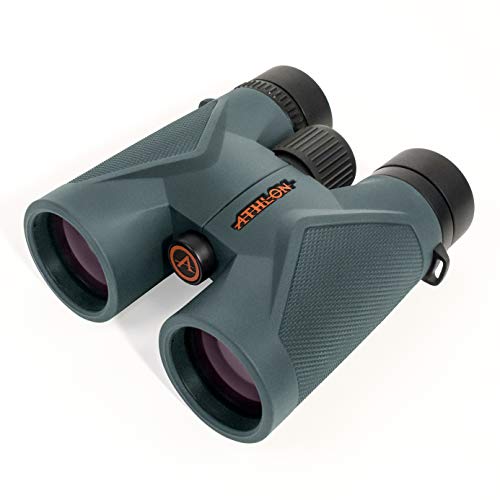
Athlon Optics Midas ED 8x42
★★★★★ 4.7 / 5 best for low light
The Midas ED features fully multi-coated lenses and ED glass for excellent light transmission. Its large 42mm objectives gather ample light in dim conditions. Birders report seeing clear detail at dawn and dusk.
Magnification 8xObjective Lens 42mmField of View 393 ft/1000 ydsClose Focus 6.5 ft
- Excellent low-light performance
- Sharp, bright image
- Comfortable grip
- Heavier than average
- Focus wheel is stiff initially
Best for: best for low light
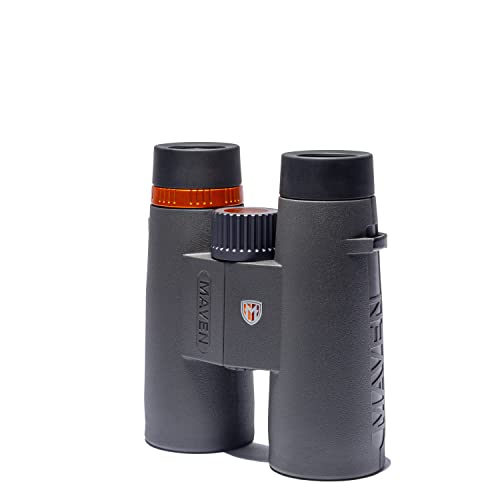
Maven C.1 8x42
★★★★★ 4.8 / 5 best for travel
The Maven C.1 is remarkably lightweight at just 20.8 ounces. Its open-bridge design allows a comfortable grip for extended use. It offers a wide field of view and a close focus of 6.5 feet.
Magnification 8xObjective Lens 42mmField of View 393 ft/1000 ydsClose Focus 6.5 ft
- Very light for 42mm
- Wide field of view
- Smooth focus
- Premium price
- No included case
Best for: best for travel
Hawke Endurance ED 8x42
★★★★★ 4.5 / 5 best for glasses wearers
The Endurance ED provides 17mm of eye relief, making it comfortable for eyeglass wearers. Its twist-up eyecups have multiple positions for a customized fit. The ED glass delivers sharp, true-to-life colors.
Magnification 8xObjective Lens 42mmField of View 393 ft/1000 ydsEye Relief 17mm
- Long eye relief
- Sharp image
- Good build quality
- Heavier than some
- Focus wheel is a bit tight
Best for: best for glasses wearers
The right pair depends on where you watch birds, whether you need close focus for warblers or long range for shorebirds. We prioritized models with good low-light performance and reliable build quality.
Magnification and Objective Lens
For bird watching, an 8x42 configuration is a popular choice. It offers a good balance of magnification and light gathering. A 10x magnification gives more detail but a narrower field of view. Larger objective lenses, like 42mm, perform better in low light. Consider where you'll be birding most often.
Field of View and Close Focus
A wide field of view helps you locate and follow birds in dense foliage. Look for a model with at least 350 feet at 1000 yards. Close focus is crucial for observing birds at short distances, like in your backyard. A close focus of 6.5 feet or less is ideal.
Weight and Ergonomics
You'll likely carry your binoculars for hours, so weight matters. Lighter models, under 22 ounces, are easier on the neck. Ergonomic design, like a comfortable grip and smooth focus wheel, enhances usability. Try holding a few models to see what feels best.
Durability and Weather Resistance
Birding often happens in unpredictable weather. Look for binoculars that are waterproof and fog-proof, usually with O-ring seals and nitrogen purging. Rubber armor provides a non-slip grip and protects against impacts. A rugged build ensures your investment lasts.
Questions people ask
What is the best magnification for bird watching?
8x is the most recommended for bird watching. It offers a wide field of view and steady image, which is better for tracking moving birds. 10x provides more detail but can be harder to hold steady.
Is 8x42 or 10x42 better for birding?
8x42 is generally better for most birders. It gives a brighter image in low light and a wider field of view, making it easier to find birds. 10x42 can be useful for open habitats like shorelines.
What does close focus mean in binoculars?
Close focus is the minimum distance at which you can focus sharply. For bird watching, a close focus of 6.5 feet or less is ideal, especially for backyard birds or those in dense brush.
Are expensive binoculars worth it for birding?
Higher-priced binoculars often have better glass and coatings, resulting in brighter, sharper images. They are also more durable and have better warranties. If you bird frequently, the investment can be worthwhile.
Can I use binoculars with glasses?
Yes, look for binoculars with long eye relief, typically 15mm or more. Twist-up eyecups allow you to adjust the distance from your eyes. Models like the Hawke Endurance ED are designed for eyeglass wearers.
What is the best binocular brand for bird watching?
Several brands are well-regarded, including Nikon, Vortex, and Celestron. Each offers models with different features and price points. The best brand depends on your specific needs and budget.
How do I choose binoculars for birding?
Consider the magnification, objective lens size, field of view, and close focus. Also think about weight and ergonomics. Test a few models if possible to see which feels comfortable and provides a clear image.
What is the difference between ED and non-ED binoculars?
ED (extra-low dispersion) glass reduces chromatic aberration, which causes color fringing. ED binoculars produce sharper, more color-accurate images, especially in high-contrast situations. They are usually more expensive.
Are compact binoculars good for birding?
Compact binoculars, like 8x25, are lightweight and portable, but they have smaller objective lenses. They gather less light, so they are less effective in low light. They can be good for casual birding in good light.
What is the best way to care for birding binoculars?
Keep the lenses clean with a soft brush and lens cloth. Store them in a dry place, ideally in a case. Avoid exposing them to extreme temperatures. Regular maintenance ensures they last for years.
The bottom lineSo which one?
The Vortex Optics Diamondback HD 8x42 is the best overall for its combination of performance and value. For serious birders, the Nikon Monarch M5 offers superior optics. Budget-conscious beginners will find the Celestron Nature DX ED a great entry point.