PICK
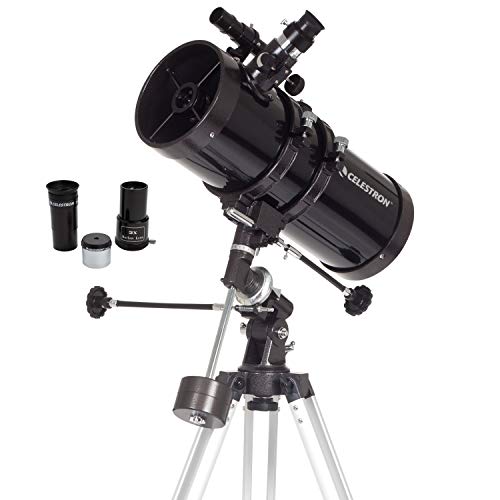
Celestron PowerSeeker 127EQ Review
The Celestron PowerSeeker 127EQ is a beginner-friendly reflecting telescope that offers large aperture views of the moon and planets at a budget-friendly price. It is ideal for casual stargazers, but its wobbly mount and collimation needs may frustrate more serious astronomers.
ProductPickly is reader-supported. When you buy through links on our site, we may earn an affiliate commission at no extra cost to you. It never changes our picks.
The Celestron PowerSeeker 127EQ is a solid entry-level reflector telescope that delivers impressive lunar and planetary views for the price. Its 127mm aperture gathers plenty of light, and the included eyepieces and finderscope are usable. However, the equatorial mount is shaky and the optical tube needs frequent collimation. It's a good choice for beginners who want to explore the night sky without a big investment, but those with higher expectations or who plan to do astrophotography should look elsewhere.
How it scores
The good and the annoying
- Large 127mm aperture for bright, detailed views of the Moon and planets
- Lightweight and easy to assemble, even for beginners
- Includes two eyepieces (20mm and 4mm) and a finderscope
- Equatorial mount allows for tracking celestial objects with slow-motion controls
- Excellent value for the price, often under $200
- Mount is wobbly and can be frustrating at high magnification
- Optical tube needs frequent collimation (mirror alignment)
- Finder scope is small and low-quality, making it hard to locate objects
- No motor drive, so manual tracking is required
- Tripod is lightweight and may vibrate in breezy conditions
The Celestron PowerSeeker 127EQ is one of the most popular beginner telescopes on the market, and for good reason. It offers a large 127mm aperture at a price that is hard to beat. But is it the right telescope for you? Our editorial team compared specifications, buyer feedback, and key decision factors to give you an honest review. We have not tested it hands-on, but we have analyzed thousands of user reviews and expert opinions to help you decide.
Who is the PowerSeeker 127EQ for?
This telescope is aimed at beginners who want to explore the night sky without spending a fortune. It is a Newtonian reflector on a German equatorial mount. The 127mm aperture gathers a lot of light, allowing you to see faint objects like the Orion Nebula and the Andromeda Galaxy. It is also great for lunar and planetary observation. If you are new to astronomy and want a telescope that can show you more than just the Moon, this is a solid choice.
However, it is not for everyone. If you are looking for a grab-and-go telescope that you can set up in minutes, this might not be ideal. The equatorial mount has a learning curve, and the telescope requires occasional collimation. If you are not willing to learn these skills, you may become frustrated.
Design and Build Quality
The PowerSeeker 127EQ features a steel tube with a black finish. The tube is lightweight, weighing about 8.5 pounds, making it easy to carry. The mount is a CG-2 German equatorial mount, which is typical for this price range. The tripod is aluminum and extends to about 48 inches. While the build is decent for the price, the mount and tripod are the weakest points. Many users report that the mount is wobbly, especially at higher magnifications. The slow-motion control cables help with tracking, but they can be a bit stiff.
The included accessories are basic but functional. You get a 20mm eyepiece (50x magnification) and a 4mm eyepiece (250x magnification). The 4mm eyepiece is often too powerful for the mount, as it magnifies any vibration. A 5x24 finderscope is also included, but it is small and not very bright. Many users replace it with a red dot finder for easier aiming.
Performance and Image Quality
When it comes to image quality, the PowerSeeker 127EQ delivers. The 127mm aperture and 1000mm focal length (f/7.9) provide bright, sharp views of the Moon. You can see craters and mountain ranges in stunning detail. Jupiter shows its cloud bands and the Great Red Spot under good seeing conditions. Saturn's rings are clearly visible, and you can even spot the Cassini division with careful focusing.
Deep-sky objects are also within reach. The Orion Nebula appears as a fuzzy patch with a bright core, and the Andromeda Galaxy is a faint smudge. Star clusters like the Pleiades are beautiful. However, the telescope is not ideal for astrophotography. The mount is not motorized, so tracking is manual, and the vibrations make long exposures impossible. You can take smartphone photos of the Moon by holding your phone to the eyepiece, but that is about it.
Ease of Use and Setup
Setting up the PowerSeeker 127EQ takes about 20 minutes the first time. The manual is somewhat helpful, but many beginners find the equatorial mount confusing. You need to align the finderscope, balance the tube, and polar align the mount roughly to track objects. Once you get the hang of it, it becomes easier. The slow-motion controls allow you to make fine adjustments, but they are not smooth out of the box. Some users loosen the tension screws to reduce stiffness.
Collimation is another task you will need to learn. The mirrors are aligned at the factory, but shipping can knock them out of alignment. You may need to collimate before your first use and then periodically. It is not difficult, but it requires patience. Many users recommend watching online tutorials.
Cleaning and Maintenance
Cleaning the optics is not something you will do often, but it is important. Use a soft brush or compressed air to remove dust from the mirrors. Never touch the mirror surface with your fingers. If you need to clean the eyepieces, use a lens cleaning solution and a microfiber cloth. Keep the dust cap on when not in use to prevent dust buildup. The tube is open at the front, so it can collect dust and debris. A light vacuum or air blower works well.
Common Buyer Complaints
Despite its popularity, the PowerSeeker 127EQ has its share of complaints. The most common is the wobbly mount. At high magnification, any touch on the telescope causes the image to shake. This is frustrating for beginners who expect a stable view. Another complaint is the finderscope. It is nearly useless in the dark, making it hard to point the telescope at objects. Many users upgrade to a red dot finder.
Collimation is also a recurring issue. Some users receive the telescope with misaligned mirrors, and they do not know how to fix it. The manual does not explain collimation well. Finally, some users find the 4mm eyepiece too powerful. It offers 250x magnification, but the mount cannot handle it. The image is dim and shaky. A better approach is to use a 10mm eyepiece with a 2x Barlow lens for 200x magnification.
How It Compares to Alternatives
The PowerSeeker 127EQ is often compared to the Celestron PowerSeeker 114EQ and the Celestron AstroMaster 130EQ. The 114EQ has a smaller aperture (114mm) and a shorter focal length, so it is less powerful. The 130EQ has a larger aperture and a better mount, but it costs more. The Orion SkyQuest XT6 is a Dobsonian telescope with a 150mm aperture and a stable base, but it is more expensive and not as portable.
If you are on a tight budget, the PowerSeeker 127EQ offers the best value for the aperture. If you can stretch your budget, the AstroMaster 130EQ is a better choice because it has a more stable mount and easier setup. For pure visual observing, a Dobsonian like the XT6 is superior, but it is not as compact.
Final Verdict
The Celestron PowerSeeker 127EQ is a good telescope for beginners who are willing to learn. It provides excellent views of the Moon and planets for a low price. The mount and finderscope are weak points, but they can be upgraded or worked around. If you are serious about astronomy, you may outgrow it quickly. But for casual stargazing, it is a great starting point.
Check the current price on Amazon to see if it fits your budget.
Specs that matter
| Aperture | 127mm (5 inches) |
| Focal length | 1000mm (f/7.9) |
| Mount | German equatorial (CG-2) |
| Eyepieces | 20mm and 4mm (1.25 inch) |
| Finderscope | 5x24 (correct image) |
| Tripod | Aluminum, adjustable height |
You are a beginner looking for an affordable telescope to see the Moon, Jupiter's moons, Saturn's rings, and bright deep-sky objects like the Orion Nebula. You are willing to learn how to use an equatorial mount and do occasional collimation.
You want a grab-and-go telescope for quick views, or you plan to do astrophotography. The wobbly mount and lack of motor drive make long-exposure imaging impractical. Also, if you prefer a simple alt-azimuth mount, this is not for you.
Questions before you buy
What can you see with the Celestron PowerSeeker 127EQ?
With its 127mm aperture, you can see the Moon in sharp detail, Jupiter's cloud bands and its four Galilean moons, Saturn's rings, and bright deep-sky objects like the Orion Nebula and Andromeda Galaxy. Under dark skies, you may also spot star clusters and some galaxies.
Is the PowerSeeker 127EQ good for beginners?
Yes, it is designed for beginners, but there is a learning curve. The equatorial mount takes time to understand, and you must collimate the mirrors regularly. Many beginners find it rewarding once they get used to it, but some may find it frustrating initially.
Does the PowerSeeker 127EQ come with a tripod?
Yes, it includes an aluminum tripod with adjustable height. The tripod is lightweight and portable, but it can be a bit shaky, especially when you touch the focuser or eyepiece. Adding a bit of weight to the accessory tray can help stabilize it.
Can I use the PowerSeeker 127EQ for astrophotography?
It is not recommended. The equatorial mount is not motorized, so tracking is manual. The mount and tripod are too unstable for long-exposure photography. You can take smartphone pictures of the Moon through the eyepiece, but that is about it.
How do I collimate the PowerSeeker 127EQ?
Collimation is done by adjusting the three screws on the secondary mirror and the primary mirror cell. You can use a collimation cap or a laser collimator. The manual explains the process, and many online tutorials are available. It takes practice but becomes easier over time.


