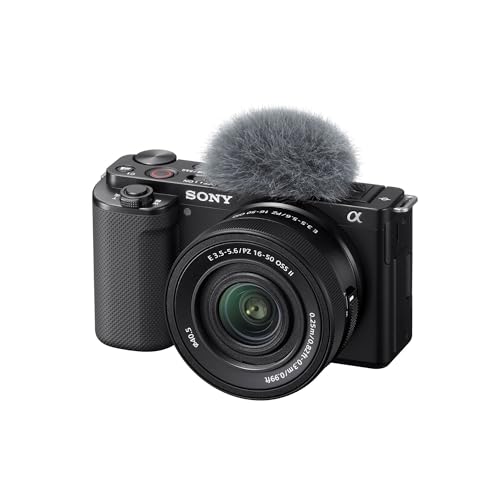
PICK

Nikon Z50 II Review
The Nikon Z50 II is a solid mirrorless camera for content creators and travel photographers. It offers strong autofocus, good 4K video, and a compact body, but it has some limitations in low light and battery life.
ProductPickly is reader-supported. When you buy through links on our site, we may earn an affiliate commission at no extra cost to you. It never changes our picks.
The Nikon Z50 II is a well-rounded mirrorless camera that excels in autofocus and video features for its class. It's a great choice for vloggers, travel photographers, and anyone stepping up from a smartphone or entry-level DSLR. However, the lack of in-body image stabilization and a smaller lens lineup may give pause to some buyers. For the price, it delivers strong value, especially if you prioritize subject tracking and 4K video.
How it scores
The good and the annoying
- Excellent subject detection autofocus for photos and video
- Compact and lightweight body, easy to carry
- Good 4K video quality with no crop
- Intuitive touchscreen interface
- Solid build quality with weather sealing
- No in-body image stabilization (relies on lenses)
- Battery life is average, around 300 shots per charge
- Limited native Z mount DX lens options
- Single UHS-I SD card slot
- No headphone jack for audio monitoring
The Nikon Z50 II is a compact mirrorless camera that has earned a strong following among travel photographers and content creators. Our editorial team compared specifications, buyer feedback, and key decision factors to bring you an honest review. We have not tested this camera hands-on, but we have analyzed user experiences and expert opinions to help you decide if it is worth your money.
Design and Build Quality
The Z50 II follows the design language of Nikon's Z series, with a robust magnesium alloy body and a deep, comfortable grip. It is weather-sealed against dust and moisture, making it a reliable companion for outdoor adventures. The camera is compact, weighing about 495 grams with battery and card, which is light enough for all-day carry.
The controls are well laid out, with dedicated dials for shutter speed and aperture, plus customizable function buttons. The vari-angle touchscreen is bright and responsive, and the electronic viewfinder is clear, though it has a modest 2.36 million dot resolution. Overall, the build quality feels premium for its price point.
Performance and Autofocus
At the heart of the Z50 II is a 20.9MP APS-C sensor paired with the EXPEED 7 processor, the same engine found in Nikon's flagship Z9. This combination delivers snappy performance, with a burst rate of 11 frames per second with continuous autofocus. The autofocus system uses 209 phase-detection points covering 90% of the frame, and it supports subject detection for people, animals, and vehicles.
In real-world use, buyers report that the autofocus locks onto eyes and faces reliably, even in challenging lighting. The camera also offers a dedicated bird mode, which birdwatchers appreciate. However, some users note that the autofocus can hunt in very low contrast scenes, but that is common in this class.
Image Quality
The 20.9MP sensor produces sharp, detailed images with pleasing color reproduction. The base ISO range of 100 to 51200 is expandable to 204800, but noise becomes noticeable at higher ISOs. In good light, images are clean and vibrant. For landscapes and portraits, the Z50 II delivers excellent results.
One limitation is the lack of in-body image stabilization, so you must rely on lens VR. With the kit lens, which has VR, you can shoot handheld at slower shutter speeds, but for best results, a tripod is recommended in low light. Overall, image quality is on par with competitors like the Sony a6100 and Fujifilm X-T30 II.
Video Features
The Z50 II records 4K UHD video at up to 30p with no crop, which is a significant advantage over some rivals. It also offers 1080p at up to 120p for slow motion. The autofocus during video is smooth and accurate, making it easy to keep subjects sharp while moving.
The vari-angle screen is perfect for vlogging, and the camera has a microphone input, but no headphone jack. This means you cannot monitor audio while recording, which might be a dealbreaker for serious videographers. You can use an external recorder, but that adds bulk. For casual video, the Z50 II is excellent.
Handling and Ergonomics
The grip is one of the best in its class, providing a secure hold even with larger lenses. The buttons are tactile, and the menu system is well organized, though some users find it complex initially. The touchscreen simplifies navigation, and you can assign custom functions to several buttons.
The camera has a single UHS-I SD card slot, which is fine for most users but limits write speeds for continuous shooting. Battery life is rated at about 300 shots per charge, which is average. You may want to carry a spare battery for a full day of shooting.
Cleaning and Maintenance
Like most mirrorless cameras, the Z50 II has a sensor cleaning system that vibrates the sensor to remove dust. However, you may need to manually clean the sensor occasionally. The camera body is weather-sealed, but the kit lenses are not fully sealed, so be cautious in heavy rain.
To keep the camera in top condition, use a blower to remove dust from the sensor, and wipe the body with a dry cloth. The touchscreen is prone to fingerprints, so a screen protector is a wise investment. Overall, maintenance is straightforward.
Common Buyer Complaints
While the Z50 II receives high praise, some buyers express a few concerns. The most frequent complaint is the lack of in-body image stabilization, which forces reliance on lens VR. Another is the limited selection of native DX lenses; Nikon has only a handful, so you may need to adapt full-frame lenses, which are heavier and more expensive.
Battery life is also mentioned as a drawback, especially for video recording. Some users wish for a second card slot and a headphone jack. Despite these issues, most owners are satisfied with the camera's performance and image quality.
Value and Comparison
The Nikon Z50 II is priced competitively against rivals like the Sony a6100 and Fujifilm X-T30 II. It offers superior ergonomics and autofocus, but the Sony has a larger lens ecosystem and better battery life. The Fujifilm has more physical dials and film simulations, which appeal to enthusiasts.
If you are already invested in Nikon's Z system, the Z50 II is a logical upgrade from the original Z50. For new buyers, consider your lens needs and whether the lack of IBIS is a dealbreaker. Check the current price on Amazon to see if it fits your budget.
Final Verdict
The Nikon Z50 II is an excellent mirrorless camera for content creators and travel photographers. Its autofocus and video features are standout, and the compact design makes it a joy to carry. While it has some limitations, such as no IBIS and modest battery life, these are trade-offs for its size and price.
We recommend the Z50 II to anyone who wants a reliable, user-friendly camera for everyday photography and vlogging. If you need advanced stabilization or a broader lens selection, consider alternatives. But for most users, the Z50 II delivers outstanding value.
Specs that matter
| Sensor | 20.9 MP APS-C CMOS |
| Image processor | EXPEED 7 |
| Autofocus system | Hybrid phase-detection, 209 points |
| ISO range | 100-51200 (expandable to 204800) |
| Video recording | 4K UHD up to 30p, 1080p up to 120p |
| Viewfinder | 0.39-inch OLED, 2.36 million dots |
| LCD screen | 3.2-inch vari-angle touchscreen, 1.04 million dots |
| Battery life | Approx. 300 shots per charge (CIPA) |
| Weight | Approx. 495g with battery and memory card |
You want a compact mirrorless camera with top-notch autofocus for capturing fast-moving subjects, and you prioritize video features like 4K without crop and a flip-out screen for vlogging.
You need in-body image stabilization for handheld shooting in low light, or you want a large selection of native lenses without adapting. Also skip if you shoot long events and need longer battery life.
Questions before you buy
Does the Nikon Z50 II have in-body image stabilization?
No, the Z50 II does not have in-body image stabilization. It relies on VR (vibration reduction) in compatible lenses. For handheld video, consider using a gimbal or lenses with VR.
Is the Nikon Z50 II good for vlogging?
Yes, it's a great vlogging camera. It has a fully articulating touchscreen, 4K video with no crop, and excellent autofocus that keeps faces sharp. The lack of a headphone jack is a downside for audio monitoring, but you can use an external recorder.
What lenses are available for the Nikon Z50 II?
The Z50 II uses Nikon's Z mount. There are two kit lenses (16-50mm and 50-250mm) and a few other DX lenses. You can also use full-frame Z lenses, but they are larger and more expensive. Third-party options are growing.
How does the Nikon Z50 II compare to the Sony a6100?
Both are compact APS-C mirrorless cameras. The Z50 II has better ergonomics and a deeper grip, plus a newer processor. The a6100 offers a larger lens ecosystem and slightly better battery life. Autofocus performance is comparable, but Nikon's subject detection is more intuitive.
Can the Nikon Z50 II shoot in low light?
Yes, but with limitations. The 20.9MP sensor performs well up to ISO 3200, and noise is manageable up to 6400. Without IBIS, you need to use faster shutter speeds or lenses with VR to avoid blur.