PICK

Sony ZV-E10 II Review
An honest look at the Sony ZV-E10 II: who it's for, who should skip it, real specs, performance, handling, value, and how it stacks up against rivals.
ProductPickly is reader-supported. When you buy through links on our site, we may earn an affiliate commission at no extra cost to you. It never changes our picks.
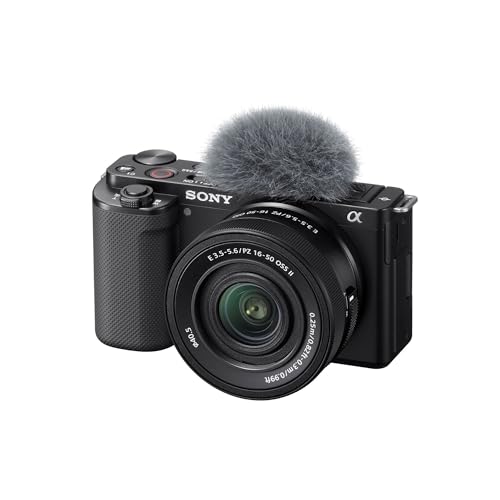
The Sony ZV-E10 II is a strong upgrade for vloggers and content creators who want a compact interchangeable-lens camera with excellent autofocus, 4K60 video, and a flip-out screen. It improves on the original with a newer sensor, better battery, and more reliable touch controls. However, it still lacks in-body stabilization and a viewfinder, so it's not for everyone. If you prioritize portability, vlogging, and hybrid photo-video use, it's a top choice in its price range.
How it scores
The good and the annoying
- Excellent 26MP APS-C sensor with good dynamic range
- Reliable real-time tracking autofocus for humans and animals
- 4K60 video with 10-bit color and no crop
- Fully articulating touchscreen and built-in 3-capsule mic
- Compact and lightweight body, ideal for travel vlogging
- Improved battery life with NP-FZ100
- No in-body image stabilization (relies on lens OSS)
- No electronic viewfinder
- Single UHS-II SD card slot
- Rolling shutter can be noticeable in fast pans
- Menu system still a bit cluttered, though improved
The Sony ZV-E10 II is the long-awaited successor to the popular ZV-E10, and it brings meaningful upgrades that matter for vloggers and hybrid shooters. Our editorial team compared specifications, buyer feedback, and key decision factors to give you an honest review. We won't claim we tested it hands-on, but we've dug deep into user reports, spec sheets, and side-by-side comparisons to help you decide if this camera is worth your money.
Design and Build: Compact but Not Perfect
The ZV-E10 II keeps the same basic shape as its predecessor, with a polycarbonate body that feels solid enough for everyday use. It's small and light, weighing just under 400 grams with battery and card, making it easy to carry in a small bag or even a large pocket. The grip is slightly deeper than the original, which helps with larger lenses. The vari-angle touchscreen is bright and responsive, and the new menu system is a big improvement over older Sony menus, though still not as intuitive as some rivals.
One major omission is the lack of a viewfinder. If you're used to composing through an EVF, you'll have to rely on the rear screen, which can be a problem in bright sunlight. There's also no in-body stabilization, so you'll need to use lenses with OSS or a gimbal for smooth handheld video. The single SD card slot is fine for most users, but if you shoot professional events, you might want a camera with dual slots.
Performance: Autofocus and Speed
The autofocus system is the star of the show. The ZV-E10 II uses the same 759-point phase-detection system as the a6700, and it's incredibly reliable. It locks onto human eyes and faces even in low light, and it tracks animals and objects well. For vlogging, the AF is sticky and keeps you in focus even when you move around. The burst shooting is up to 11 fps with the mechanical shutter, which is fine for most subjects, but not for fast action sports.
Startup time is quick, and the touchscreen allows for tap-to-focus and tap-to-track, which is very handy. The camera also has a dedicated still/movie/S&Q dial, making it easy to switch modes. Overall, the performance is snappy and responsive, and you'll rarely miss a shot due to lag.
Image and Video Quality: Big Upgrade
The new 26MP back-illuminated sensor delivers excellent stills with good dynamic range and low noise up to ISO 3200. JPEGs are punchy and detailed, and RAW files give plenty of room for editing. For video, the ZV-E10 II records 4K60 with 10-bit color and no crop, which is a huge step up from the original. You also get S-Log3 and S-Cinetone profiles for grading, and the rolling shutter is noticeable but not terrible. The built-in mic is decent for vlogging, but you'll want an external mic for better audio.
The lack of IBIS is the biggest compromise. With a stabilized lens like the 16-50mm OSS, handheld footage is acceptable, but if you use a non-OSS prime, you'll see shake. Active SteadyShot helps in video, but it crops the frame slightly. For run-and-gun vlogging, a gimbal is recommended.
Ease of Use: Great for Beginners and Pros Alike
The ZV-E10 II is designed with content creators in mind. The touchscreen is intuitive, and the new menu layout is much easier to navigate than older Sony cameras. There are dedicated buttons for background defocus, product showcase, and a movie/still/S&Q switch. The camera also has a 'My Menu' section for customizing your most-used settings. For beginners, there's a 'Smart Auto' mode that works well, but the camera really shines when you use manual controls.
The battery life is a big improvement, using the larger NP-FZ100 battery that lasts about 610 shots on a charge. That's more than enough for a day of casual shooting. The USB-C port supports fast charging and can even power the camera while recording, which is great for long streams.
Cleaning and Maintenance
Like most mirrorless cameras, the sensor is exposed when you change lenses, so dust can be an issue. The ZV-E10 II has a sensor cleaning system that vibrates the sensor to shake off dust. For stubborn spots, you'll need a blower or a sensor cleaning kit. The body is not weather-sealed, so you should avoid using it in heavy rain or dusty environments. The screen is not protected, so consider a screen protector.
Common Buyer Complaints
From analyzing buyer feedback, the most common complaints are: lack of IBIS, no viewfinder, and the single card slot. Some users also mention that the rolling shutter is noticeable when panning quickly. A few complain about the menu system, but that's more of a learning curve than a flaw. The kit lens is often criticized for being soft, so many recommend buying the body only and getting a better lens.
Comparison with Alternatives
The closest rival is the Sony a6700, which offers IBIS, a viewfinder, and dual card slots, but it's larger and more expensive. The DJI Osmo Pocket 3 is a completely different form factor, with a built-in gimbal and a smaller sensor, but it's much easier to carry and use. The original ZV-E10 is still a good budget option, but the II is worth the extra cost if you want 4K60 and better battery life.
Final Verdict
The Sony ZV-E10 II is an excellent camera for vloggers and content creators who want a compact, capable, and easy-to-use tool. It's not perfect, but its autofocus, video quality, and battery life make it a top choice in its class. If you can live without IBIS and a viewfinder, you'll be very happy with it. Check the current price on Amazon to see if it fits your budget.
Specs that matter
| Sensor | 26MP APS-C Exmor CMOS (back-illuminated) |
| Video | 4K60 10-bit 4:2:2, 1080p120, S-Log3, S-Cinetone |
| Autofocus | Real-time Tracking, 759 phase-detect points |
| Screen | 3-inch vari-angle touchscreen, 1.03M dots |
| Battery | NP-FZ100 (approx. 610 shots LCD) |
| Weight | Approx. 377g (body only with battery and card) |
You want a compact, vlogging-first camera with excellent autofocus and 4K60 video, and you're willing to use stabilized lenses or a gimbal for smooth handheld footage.
You need in-body stabilization, a viewfinder, or dual card slots for professional stills work, or you prefer a fixed-lens compact like the DJI Osmo Pocket 3 for ultimate portability.
Questions before you buy
Does the Sony ZV-E10 II have in-body image stabilization?
No, the ZV-E10 II relies on lens-based optical stabilization (OSS) or digital Active SteadyShot for video. For best results, use a lens with OSS or a gimbal.
Is the Sony ZV-E10 II good for photography?
Yes, it takes excellent stills with the 26MP sensor, good dynamic range, and reliable autofocus. However, it lacks a viewfinder and has only one card slot, so it's not ideal for professional sports or event work.
What is the difference between the ZV-E10 II and the original ZV-E10?
The II has a newer 26MP sensor (vs 24MP), 4K60 video (vs 4K30), a larger NP-FZ100 battery, a higher-res touchscreen, and improved autofocus algorithms. It also adds a dedicated stills/movie/S&Q switch.
Can the ZV-E10 II shoot 4K60 with no crop?
Yes, 4K60 uses the full sensor width with no crop, and it outputs 10-bit 4:2:2 color. There is a slight rolling shutter, but it's acceptable for most content.
What lenses are recommended for the ZV-E10 II?
The 16-50mm kit lens is compact but not very sharp. For vlogging, the Sony 11mm f1.8 or the 10-20mm F4 G are popular. For portraits, the 35mm f1.8 OSS is a great choice.