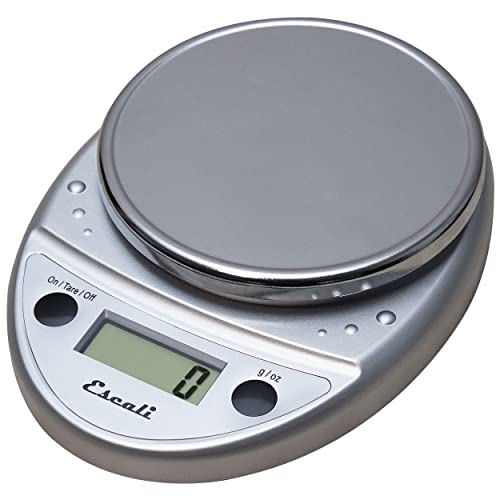
Most digital kitchen scales can measure in both grams and ounces via a unit button.
- Analog scales often show only one unit, but some have dual dials.
- Check the scale's resolution and capacity to ensure it meets your precision needs.
- For baking, grams offer more precision, but ounces are fine for general cooking.
How do kitchen scales switch between grams and ounces?
Most digital scales have a unit button labeled UNIT or MODE. Press it to cycle through grams, ounces, and sometimes pounds and milliliters. The display updates instantly. Some scales require you to press the button before adding ingredients. Others let you switch mid-weighing, which can cause measurement confusion. Check the manual for your specific model.
Which types of kitchen scales support both units?
Digital kitchen scales almost always support multiple units. They use load cells and microchips to convert measurements. Analog spring scales typically show only one unit, often ounces. Some analog scales have dual dials with both grams and ounces. High-end digital scales may also offer troy ounces for precious metals, but that is rare in kitchen models.
What should you look for in a dual-unit kitchen scale?
Check the resolution and capacity. A scale that measures in 1-gram increments is useful for baking. For ounces, look for 0.1-ounce precision. The unit button should be easy to reach. Some scales have a dedicated button on the front, while others bury it in a menu. Also, consider the display size and readability. Backlit displays help in low light.
Are there kitchen scales that only measure in grams?
Yes, some scales are metric-only, especially those made for European markets. They display grams and kilograms only. If you buy a scale from a US retailer, it usually includes ounces. Check the listing for 'metric only' or 'grams only' to avoid surprises. For international recipes, a dual-unit scale is more versatile.
How accurate are kitchen scales in both units?
Accuracy depends on the scale's quality and calibration. Digital scales are accurate to within 1-2 grams or 0.05-0.1 ounces. Cheaper scales may drift over time. You can test accuracy with a known weight, like a coin. Place the item on the scale and compare the reading to the expected weight. Recalibrate if necessary, but many scales lack manual calibration.