Digital scales can measure milliliters for water and milk using preset density conversions.
- For other liquids, you need to know the density or use a scale with a custom setting.
- Scales are more accurate than measuring cups for liquid ingredients.
- Check the scale's manual to see which liquids are supported.
How Do Kitchen Scales Measure Milliliters?
Digital kitchen scales measure mass in grams and ounces. To show milliliters, they apply a density conversion. Water has a density of 1 gram per milliliter, so 100 grams equals 100 ml. Many scales have a 'milk' or 'water' mode that uses this ratio. Some models let you set custom density for other liquids. This feature is common on scales with a 'unit' button that cycles through ml, fl oz, and g.
Which Liquids Can Scales Measure in Milliliters?
Scales with a volume mode typically support water and milk. Milk has a density close to water, about 1.03 g/ml, so the error is small. Some scales include settings for oil, honey, or flour. The scale's manual lists supported liquids and their density presets. For liquids not listed, you can calculate volume manually using density. For example, olive oil has a density of 0.91 g/ml, so 100 grams equals about 110 ml.
Best Kitchen Scales with Milliliter Measurement
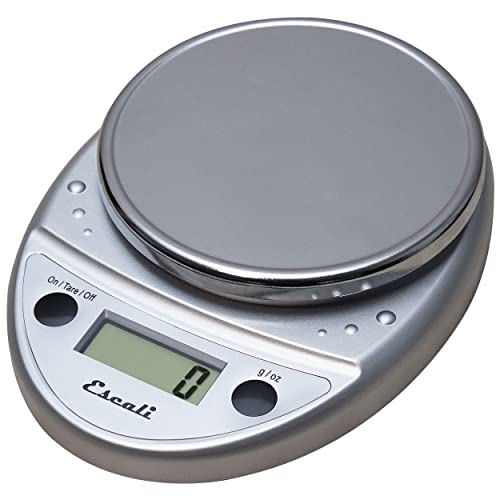
The Escali Primo Digital Scale includes a 'ml' unit for water and milk. The OXO Good Grips Stainless Steel Food Scale has a 'milk' mode. The Etekcity Food Scale offers multiple unit options, including ml. The Greater Goods Digital Kitchen Scale features a 'water' and 'milk' setting. These scales are widely available on Amazon and have clear displays.
How to Use a Kitchen Scale to Measure Milliliters
Place a container on the scale and zero it out. Press the unit button until 'ml' appears on the display. Pour the liquid into the container. The scale calculates the volume based on the weight and density. For water, the reading is direct. For other liquids, ensure the scale is set to the correct liquid mode. If not, use a conversion chart.
Limitations and Accuracy of Milliliter Measurement
Scales measure volume indirectly, so accuracy depends on liquid density. Temperature changes density slightly, but the effect is minimal for cooking. Scales cannot measure milliliters for solids like flour or sugar. For those, use a measuring cup or spoon. The resolution of most scales is 1 gram, which equals 1 ml for water. That precision is sufficient for most recipes.