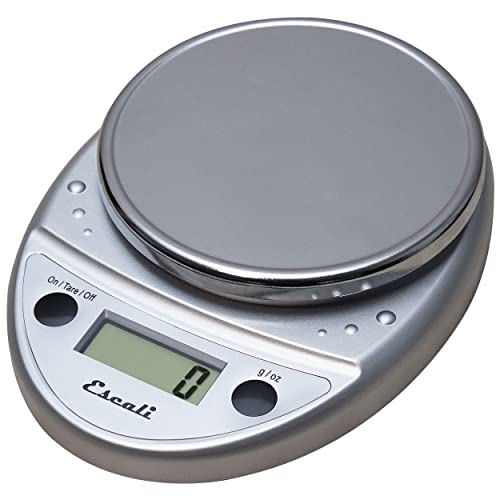
Digital kitchen scales use load cells and strain gauges to measure weight electronically.
- Mechanical scales rely on spring compression and are simpler but less precise.
- Accuracy depends on surface, calibration, and avoiding overload.
- Tare function allows measuring ingredients in any container.
- Choose a scale with at least 1g resolution for baking.
What is a load cell and how does it work?
A load cell is the core component in most digital kitchen scales. It is a metal block, often aluminum, that deforms microscopically when weight is applied. Strain gauges, which are thin foil resistors, are bonded to the cell. As the cell bends, the gauges stretch or compress, changing their electrical resistance. This resistance change is measured and converted into a voltage signal. The scale's microprocessor then calculates the weight based on that signal. Most kitchen scales use one or more load cells arranged under the platform.
How do strain gauges convert force into a reading?
Strain gauges are wired in a Wheatstone bridge circuit to amplify tiny resistance changes. When the load cell bends, the gauge's resistance alters by a fraction of a percent. The bridge converts this into a measurable voltage difference. That voltage is proportional to the applied force, so the scale can map it to a weight. The signal is then digitized by an analog-to-digital converter. Finally, the processor applies calibration factors to display the weight in grams or ounces.
How do mechanical kitchen scales measure weight?
Mechanical scales use a spring rather than a load cell. When you place an object on the platform, it compresses a spring. The spring's compression is directly proportional to the weight, following Hooke's law. A rack and pinion gear translates the spring's movement into rotation of a needle. The needle points to a calibrated dial showing the weight. These scales require no batteries and are often more durable. However, they are less precise than digital models, typically reading to the nearest 5 or 10 grams.
How do digital scales achieve high accuracy?
Digital scales can measure to the nearest gram or even 0.1 gram. Accuracy depends on the quality of the load cell and the calibration process. Most digital scales have a tare function that zeroes out the container weight. They also compensate for temperature changes that affect metal resistance. Some models use multiple load cells for better stability on uneven surfaces. The resolution, or smallest increment, is determined by the sensor's sensitivity and the ADC's bit depth.
What factors affect the accuracy of a kitchen scale?
Placement on a hard, level surface is critical for consistent readings. Uneven floors or soft mats can cause the load cell to bend unevenly. Temperature extremes can alter the metal's elasticity, leading to drift. Overloading the scale beyond its maximum capacity can permanently damage the load cell. Battery level also matters; low voltage can cause erratic readings. Regular calibration with a known weight, like a coin, helps maintain accuracy.