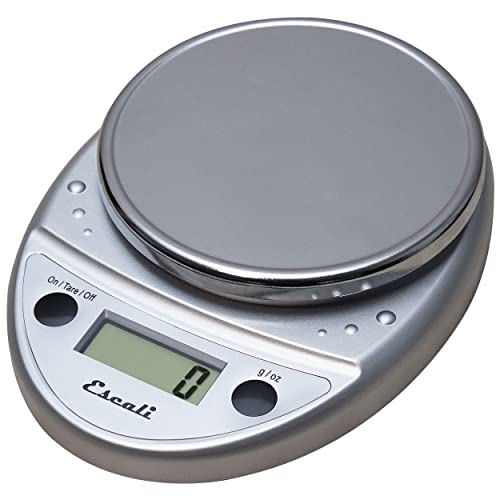
Kitchen ScalesGuide
How do kitchen scales work? A clear guide
Kitchen scales measure weight by detecting force. Most digital models use a load cell with a strain gauge. When you place food on the scale, the gauge bends slightly and changes electrical resistance. The scale converts that change into a weight reading on the display. Mechanical scales use a spring that compresses with weight.
5 min read
Digital kitchen scales use load cells with strain gauges to measure weight electronically.
- Mechanical scales rely on spring compression and are less precise than digital models.
- The tare function is crucial for weighing ingredients in containers and multi-step recipes.
- Accuracy depends on sensor quality, surface, and battery condition; calibrate regularly for best results.
What are the main types of kitchen scales?
Digital scales dominate the market today. They rely on electronic sensors for measurement. Mechanical scales use springs and dials instead. Both types serve the same purpose but differ in accuracy and features. Digital scales typically offer more precision and tare functions.
How does a digital kitchen scale measure weight?
Digital scales use a load cell as their core sensor. The load cell contains a strain gauge, a thin metallic foil. When weight presses down, the gauge deforms and its electrical resistance changes. This resistance change is tiny, so the scale amplifies the signal. A microprocessor then converts the signal into a digital weight readout.
How does a mechanical kitchen scale work?
Mechanical scales operate without electricity. They use a spring that compresses under weight. The compression moves a needle across a dial. The dial is calibrated to show weight in grams or ounces. These scales are simple and durable but less precise than digital ones.
What is the tare function and why does it matter?
The tare function zeroes out the scale's current reading. This lets you weigh ingredients in a bowl without including the bowl's weight. Press tare after placing the container, then add ingredients. You can also weigh multiple ingredients sequentially in the same bowl. This feature is essential for baking and meal prep.
How accurate are kitchen scales and what affects accuracy?
Most digital kitchen scales have a resolution of 1 gram. Some high-end models offer 0.1 gram accuracy. Accuracy depends on sensor quality and calibration. Temperature changes and uneven surfaces can affect readings. Always place the scale on a flat, stable surface. Avoid overloading beyond the scale's maximum capacity.
Common questions
How do kitchen scales work?
Kitchen scales measure the force exerted by an object. Digital scales use a load cell with a strain gauge that changes resistance under weight. Mechanical scales use a spring that compresses. The scale converts the physical deformation into a weight reading.
What is a load cell in a kitchen scale?
A load cell is a transducer that converts force into an electrical signal. It contains a strain gauge that deforms under weight, altering electrical resistance. The scale's processor interprets this change as weight.
How does a strain gauge work?
A strain gauge is a thin conductive foil attached to a flexible base. When the base bends, the foil stretches or compresses, changing its electrical resistance. This resistance change is proportional to the applied force.
Are digital scales more accurate than mechanical ones?
Yes, digital scales generally offer higher accuracy and precision. They can measure to 1 gram or finer, while mechanical scales often have larger increments. Digital scales also provide consistent readings across their range.
How do I calibrate a kitchen scale?
Many digital scales have a calibration mode. Use a known weight, like a calibration weight or a coin, to adjust the scale. Check the manual for specific steps. Some scales auto-calibrate each time they power on.
Why does my kitchen scale give different readings?
Inconsistent readings can result from uneven surfaces, low battery, or temperature fluctuations. Make sure the scale is on a flat, stable surface. Replace batteries if the display is dim. Allow the scale to warm up for a few seconds before use.
Can I use a kitchen scale for weighing letters?
Yes, if the scale's capacity and accuracy meet postal requirements. Most kitchen scales handle up to 5 kg or 11 lb. For letters, you need 1 gram accuracy, which most digital scales have. But a dedicated postal scale may be more convenient.
What is the difference between a kitchen scale and a postal scale?
Kitchen scales are designed for food and have features like tare and unit switching. Postal scales focus on letter and package weights, often with higher capacity. Both use similar load cell technology. Choose based on your primary use.