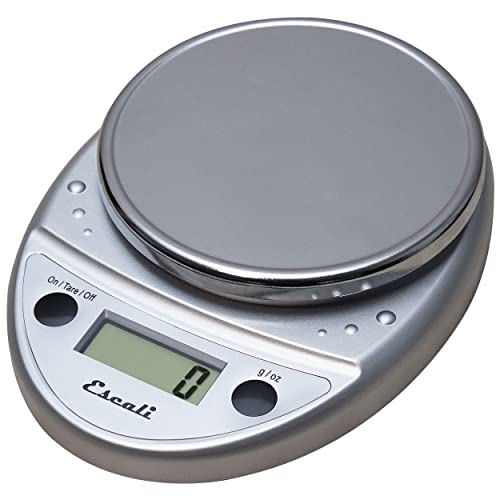
Digital scales with 1-gram increments are accurate for most cooking.
- For baking, choose a scale with 0.1-gram precision.
- Calibration and a flat surface improve accuracy.
What Makes a Kitchen Scale Accurate?
Accuracy in kitchen scales depends on the sensor type and resolution. Most digital scales use strain gauge load cells. These convert weight into an electrical signal. Higher-quality sensors provide more consistent readings. Resolution, often 1 gram or 0.1 ounces, determines the smallest detectable change. A scale with 1-gram increments is suitable for most cooking. For baking, 0.1-gram precision may be necessary. Calibration features allow you to reset the scale to zero. Temperature changes can affect accuracy, so keep scales away from heat sources.
Digital vs. Mechanical Scales: Which Is More Accurate?
Digital scales generally outperform mechanical ones in accuracy. Mechanical scales rely on springs and dials, which can drift over time. Digital scales use electronic sensors for precise measurements. They also offer tare functions for subtracting container weight. For most home cooks, a digital scale is the better choice. However, high-end mechanical scales can be accurate within a few grams. But they lack the fine resolution of digital models. If you need consistent results, choose digital.
Top Features to Look For in an Accurate Kitchen Scale
Look for a scale with a high maximum capacity, like 5 kilograms or more. A tare function is essential for measuring ingredients in a bowl. Units of measure should include grams, ounces, and pounds. A backlit display helps read measurements in low light. Auto-off saves battery but can be annoying during long tasks. Some scales have a 'hold' function to lock the reading. Consider a scale with a removable stainless steel top for easy cleaning. Accuracy is often specified as plus or minus 1 gram. Check the product listing for this tolerance.
Best Kitchen Scales for Different Uses
For baking, a scale with 0.1-gram precision is ideal. The Ozeri Pronto Digital Kitchen Scale offers 0.1-gram resolution. It measures up to 5 kilograms, suitable for most recipes. For everyday cooking, the Etekcity Food Scale provides 1-gram increments. It has a large platform for bowls. For coffee enthusiasts, a scale with a timer is useful. The AWS American Weigh Scales AWS-600 has a 0.1-gram accuracy. For portion control, a compact scale like the Greater Goods Digital Scale works well. It fits in a drawer and measures up to 11 pounds.
Edge Cases: When Accuracy Matters Most
In baking, small errors can ruin a recipe. Flour and sugar need precise measurement. A scale with 1-gram accuracy is sufficient for most. For yeast or salt, 0.1-gram precision is better. Coffee brewing requires consistent ratios. A scale with 0.1-gram increments helps replicate results. For weighing jewelry or supplements, a milligram scale is needed. But that is beyond kitchen use. Calibration weights can verify accuracy. Some scales come with a calibration weight. Check if the scale has a calibration mode.