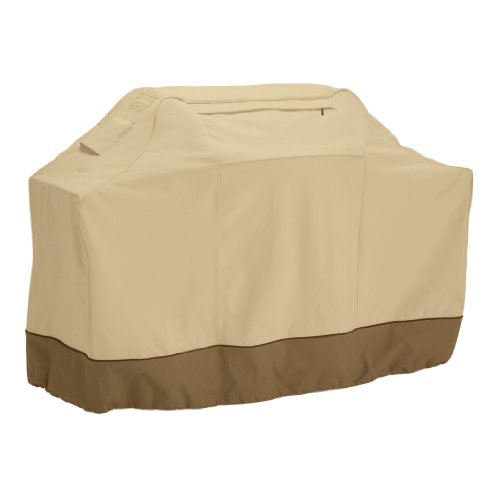
Use a snug-fitting cover with drawstrings or buckles, add bungee cords or clips, and place a heavy object on top if needed.
Why Your Grill Cover Blows Off
Wind can turn a grill cover into a sail. When gusts hit the large flat surface of the cover, they create lift, just like an airplane wing. If the cover is loose or doesn't have a secure fastening system, it will easily fly off. Even a well-fitted cover can blow off if the wind is strong enough, especially if the grill is in an open area.
Another factor is the shape of your grill. Round kettle grills are more prone to cover blow-off because the cover has a tendency to catch wind from underneath. Rectangular grills with side shelves offer more anchor points, but the cover can still be lifted if it's not secured properly.
Our editorial team compared specifications, buyer feedback and key decision factors to bring you practical solutions. Here's what you can do to keep your cover in place.
How to Fix a Blowing Grill Cover
There are several effective methods to secure your grill cover. You can use them alone or in combination for maximum protection. Here are the most common and reliable solutions.
- Use a cover with a drawstring or buckles. When buying a new cover, look for one that has a drawstring at the bottom hem or adjustable buckle straps. These allow you to tighten the cover around the grill's base, creating a snug fit that is less likely to catch wind. Many covers also have hook-and-loop straps that wrap around the grill's legs.
- Add bungee cords or straps. If your cover doesn't have built-in fasteners, you can use bungee cords or ratchet straps. Hook the bungee cords to the grill's handles, side shelves, or legs, and stretch them over the cover. This creates downward pressure that holds the cover in place. Make sure the bungee cords are not too tight to avoid tearing the cover.
- Use clips or clamps. There are special clips designed for grill covers that attach to the cover's hem and grip the grill's edge. These are easy to install and remove, and they provide a secure hold without adding bulk. You can also use large binder clips or spring clamps, but make sure they don't rust.
- Place heavy objects on top. The simplest and most effective method is to place a heavy object on top of the cover, such as a brick, a cinder block, or a sandbag. This adds weight that prevents the cover from lifting. However, be careful not to place anything too heavy that could damage the grill or leave marks on the cover. You can also place weights on the side shelves if they are sturdy.
- Improve the fit. If your cover is too large, it will billow in the wind. Consider buying a smaller size or a cover with an elastic hem that hugs the grill. You can also adjust the drawstring or straps to make the cover tighter. A proper fit is the first line of defense against wind.
- Anchor the cover to the ground. In extreme wind conditions, you can use tent stakes or ground anchors to secure the cover. Attach bungee cords to the cover's grommets (if it has them) and stake them into the ground. This is especially useful for portable grills.
Choosing the Right Cover for Windy Areas
If you live in a windy area, you should invest in a cover that is specifically designed for wind resistance. Look for features like a thicker fabric (e.g., 600D or 900D polyester), a waterproof backing, and reinforced seams. Some covers come with a windproof design that includes a built-in strap system or a padded base that adds weight.
Also, consider the shape of the cover. A cover that is slightly smaller than your grill will fit more snugly and reduce wind flapping. But make sure it's not too tight that it's hard to put on or take off. Measure your grill's dimensions before buying a new cover.
When to Replace a Worn Grill Cover
Even the best grill cover will eventually wear out. The sun's UV rays can degrade the fabric, making it brittle and prone to tearing. Wind can also stress the seams and fasteners. Here are signs that it's time to replace your cover:
- Visible holes, cracks, or thin spots in the fabric.
- Seams that are pulling apart or stitching that is unraveling.
- Drawstrings or straps that are broken or no longer tighten properly.
- The cover no longer repels water, and water soaks through.
- The cover has become stiff or brittle, and it cracks when you fold it.
- Mold or mildew that won't come off.
Using a worn cover can actually damage your grill. If water gets through, it can cause rust and corrosion. If the cover blows off, it can scratch the grill's finish. So, it's better to replace it sooner rather than later.
When you do replace it, choose a cover that fits your grill properly and has the features mentioned above. You can also consider a cover with a warranty, as many reputable brands offer a 1- to 3-year warranty against defects.
Additional Tips for Wind Protection
Here are some extra tips to keep your grill cover in place:
- Place your grill in a sheltered spot, such as against a wall or fence, to reduce wind exposure.
- If you have a grill with side shelves, make sure the cover covers the shelves completely, as they can act as sails.
- Check the cover regularly for wear and tear, especially after a storm.
- If you use a heavy object on top, make sure it doesn't trap moisture against the cover, which can cause mildew.
- Consider using a cover with a wind vent or a breathable fabric to reduce wind lift.
Frequently Asked Questions
What is the best way to keep a grill cover from blowing off?
The best way depends on your grill and wind exposure. A cover with a drawstring or buckle straps that snugly fits the grill is the first line of defense. For extra security, add bungee cords or clips that attach to the grill's handles or legs. In very windy areas, placing a heavy object like a brick or a sandbag on top of the cover can help, but make sure it doesn't damage the cover or the grill.
Can I use bungee cords on any grill cover?
Yes, you can use bungee cords on any grill cover, but you need to be careful. Hook the bungee cords to sturdy parts of the grill, such as the side shelves, handles, or legs. Avoid hooking them to fragile parts like thermometer probes or gas lines. Also, make sure the bungee cords are not too tight, as they can tear the cover or distort its shape.
How do I know if my grill cover is too worn to use?
Check for signs of wear like thin spots, cracks, holes, or faded fabric. If the cover no longer repels water or if the seams are pulling apart, it's time to replace it. Also, if the drawstring or straps are broken and can't be repaired, the cover won't stay on in wind. A worn cover can trap moisture, which can lead to rust on your grill, so don't wait too long.