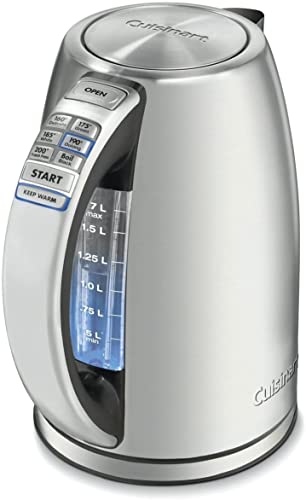
Choose a kettle with a lower wattage for energy efficiency, but balance it with boiling speed.
- Insulated kettles keep water hot longer, reducing the need to reboil and saving energy.
- Boil only the water you need and use a water window to avoid overfilling.
- Consider a stovetop kettle if you use gas, as it can be more cost-effective.
- Regularly descale your kettle to maintain its efficiency and prolong its life.
What Makes a Kettle Energy Efficient?
Energy efficiency in kettles depends on wattage, insulation, and capacity. Lower wattage means less power used per boil, but it may take longer. Insulated kettles keep water hot longer, reducing reboils. A smaller capacity encourages boiling only what you need. Look for kettles with a 1.7L capacity or less for everyday use. Some models have a 'keep warm' function, which uses extra energy. Choose a kettle with a clear water window to avoid overfilling.
How Does Wattage Affect Energy Use?
Wattage determines how quickly a kettle heats water. Higher wattage (around 3000W) boils faster but uses more electricity per minute. Lower wattage (around 1500W) uses less power but takes longer. The total energy used is similar for the same volume of water. However, faster boiling reduces heat loss to the environment. For energy efficiency, a mid-range wattage around 2200W is a good balance. Check the energy label for annual consumption if available.
Which Kettle Types Are Most Efficient?
Insulated kettles, like the Eco Kettle, are designed to keep water hot for hours. This reduces the need to reboil, saving energy. Stovetop whistling kettles are also efficient because they use gas, which is often cheaper than electricity. However, they lose heat quickly. Electric kettles with a double-wall construction retain heat better. Some models have a 'variable temperature' setting, which heats water to a specific temperature, avoiding overboiling. Choose a type that matches your usage pattern.
How to Choose the Right Size and Features
Select a kettle capacity that matches your typical usage. A 1.7L kettle is standard, but if you only boil one cup, a smaller 1L model is more efficient. Features like a water window and a cordless base add convenience but not energy use. Avoid kettles with a 'keep warm' function if you want to save energy. Look for a kettle with a concealed heating element, which is easier to descale. Descale regularly to maintain efficiency.
What Are the Best Energy-Efficient Kettles?
Based on specifications, the Russell Hobbs Inspire is a top pick for its 3kW power and rapid boil. The Eco Kettle is designed for energy saving with its two-chamber system. The Breville Quick Touch has a 'variable temperature' feature. The Swan Retro is a stylish option with good insulation. The Dualit Classic is durable and efficient. The Philips Daily Collection is affordable and has a water window. The Bosch Styline is compact and energy-efficient.