Kettles
57 posts in this topic
The best kettle for energy efficiency is one with a lower wattage, good insulation, and a capacity that matches your needs. Models like the Russell Hobbs Inspire use less power. Boiling only what you need saves the most energy.
The best kettle for pour-over coffee is a gooseneck model with precise flow control. Electric versions with variable temperature settings offer the most convenience. Stovetop options work well for those who prefer simplicity. Look for a narrow spout and comfortable handle. These features give you the control needed for even extraction.
The best kettle for pour over coffee is a gooseneck model with a narrow spout for precise flow control. Electric versions offer temperature control, while stovetop kettles are cheaper and quieter. Choose based on your budget and brewing routine.
Yes, leaving water in a kettle overnight is generally safe if the kettle is clean and the water is covered. Stagnant water can develop a flat taste, but it won't harbor harmful bacteria in a sealed, heated appliance. However, minerals may settle, causing scale. Emptying and drying the kettle after each use prevents buildup and keeps water fresh.
Yes, you can boil eggs in an electric kettle. It's a quick, energy-efficient method. Place eggs in the kettle, cover with water, and boil. The kettle auto-shuts off when boiling. Let eggs sit in hot water for desired doneness. Then cool and peel.
The best kettle for pour-over coffee is a gooseneck model with variable temperature control. The Fellow Stagg EKG leads for precision and design. The Hario Buono offers classic value. Choose based on your budget and need for electric heating.
For most tea drinkers, a variable temperature electric kettle with a gooseneck spout is best. It heats water to precise temperatures for different tea types. This preserves delicate flavors and prevents bitterness. Models like the Fellow Stagg EKG or the Cuisinart CPK-17 offer reliable performance. Choose based on your budget and brewing style.
The best kettle for induction cooktops is a stainless steel model with a flat, magnetic base. Look for at least 1.7 liters capacity and a rapid boil feature. The Cuisinart Aura and OXO Brew are top choices based on specifications and owner feedback.
Yes, you can boil water in a kettle on a stove, but only if the kettle is stovetop-safe. Electric kettles are not. Check the base material and any markings. Stainless steel, enameled steel, and aluminum kettles work. Glass and ceramic may work on some stoves. Avoid kettles with plastic parts near the heat.
Yes, most modern electric kettles are safe to leave plugged in when not in use. They have auto shut-off and boil-dry protection. However, unplugging reduces standby power and eliminates any residual risk. Always check the cord and outlet condition. For maximum safety, unplug after use.
The fastest kettles are high-wattage electric models. A 3000-watt kettle boils a liter in about three minutes. Stovetop kettles take longer, often five to seven minutes. Gooseneck kettles prioritize pouring control over speed. For pure speed, choose the highest wattage you can plug in.
The best kettle for tea offers precise temperature control, a gooseneck spout for controlled pouring, and a capacity that suits your brewing habits. Variable temperature electric kettles excel for most tea types. Stovetop models suit those who prefer simplicity and durability.
The fastest kettles are cordless electric models with 3000W power and a concealed heating element. They boil one liter in under three minutes. Higher wattage means faster boiling, but capacity also matters. A 3000W kettle with a 1.7L capacity is the sweet spot. Look for rapid-boil technology and a wide base for quick heat transfer.
Yes, you can boil water in a glass kettle, provided it's made from borosilicate glass and rated for high heat. Most electric glass kettles are safe and convenient. Stovetop glass kettles exist but require careful handling. Avoid sudden temperature changes to prevent cracking. Always check the manufacturer's instructions.
The best camping kettle balances weight, capacity, and heat-source compatibility. For backpackers, a titanium or aluminum kettle under a pound works best. Car campers can use heavier stainless steel. Look for a folding handle and a spout that pours cleanly. Match the kettle to your stove type.
Yes, leaving water in a kettle is generally safe for a day or two, but it can breed bacteria and cause scale buildup. Stagnant water may develop a stale taste. For best results, empty and dry the kettle after each use. Regular descaling keeps it hygienic.
Yes, you can boil water in a kettle on a gas stove, provided the kettle is stovetop-safe. Use a stainless steel, enameled steel, or aluminum kettle. Avoid glass and electric kettles on gas. Place it on a stable burner and never leave it unattended.
Choosing a kettle comes down to how you heat water. Electric models boil faster and safer than stovetop versions. We compared real specifications and owner reviews across popular brands.
Choosing a kettle goes beyond boiling water. Speed, temperature control, and safety matter. We compared specs and owner feedback to find the best.
Electric kettles boil water faster than stovetops and often shut off automatically. Choosing the right one depends on your counter space, tea habits, and budget. We compared specifications and owner feedback across 7 popular models.
Choosing a kettle goes beyond boiling water. The right one matches your counter space, speed needs, and brewing habits.

An honest look at the Chefman Electric Kettle: its features, real-world performance, ease of use, cleaning, and how it stacks up against close alternatives. Find out if it's the right kettle for your kitchen.

A detailed, honest review of the COSORI Gooseneck electric kettle: who it's for, real specs, performance, ease of use, cleaning, pros and cons, and how it stacks up against alternatives.

A detailed, honest review of the Mueller Ultra Kettle: who it's for, standout features, real specs, performance, ease of use, cleaning, pros and cons, and how it compares to close alternatives.

An honest look at the Amazon Basics Electric Kettle: who it is for, real specs, performance, ease of use, cleaning, pros and cons, and how it compares to alternatives.
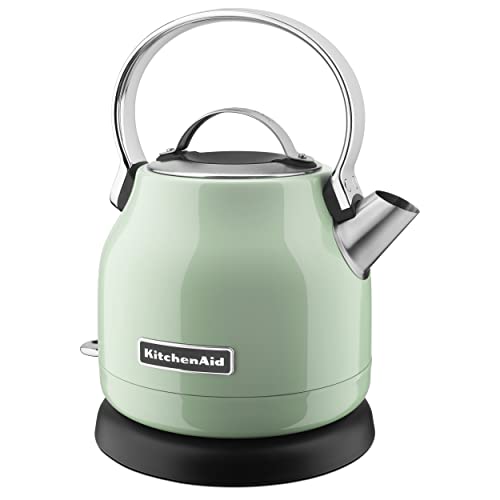
An honest look at the KitchenAid Electric Kettle: who it's for, standout features, real-world performance, ease of use, cleaning, pros and cons, and how it stacks up against close alternatives.

The Zwilling Enfinigy is a premium electric kettle with precise temperature control, a sleek design, and fast heating. Ideal for tea and pour-over coffee enthusiasts who want consistency and style.
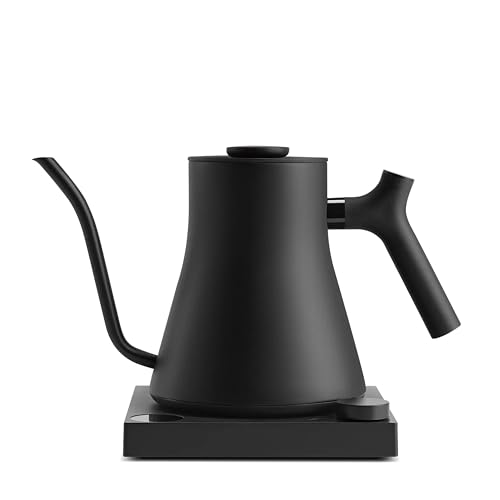
The Fellow Stagg EKG is a precision gooseneck kettle that combines minimalist design with accurate temperature control. It is ideal for pour-over coffee and tea enthusiasts who value control and aesthetics, but its price and small capacity may not suit everyone.
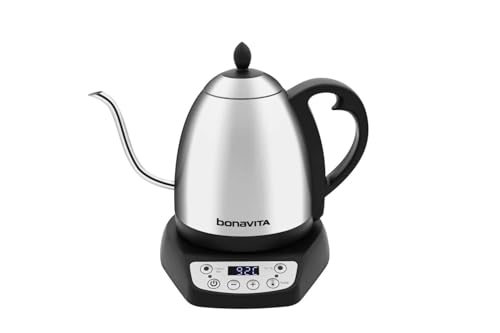
The Bonavita Gooseneck kettle is a favorite among pour-over enthusiasts. This review covers who it's for, standout features, real-world performance, ease of use, cleaning, and how it compares to alternatives.

An honest US buyer review of the Breville Soft Top electric kettle: who it is for, standout features, real specs, performance, ease of use, cleaning, pros and cons, and how it compares to close alternatives.

An honest look at the Breville IQ Kettle: who it is for, standout features, real specifications, performance, ease of use, cleaning, value, pros and cons, and how it compares to close alternatives.

An honest look at the Hamilton Beach Glass Kettle: its design, performance, ease of use, cleaning, and how it stacks up against alternatives. Who it's for and who should skip it.

The OXO Brew Adjustable Kettle offers precise temperature control and a gooseneck spout for pour-over coffee and tea. Our editorial team compared specifications, buyer feedback, and key decision factors to help you decide if it's worth it.
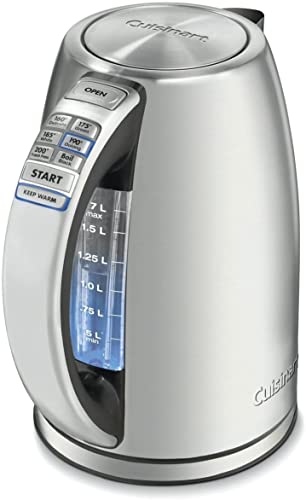
An honest look at the Cuisinart PerfecTemp CPK-17 electric kettle: who it suits, standout features, real-world performance, ease of use, cleaning, value, pros and cons, and how it compares to close alternatives.
Descale your kettle weekly with a 50/50 white vinegar and water solution, boil, let sit for 30 minutes, then rinse thoroughly. For daily prevention, use filtered water and empty the kettle after each use. This simple routine stops limescale from taking hold.
Mix two tablespoons of baking soda with water, fill the kettle, boil, then let it sit for 30 minutes. Scrub with a soft sponge, rinse thoroughly, and boil fresh water twice to remove any residue.
First, unplug the kettle immediately. The most common cause is a stuck or faulty steam sensor, often due to limescale. Descale thoroughly with vinegar or citric acid. If that fails, the switch mechanism or thermostat may be worn. Check the lid and spout for blockages. If the kettle still boils dry, replace it or call a pro.
Fill the kettle halfway with equal parts water and white vinegar, bring it to a boil, then let it sit for 20 minutes. Pour out the solution, rinse thoroughly, and boil fresh water twice to remove any vinegar taste. For heavy scale, repeat or use citric acid.
Fill the kettle halfway with equal parts water and white vinegar. Boil, let it sit for 30 minutes, then rinse thoroughly. For heavy buildup, use citric acid powder instead. Repeat if needed.
Unplug the kettle immediately to stop the boil. The usual culprit is a faulty thermostat or a stuck lid switch. Check the lid and clean the contacts. If it still boils over, replace the thermostat or the kettle. Safety first.
Descale your kettle weekly with a 50/50 white vinegar and water solution, boil, let sit for 30 minutes, then rinse thoroughly. To prevent build-up, use filtered water, empty the kettle after each use, and wipe the interior dry. These simple habits stop limescale before it starts.
Mix equal parts white vinegar and water, fill the kettle halfway, and boil. Let it sit for 20 minutes, then rinse thoroughly. Boil plain water once or twice to remove any vinegar taste. Repeat monthly or when scale appears.
Your kettle likely won't switch off because the steam sensor or thermostat is blocked by limescale or debris. Clean the lid and spout with descaling solution. If that fails, the switch mechanism may be worn out, requiring replacement.
Fill the kettle halfway with equal parts water and white vinegar. Boil, let it sit for 20 minutes, then rinse thoroughly. For heavy buildup, use citric acid instead. Boil again with fresh water to remove any taste.
First, unplug the kettle and let it cool. Check the base for cracks or a loose heating element. Tighten any visible screws. If the base is cracked or the element is faulty, replace the kettle. Most base leaks are not user-serviceable.
Check the heating element seal first. Limescale or a worn gasket often causes bottom leaks. Descale with vinegar or citric acid. If the base is cracked or the seal is broken, replace the kettle. Never use a leaking kettle near outlets.
Fill the kettle with equal parts water and white vinegar, boil, let sit for 30 minutes, then rinse thoroughly. For stubborn scale, repeat or use citric acid. Boil plain water once after to remove any taste.
First, check the power base and cord for loose connections. Then, inspect the kettle's lid and ensure it's closed. If it still won't boil, descale the heating element with vinegar or citric acid. Finally, test the reset switch or thermal fuse.
Rust forms when water, oxygen, and bare metal meet. Stop it by drying your kettle after each use, descaling weekly, and switching to filtered water. If rust appears, scrub it with lemon juice or vinegar, then rinse thoroughly. Replace the kettle if rust pits the metal.
Fill the kettle halfway with equal parts water and white vinegar, or use citric acid per package directions. Boil, let it sit for 20 minutes, then rinse thoroughly. Repeat if heavy scale remains. Boil plain water once more to remove any lingering taste.
A kettle that won't turn off usually has a stuck steam tube, a faulty thermostat, or a broken switch. Unplug it immediately. Clean the steam tube with vinegar. If it still boils dry, replace the thermostat or the kettle. Never leave it running.
Fill the kettle with equal parts water and white vinegar, boil, let sit for 30 minutes, then rinse thoroughly. For stubborn scale, repeat or use citric acid. Wipe the exterior with a damp cloth and mild soap. Dry completely to avoid water spots.
Kettle spitting usually comes from scale buildup or overfilling. Descale with vinegar or citric acid, fill only to the max line, and keep the lid closed. If it persists, check for a faulty thermostat or replace the kettle.
Fill the kettle with equal parts water and white vinegar, boil, let sit for 30 minutes, then rinse thoroughly. For heavy scale, use citric acid. Boil, soak, and scrub with a soft cloth. Rinse well. Repeat if needed.
First, check the power outlet and the kettle's base connection. Ensure the lid is closed and the kettle is seated properly. If it still won't turn on, inspect the switch and cord for damage. Reset any tripped circuit breaker. If these fail, the heating element may be burnt out, requiring replacement.
Descale your kettle weekly with a 50/50 white vinegar and water solution, boil, let it sit for 30 minutes, then rinse thoroughly. To prevent buildup, use filtered or bottled water, empty the kettle after each use, and wipe the interior dry. Regular maintenance keeps scale from forming.
Your kettle likely switches off early because of limescale on the heating element or a faulty thermostat. Descale it with vinegar or citric acid first. If that fails, check the lid and base for debris. Still broken? Replace the thermostat or buy a new kettle.